Why You Should Change Your Pool Filter NOW

(And How Long They Actually Last)
We all love seeing crystal-clear pool water ready for a good swim, but that magic doesn’t happen by accident. Behind the scenes, the filter is doing the heavy lifting.
If you feel like the water has been looking cloudy lately no matter how many chemicals you add, your filter is probably the culprit. Here is a simple breakdown of why you need to change it on time and stop putting it off.
What happens if you don’t change the filter?
Think of the filter as your pool’s kidneys: its job is to catch all the dirt, oils, and leaf debris so the water returns clean. When it gets saturated, three things happen that will ruin your pool (and your budget):
- Your equipment “suffocates”: Imagine trying to run a marathon while breathing through a dust-filled mask. Impossible, right? When the filter is clogged, the pool pump has to work twice as hard to push the water through. This skyrockets your electric bill and can burn out the pump motor prematurely.
- You burn through your chlorine budget (and it doesn’t work): Chlorine is designed to sanitize bacteria, not to perform magic tricks on accumulated trash. If the filter isn’t pulling the dirt out, the chlorine gets quickly “eaten up” fighting all that stagnant organic matter. You’ll end up pouring in double or triple the gallons of chlorine, throwing money down the drain, while the water stays green or milky.
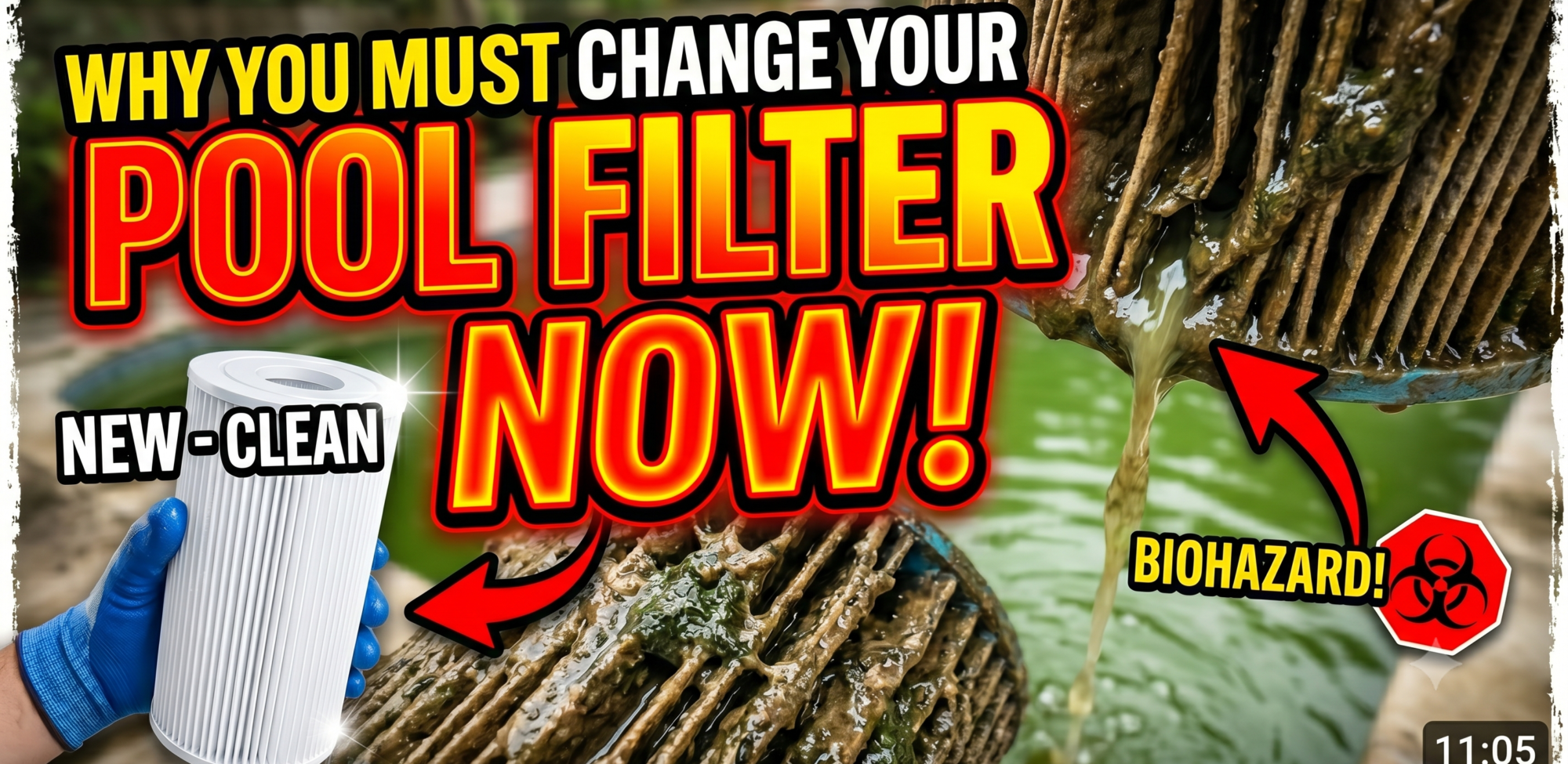
- It becomes a bacteria hotel: A dirty filter is the ultimate paradise for algae. Eventually, the filter gets so packed with gunk that the water just bypasses it entirely, dragging all that dirt straight back into your pool.
So, how long do they actually last?
There’s no one-size-fits-all answer because it depends heavily on the type of system you have installed, but here is the general rule of thumb to keep on your radar:
- Cartridge Filters (1 to 3 years): These are the most common. You have to take them out and hose them down every month or month and a half. However, the fabric wears out and the pores open up over time. If the pleats look frayed or the bands are broken, it’s time for a new one.
- Sand Filters (3 to 5 years): Even though you don’t change the tank itself, the sand inside does expire. Over the years, the rushing water polishes the sand grains, leaving them round and smooth. When this happens, the dirt simply slips right past them instead of getting trapped.
- Diatomaceous Earth or DE Filters (10 years): These provide the highest quality filtration. The internal grids last a very long time, but keep in mind: you must replenish the white powder (the diatomaceous earth) that does the filtering magic every single time you backwash the system.
The golden rule: If your pressure gauge is reading 8 to 10 PSI above its normal clean starting pressure, even after you’ve just cleaned it, that is the ultimate sign that your filter media has reached the end of the line.