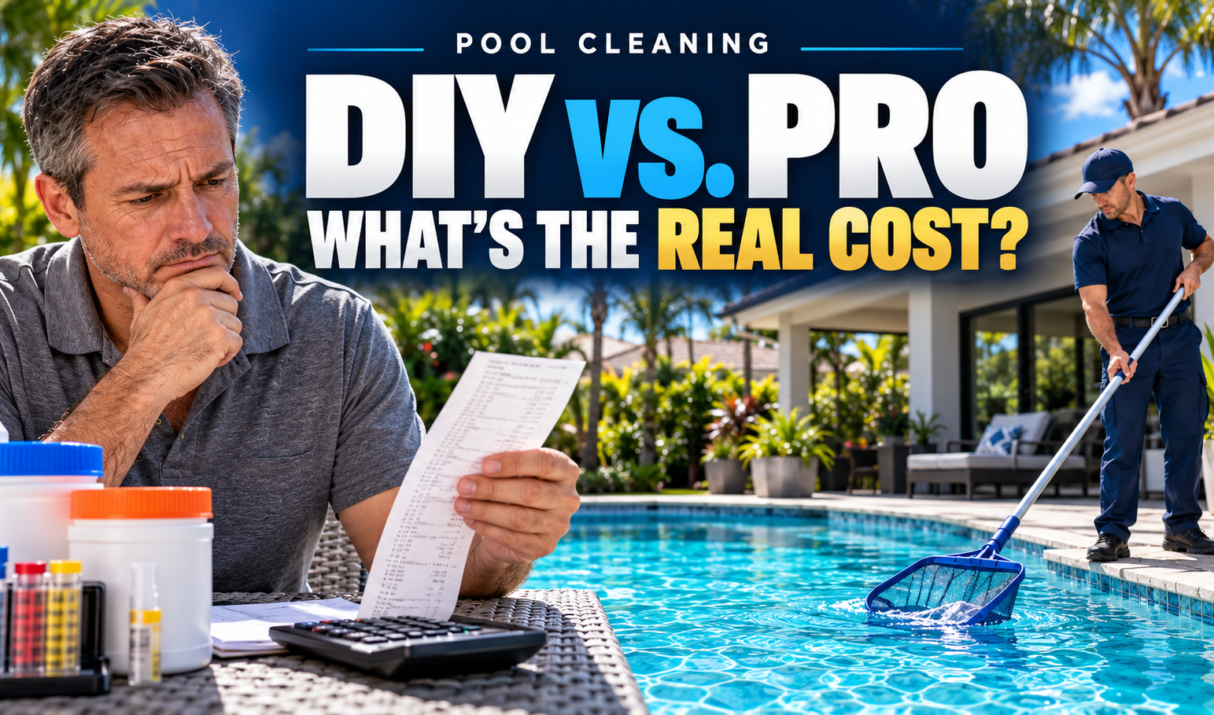

When calculating the monthly budget for a home with a pool, there is a common belief that the DIY pool cleaning cost is low, because handling the maintenance yourself is synonymous with immediate savings. At first glance, the math seems simple: buy a couple of buckets of chlorine, skim the leaves out with a net
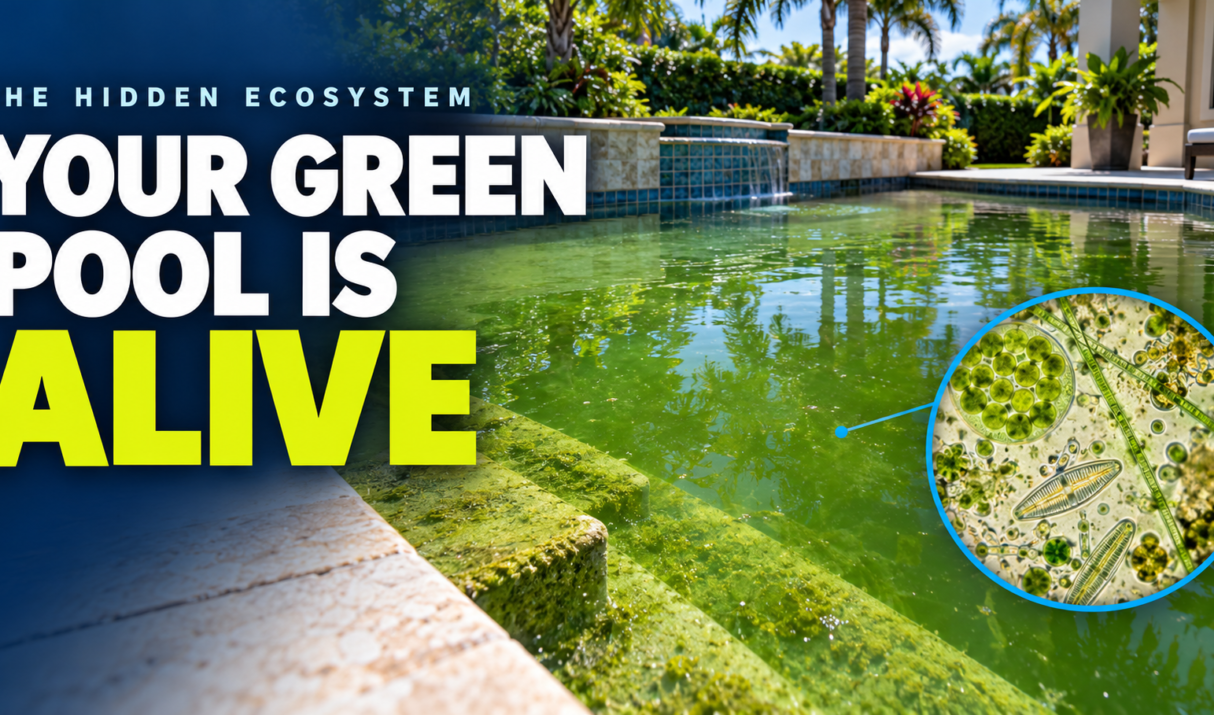
When pool water loses its clarity and takes on an emerald or swampy hue, it hasn’t simply “gotten dirty.” What is actually taking place in a green pool ecosystem is a complete biological transition: an artificial, sterile body of water has been reclaimed by nature, turning into a living, complex, and self-sustaining habitat. Understanding how
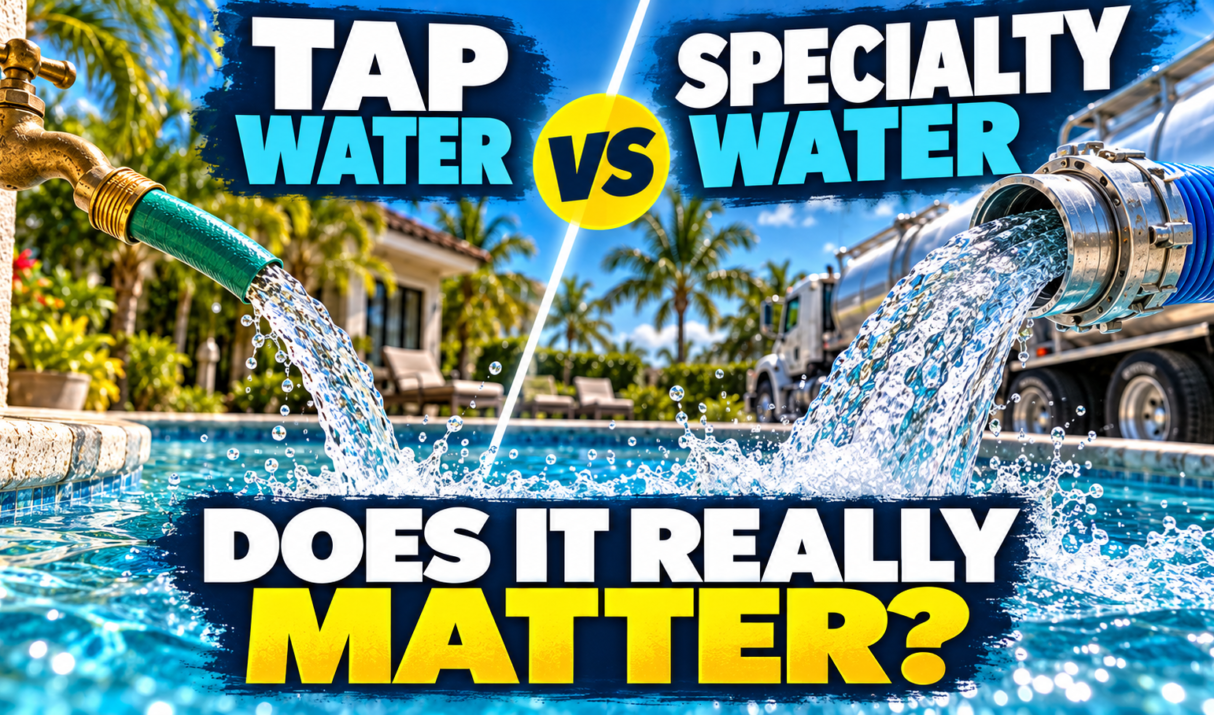
When considering tap water for pool filling, the water coming out of a garden hose looks perfect at first glance: it is clear, odorless, and completely safe to drink. However, what is safe and healthy for the human body in an eight-ounce glass behaves in a completely different way when 15,000 or 20,000 gallons sit
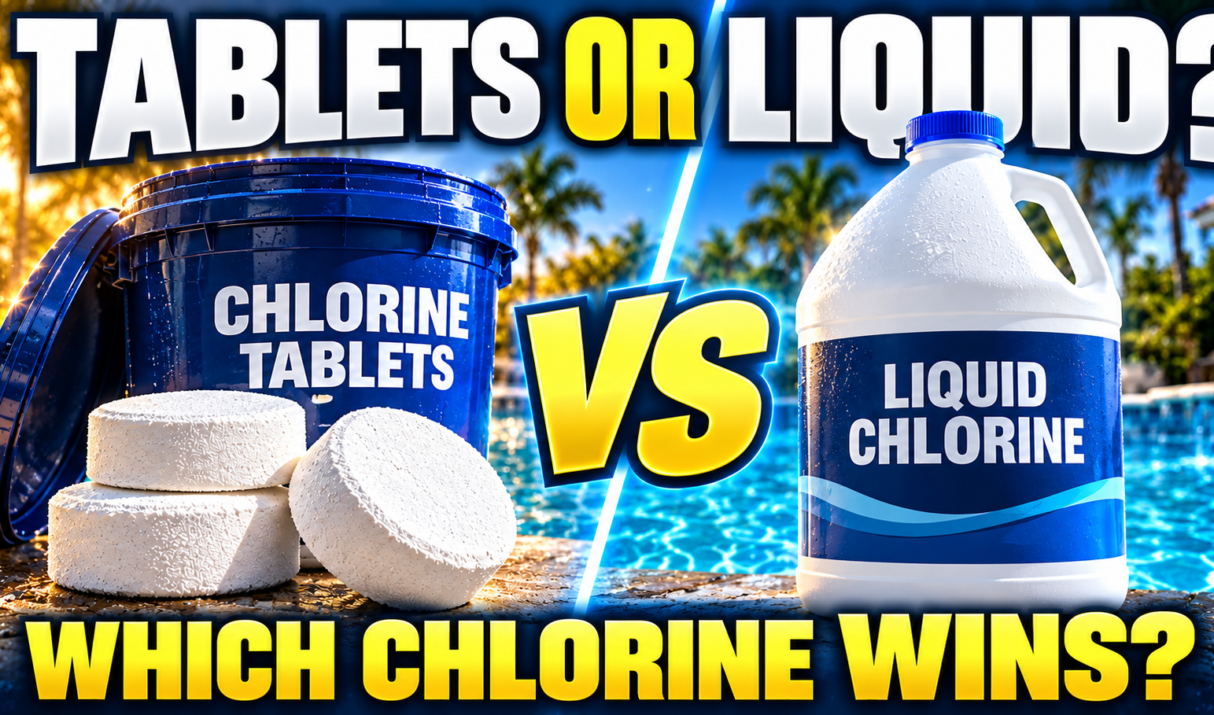
When approaching swimming pool water maintenance, a fundamental question, the classic chlorine tablets vs liquid chlorine dilemma, often arises: whether to use slow-dissolving solid tablets or pour liquid chlorine directly into the water. At first glance, both products seem to fulfill the exact same purpose of keeping the water crystal clear and free of bacteria.
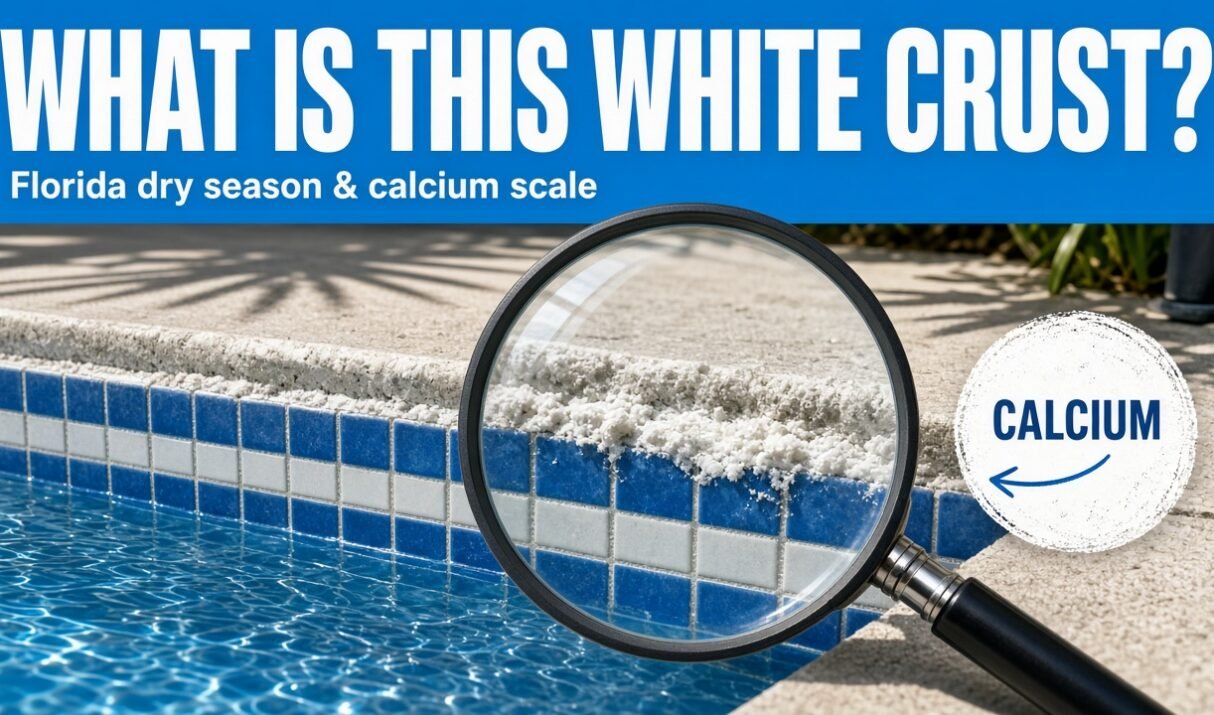
White crust on your tile? Calcium scale in pool water builds in Florida’s dry season. Learn how to prevent and remove it. Need tile cleaning? Call us.
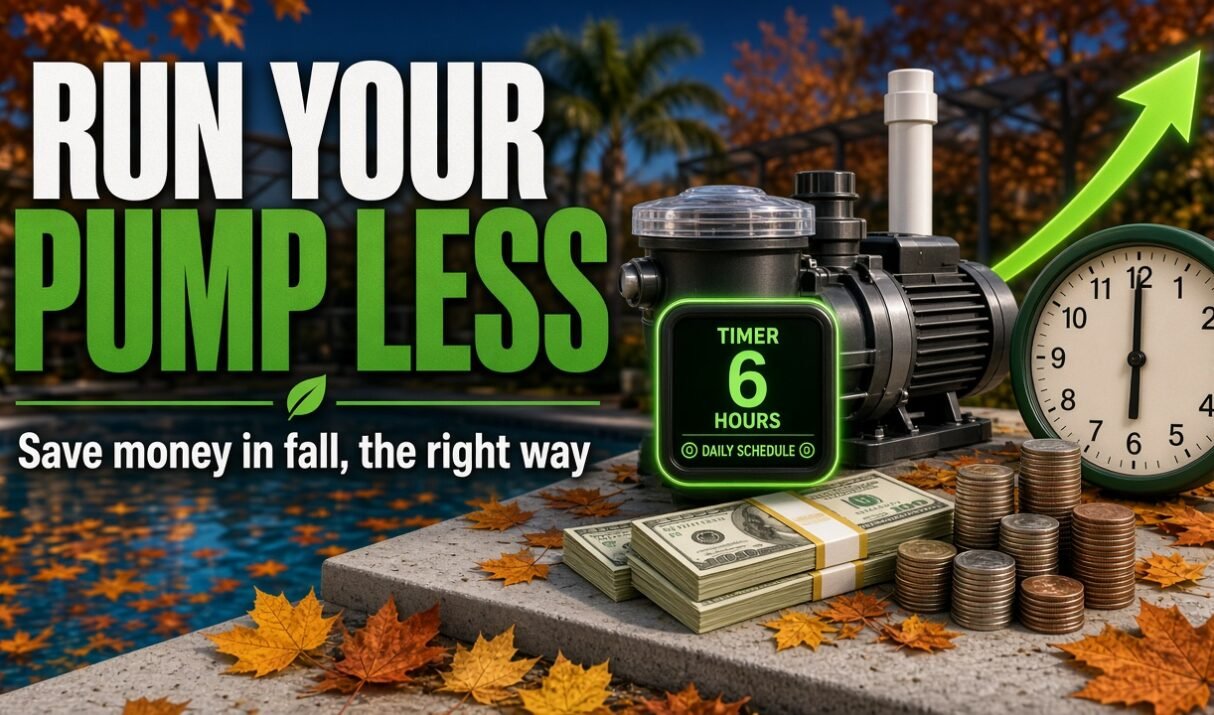
What pool pump run time is right in fall? Learn turnover, timing and variable-speed tips to save energy without green water in Florida. Ask our team.