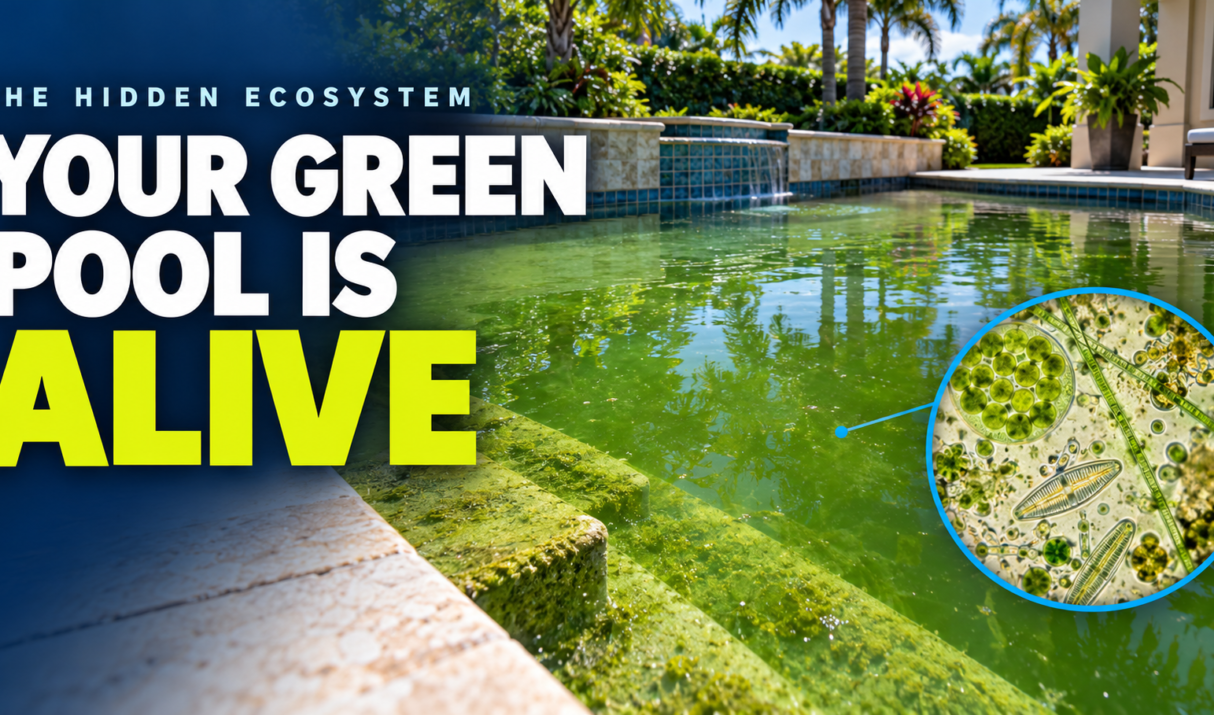

When pool water loses its clarity and takes on an emerald or swampy hue, it hasn’t simply “gotten dirty.” What is actually taking place in a green pool ecosystem is a complete biological transition: an artificial, sterile body of water has been reclaimed by nature, turning into a living, complex, and self-sustaining habitat. Understanding how
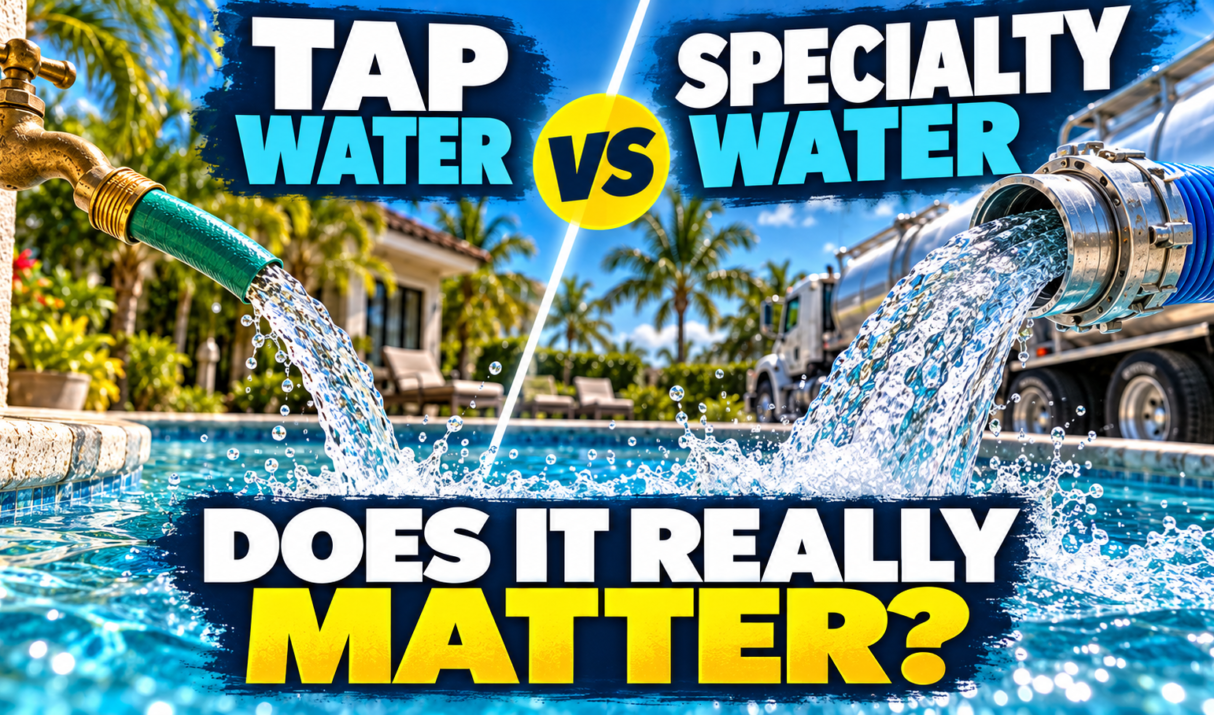
When considering tap water for pool filling, the water coming out of a garden hose looks perfect at first glance: it is clear, odorless, and completely safe to drink. However, what is safe and healthy for the human body in an eight-ounce glass behaves in a completely different way when 15,000 or 20,000 gallons sit

Choosing the design of an aquatic space is rarely analyzed beyond visual impact or available land space. However, the geometry of the basin has a direct, constant, and silent impact on water quality, filtration equipment wear, and maintenance dynamics. Understanding how water reacts to different structures reveals that each geometric design offers very specific benefits

Maintaining a pool with a crystal-clear appearance is often perceived as a purely visual and mechanical task: if there are no leaves floating and the water looks blue, it is assumed that everything is in perfect condition. However, beneath that calm surface operates a highly unstable chemical and biological ecosystem. Proper water management is not
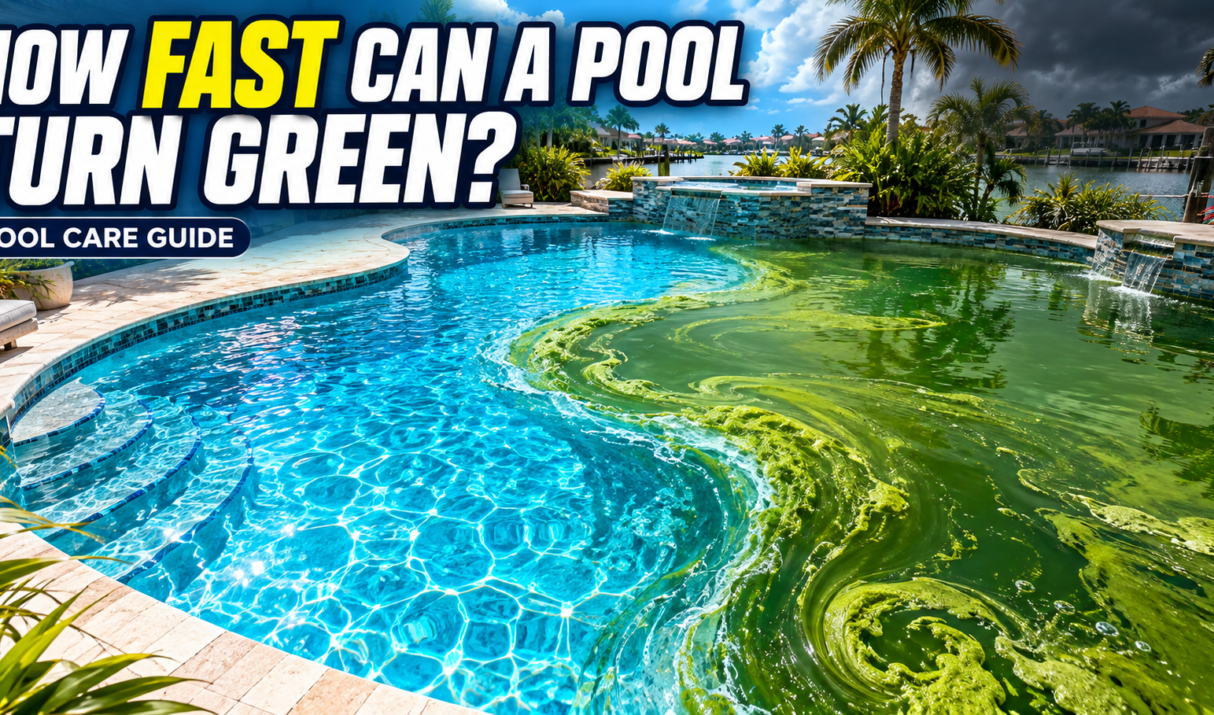
The drastic change from a crystalline oasis to a greenish pond is a phenomenon that seems to occur overnight. And, in fact, from a biological and chemical standpoint, pool water can go from being perfectly clear to acquiring a deep green color in just 24 to 48 hours. To understand the speed of this transformation,
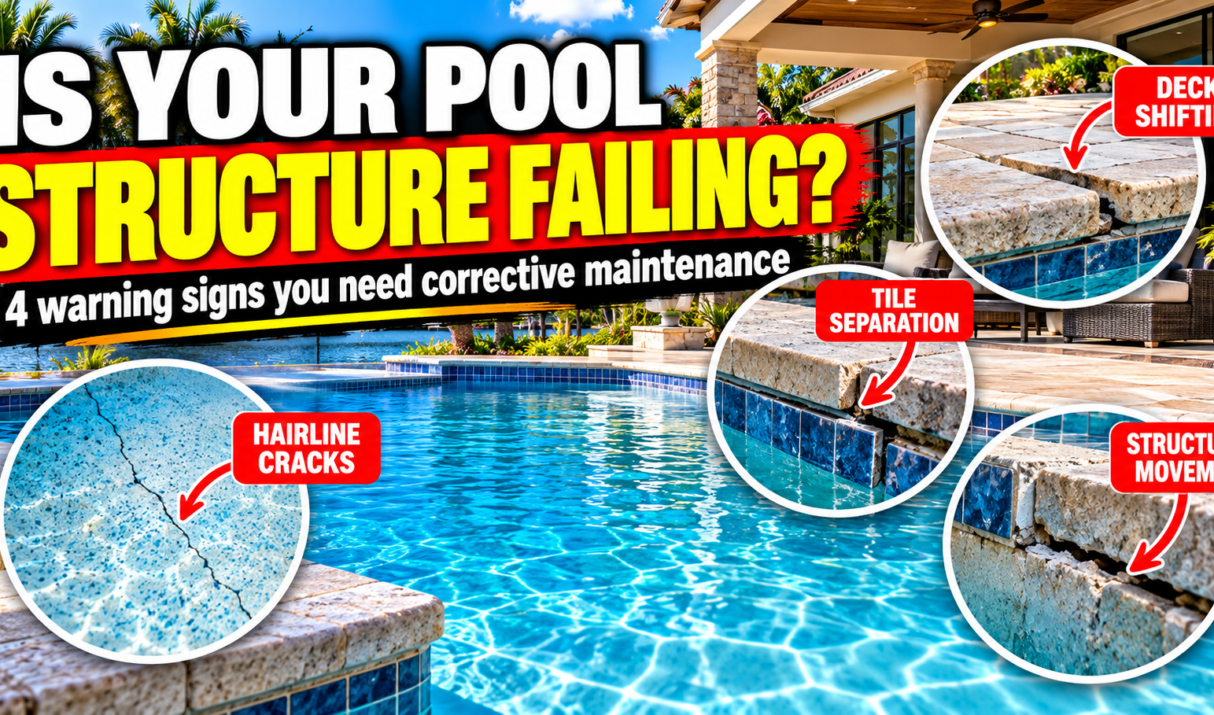
Crystal-clear water often hides what is really happening beneath the surface. Maintaining chemical balance and cleanliness is a standard practice, but the pool structure itself has its own language. Detecting in time when the pool shell or structural framework requires corrective intervention prevents much larger problems. To the naked eye, internal deterioration is often confused