Heat Pump or Solar Cover? How to Keep Swimming in Your Florida Pool Until Christmas

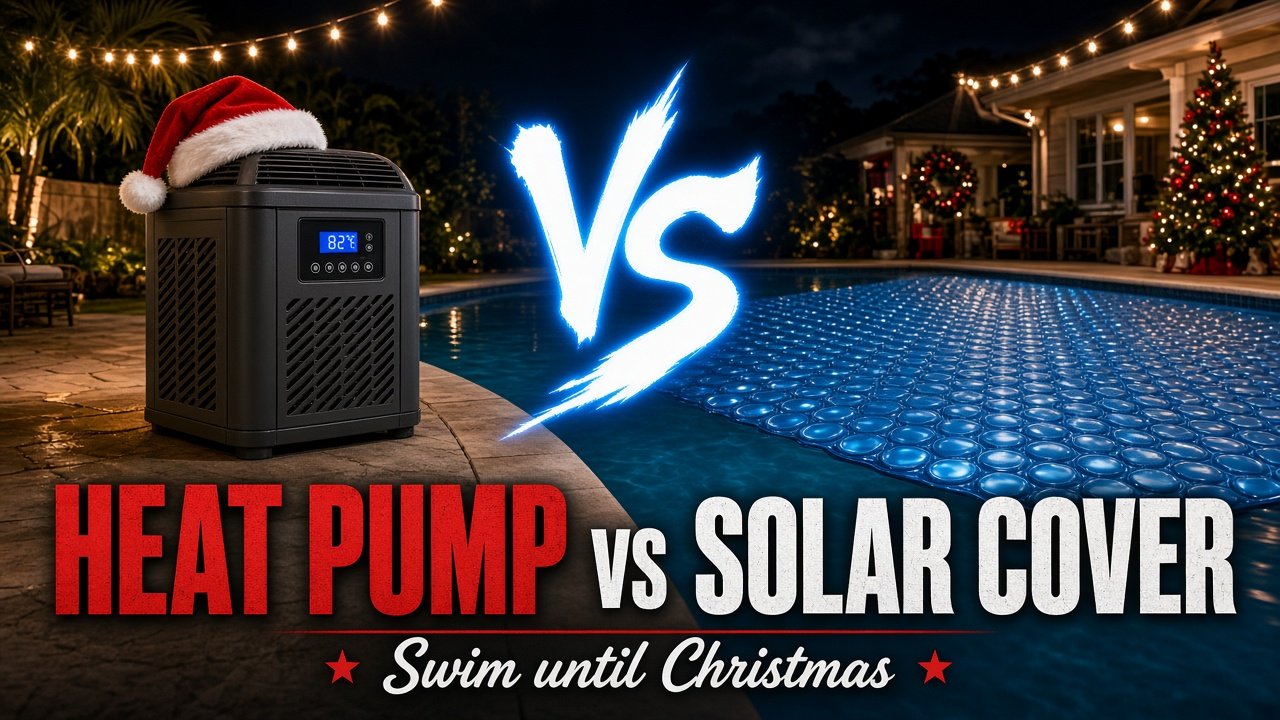
When the water drops below 78°F, most Florida pool owners quietly decide swim season is over. But here’s what many people never realize: in Florida, you can comfortably swim through Thanksgiving, past Christmas and even into the new year without spending a fortune. The two most popular tools for that are a heat pump and a solar cover. Which one makes sense for you? Let’s compare them honestly. If you’re dealing with pool heat pump vs solar cover issues in Brandon or nearby Tampa Bay communities, this guide is for you.
Why Your Pool Cools Down So Fast in Fall
A pool loses heat mainly through evaporation, which accounts for roughly 70% of heat loss. The rest escapes through radiation to the night sky and contact with cooler air. As fall nights get cooler and drier, your pool can lose several degrees in just a few days after a cold front, even when afternoons are warm.
That’s why keeping heat in is just as important as adding heat.
Option 1: The Solar Cover
A solar cover, often called a “solar blanket,” is a sheet of bubble-like plastic that floats on the water. It does two jobs: it absorbs sunlight to warm the water during the day, and more importantly, it blocks evaporation at night.
- Approximate cost: about $100–$400 for the cover, plus an optional reel.
- Typical gain: can raise water temperature by several degrees and reduce evaporation significantly.
- Operating cost: zero.
- Downside: you have to remove and replace it, and it doesn’t help much during long cloudy, cold spells.
Option 2: The Heat Pump
A heat pump works like an air conditioner in reverse. It pulls heat from the surrounding air and transfers it into the water. Because Florida’s air usually stays above 50°F, heat pumps work efficiently here for most of the winter.
- Approximate cost: often $3,000–$6,000 installed, depending on size.
- Operating cost: commonly a modest monthly electric bill increase, depending on pool size, target temperature and whether you use a cover.
- Advantage: keeps water at a set temperature, like 82°F, regardless of clouds.
- Downside: higher upfront investment and less efficient on the coldest nights.
The Smart Answer: Use Both
Here’s the secret that professionals know: a heat pump without a cover is like running your home heater with the windows open. Since most heat leaves through evaporation, covering your pool at night can significantly reduce how long your heat pump needs to run. Together, they give you comfortable water at the lowest operating cost.
Pool Heat Pump vs Solar Cover: Which Is Right for You?
- You swim occasionally on sunny weekends: a solar cover alone may be enough.
- Kids or family swim often, or you want reliable warm water: a heat pump plus a cover.
- Your pool is in shade most of the day: solar gain will be limited, so a heat pump makes more sense.
Warm Water Changes Your Chemistry Too
Warmer water consumes chlorine faster and can encourage algae if circulation and sanitizer are not kept on track. Covers also trap chlorine gases, so balanced chemistry matters even more. If you extend your season, keep testing weekly, just like summer.
Other Ways to Extend Your Season on a Budget
A heat pump and a solar cover are the main tools, but a few small habits can add extra comfortable weeks without spending much. First, consider liquid solar covers. These are thin, invisible layers of a safe alcohol-based product that float on the surface and slow evaporation. They’re less effective than a physical cover but require no handling, which makes them a good option for owners who won’t remove a blanket every day.
Second, reduce wind exposure. Wind across the surface steals heat quickly, so a screened enclosure, hedges or a fence on the windward side can make a noticeable difference. Third, turn off waterfalls, deck jets and spillways in cooler months, because splashing water cools the pool and increases evaporation.
Finally, plan your heating smartly. Heat ahead of a cold front instead of trying to recover several degrees afterward, and choose a realistic target temperature. Every degree higher increases operating cost, so many families find 80–82°F the sweet spot between comfort and savings.
Frequently Asked Questions
Is a solar cover enough to heat a pool in Florida?
It holds heat and can add a few degrees, but on cool December nights most pools also need a heat pump.
How much does it cost to run a pool heat pump in Florida?
It depends on pool size and target temperature; a cover on at night can cut heat pump run time a lot.
Keep reading: learn about adjusting chlorine in cooler months and pump hours in fall.
Conclusion
Swim season in Florida doesn’t have to end in October. A solar cover is an affordable way to hold heat and save water, while a heat pump gives you reliable warmth on demand. Combined, they let you enjoy your pool through the holidays at a reasonable cost.
Final Recommendations
Start with a cover if you’re on a budget, consider a properly sized heat pump if you swim often, and always cover at night when heating. Keep chemistry balanced as temperatures change. Pro Quality Pools can keep your water clean and balanced all winter long, so whenever you decide to take a dip, your pool is ready.
Need Help With Your Pool in Brandon and Nearby?
Pro Quality Pools is a family-owned pool cleaning company serving Brandon, Valrico, Riverview, FishHawk, Seffner and Dover, Florida. Explore our pool cleaning and maintenance services or contact us today for a free quote.