Why Your Florida Pool Loses More Water in October Than in July

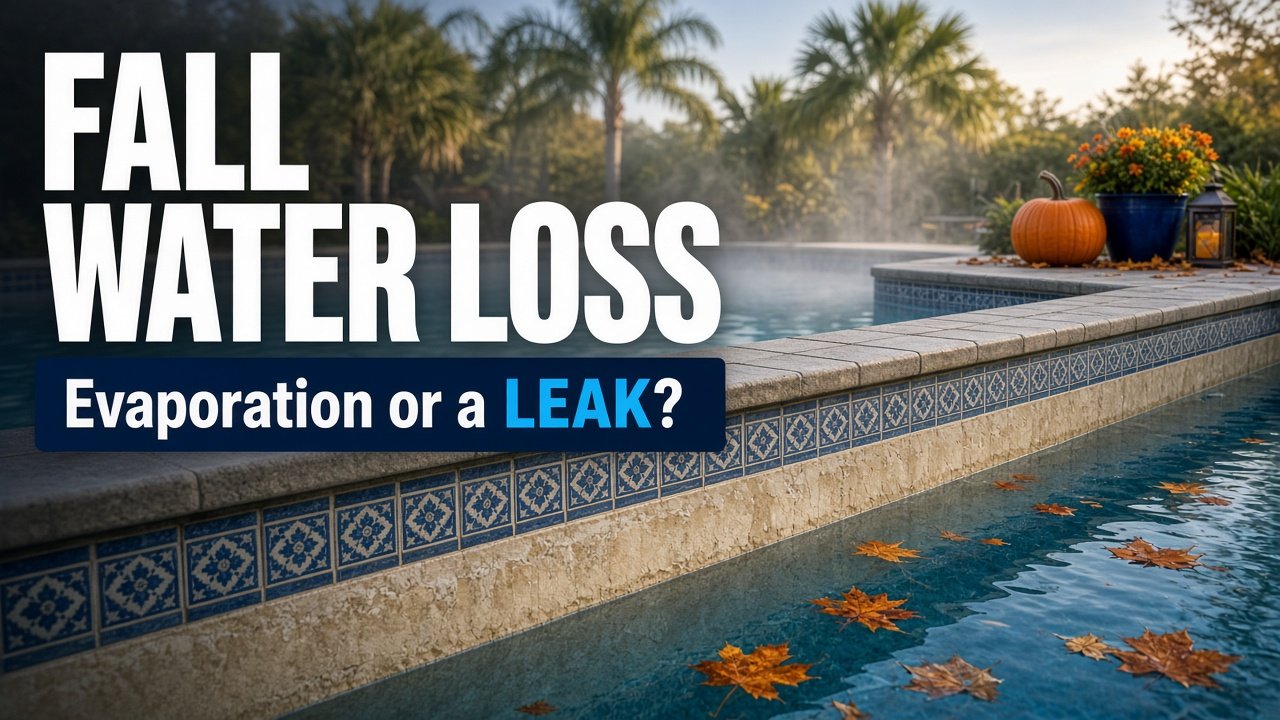
Here’s a fact that surprises almost every Florida pool owner: your pool can lose more water in a mild October week than in a blazing July one. It sounds backwards. July is hotter, sunnier and stickier. So why does the waterline seem to drop faster just as the weather finally gets comfortable? The answer is a bit of physics, and once you understand it, you’ll know exactly when to relax and when to call for help. If you’re dealing with pool losing water in Florida issues in Brandon or nearby Tampa Bay communities, this guide is for you.
Evaporation Isn’t About Heat. It’s About Difference.
Most people assume evaporation depends on how hot the air is. In reality, it depends mainly on the difference between the water and the air above it, especially in temperature and humidity. Water evaporates when its molecules escape into the air. The drier and cooler that air is compared to the water, the faster they escape.
In July, Florida air is hot and saturated with humidity, often 75–90%. Air that is already full of moisture can’t absorb much more, so evaporation slows down. Your pool water and the air are almost “in balance.”
Why October Changes Everything
In October and November, the first cold fronts bring drier, cooler air, especially at night. Meanwhile, your pool is still holding the heat it stored all summer, often staying in the high 70s or low 80s. Warm water under cool, dry air is the perfect recipe for fast evaporation. If you’ve ever seen “steam” rising from your pool on a crisp morning, you were literally watching your water leave.
Add the breezy days that come with fall fronts, and the effect gets stronger. Wind constantly sweeps away the moist air layer sitting on the surface and replaces it with dry air, which pulls even more water out.
- Warm water + cool air = bigger temperature gap
- Lower humidity = air can absorb more moisture
- Wind = constant fresh, dry air over the surface
How Much Water Loss Is Normal for a Florida Pool?
In Florida, losing about 1/4 inch per day is common during dry, windy fall stretches. That can add up to around 1.5–2 inches per week. A pool cage helps a little by blocking some wind, but it won’t stop evaporation completely. Heated pools lose even more because the gap between water and air temperature is larger.
Evaporation or Leak? Try the Bucket Test
The big question is whether you’re seeing normal evaporation or a hidden leak. The classic bucket test gives you a clear answer in 24 hours:
- Fill a bucket with pool water and set it on the first or second pool step, so it sits at the same temperature as the pool.
- Mark the water level inside the bucket and the pool level on the outside of the bucket.
- Run your pump normally and avoid swimming or adding water for 24 hours.
- Compare both marks. If the pool dropped noticeably more than the bucket, you likely have a leak.
Repeat the test with the pump off. If the loss is larger with the pump running, the leak may be in the pressure-side plumbing. If it’s larger with the pump off, look at the suction side or the shell.
Why Low Water Is a Real Problem
Letting the level fall below the middle of the skimmer opening can let air into the pump. A pump that runs dry overheats and can damage its seals and motor. Evaporation also concentrates minerals: the water leaves, but calcium and dissolved solids stay behind, which can lead to scale and cloudy water over time.
Simple Ways to Reduce Fall Evaporation
- Use a solar or liquid cover at night, when the air is coolest and driest.
- Turn off waterfalls, fountains and spillways when you’re not enjoying them; splashing multiplies evaporation.
- Lower heater settings slightly on breezy nights.
- Top off with a hose in small amounts and check chemistry after large refills.
Frequently Asked Questions
How much water does a Florida pool lose per day?
Normal evaporation is about 1/8 to 1/4 inch per day, and it can be higher on dry, windy fall days.
How do I know if my pool is leaking?
Do the bucket test: if the pool drops noticeably more than the bucket over 24 hours, you likely have a leak.
Keep reading: learn about how chlorine changes in November and calcium scale on your tile.
Conclusion
Your pool losing water in October isn’t your imagination. Warm water meeting cooler, drier fall air creates the ideal conditions for evaporation, often more than in mid-summer. Knowing the difference between normal loss and a leak saves you water, money and equipment.
Final Recommendations
Do the bucket test whenever the level drops more than 2 inches in a week, keep your water at mid-skimmer, and watch your calcium levels this season. If you’d rather have an expert keep an eye on it, the team at Pro Quality Pools checks water level, chemistry and equipment on every weekly visit, so small problems never become expensive ones.
Need Help With Your Pool in Brandon and Nearby?
Pro Quality Pools is a family-owned pool cleaning company serving Brandon, Valrico, Riverview, FishHawk, Seffner and Dover, Florida. Explore our pool cleaning and maintenance services or contact us today for a free quote.