The Brown Stains That Appear Every Fall: Leaves, Tannins and Your Pool Floor

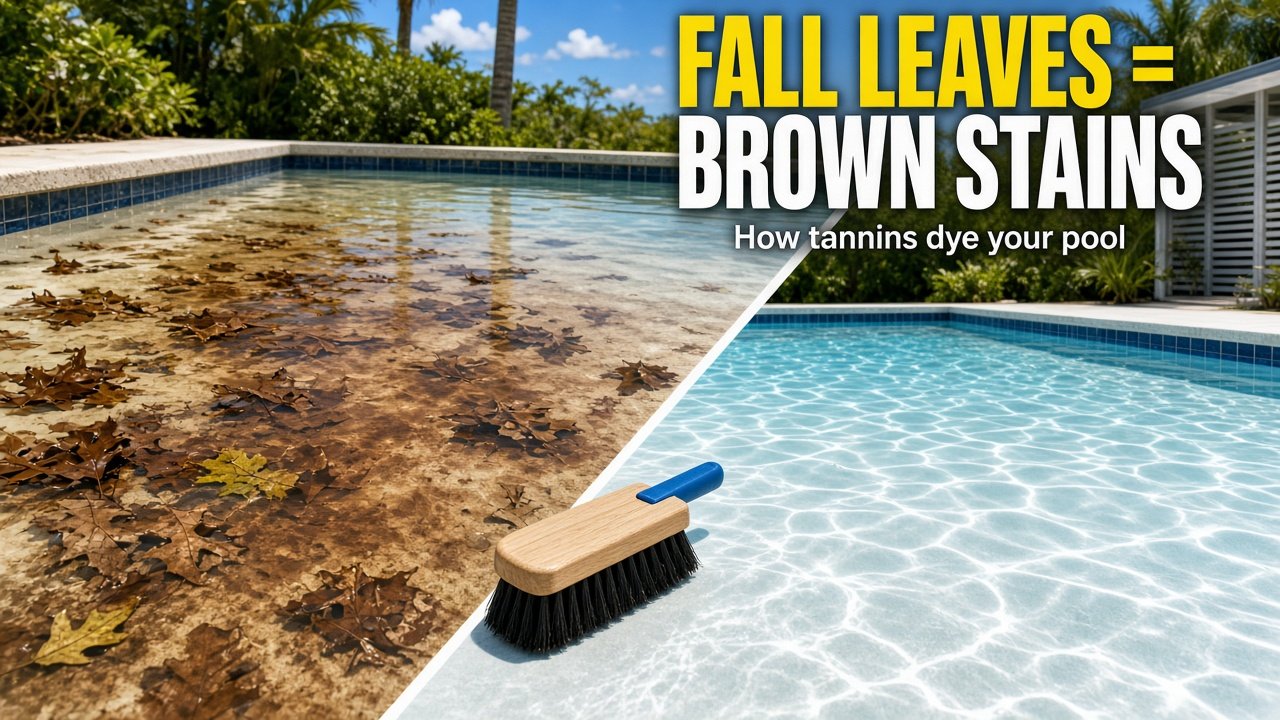
You brush the pool, the water looks clear, and yet there they are: brownish, tea-colored shadows on the floor, usually right under the trees. Many homeowners think it’s rust. Others are sure it’s algae. In most Florida pools during the fall, it’s neither. It’s something much more natural, and once you know what it is, it’s surprisingly easy to fix. If you’re dealing with tannin stains in pool issues in Brandon or nearby Tampa Bay communities, this guide is for you.
Meet the Culprit: Tannins
Tannins are natural compounds found in leaves, bark, acorns, seed pods and berries. They’re the same family of molecules that give tea, coffee and red wine their color. When leaves sit in water, tannins slowly leach out, essentially brewing a weak “leaf tea” on your pool floor. Over hours or days, that color bonds to the plaster or pebble surface and leaves a stain shaped like the leaf itself.
Why Fall Makes It Worse in Florida
Florida doesn’t have a dramatic autumn, but plenty of trees still shed in October and November, including live oaks, laurel oaks, maples, palms dropping fronds and fruiting trees. Cold fronts bring wind, and wind delivers leaves straight into the pool. Many leaves sink once they become waterlogged, and sunken leaves are the ones that stain because they sit still against the surface.
- More falling leaves and seed pods
- Windy cold fronts that blow debris in
- Owners swimming less, so debris sits longer
- Pumps often running fewer hours, reducing skimming
Tannin Stain, Rust or Algae? How to Tell
A quick test helps you identify the stain before you treat it. Place a chlorine tablet in a sock (or use a little granular chlorine in a sock) and hold it directly on the stain for 30 seconds:
- Stain lightens or disappears: organic stain (tannins, leaves, berries).
- No change: likely metal. Try a vitamin C tablet; if it fades, it’s probably iron.
- Brushes away with a cloud: likely algae, often mustard algae, which needs a different treatment.
How to Remove Tannin Stains in Your Pool
Organic stains respond well to oxidation. The general approach is:
- Remove all leaves and debris first, including the skimmer and pump baskets.
- Balance pH to around 7.2–7.4, where chlorine works most efficiently.
- Shock the pool to raise free chlorine and let it work overnight with the pump running.
- Brush the stained areas well the next morning.
- For stubborn spots, spot-treat with granular chlorine carefully placed on the stain (avoid this on vinyl liners, which can bleach).
Most tannin stains fade within one to three days. Always follow product labels and avoid mixing chemicals.
Don’t Forget the Water Itself
Tannins don’t only stain surfaces; they also consume chlorine. Every leaf in the water is organic material your sanitizer must break down. That’s why pools with heavy leaf loads in fall often show low chlorine readings even when you added plenty. Leaving debris in the pool can open the door to algae.
How to Prevent Fall Stains
- Skim daily during windy weeks, especially after a cold front.
- Use a leaf canister on your vacuum line if trees are close to the pool.
- Trim branches that hang directly over the water.
- Keep pump run time sufficient for good skimming.
- Consider a cover if your pool will go unused for days.
Common Mistakes That Make Fall Stains Worse
When homeowners see a dark spot on the pool floor, the first instinct is often to reach for the strongest product on the shelf. That can backfire. Pouring acid on an organic stain won’t remove it, and it can etch plaster and throw off your water balance for days. Another frequent mistake is adding a metal sequestrant to a stain that is actually organic, which wastes money and leaves the stain in place.
It’s also common to shock the pool without first removing the leaves. Chlorine then spends its strength breaking down debris that could have been scooped out in two minutes, and the stain barely changes. Finally, many owners turn the pump down in fall to save energy just when leaf season demands more skimming. Fix the cause first, then treat the stain, and always identify it before choosing a product.
- Don’t use acid on organic stains.
- Don’t shock with leaves still in the pool.
- Don’t cut pump time during heavy leaf drop.
Frequently Asked Questions
Are brown pool stains from leaves permanent?
Usually not. Tannin stains are organic and often fade with shock and brushing if treated early.
How do I tell tannin stains from rust?
Rub a chlorine tablet on the stain: if it lightens, it’s organic (tannin); if not, it may be metal.
Keep reading: learn about lovebug season and why your pool loses water in fall.
Conclusion
Those brown fall stains are usually your trees making tea in your pool. Tannins are natural, common and very treatable, but if you ignore them, they lower your chlorine, set into the surface and make even clean water look neglected.
Final Recommendations
Test the stain before treating it, keep leaves out as quickly as possible, and keep chlorine and pH balanced through the season. If your yard has a lot of trees, a weekly professional service makes a real difference. Pro Quality Pools removes debris, brushes surfaces and balances your water every visit so stains never get a chance to settle in.
Need Help With Your Pool in Brandon and Nearby?
Pro Quality Pools is a family-owned pool cleaning company serving Brandon, Valrico, Riverview, FishHawk, Seffner and Dover, Florida. Explore our pool cleaning and maintenance services or contact us today for a free quote.