Why Your Chlorine Lasts Longer in November (and the Mistake Most Owners Make)

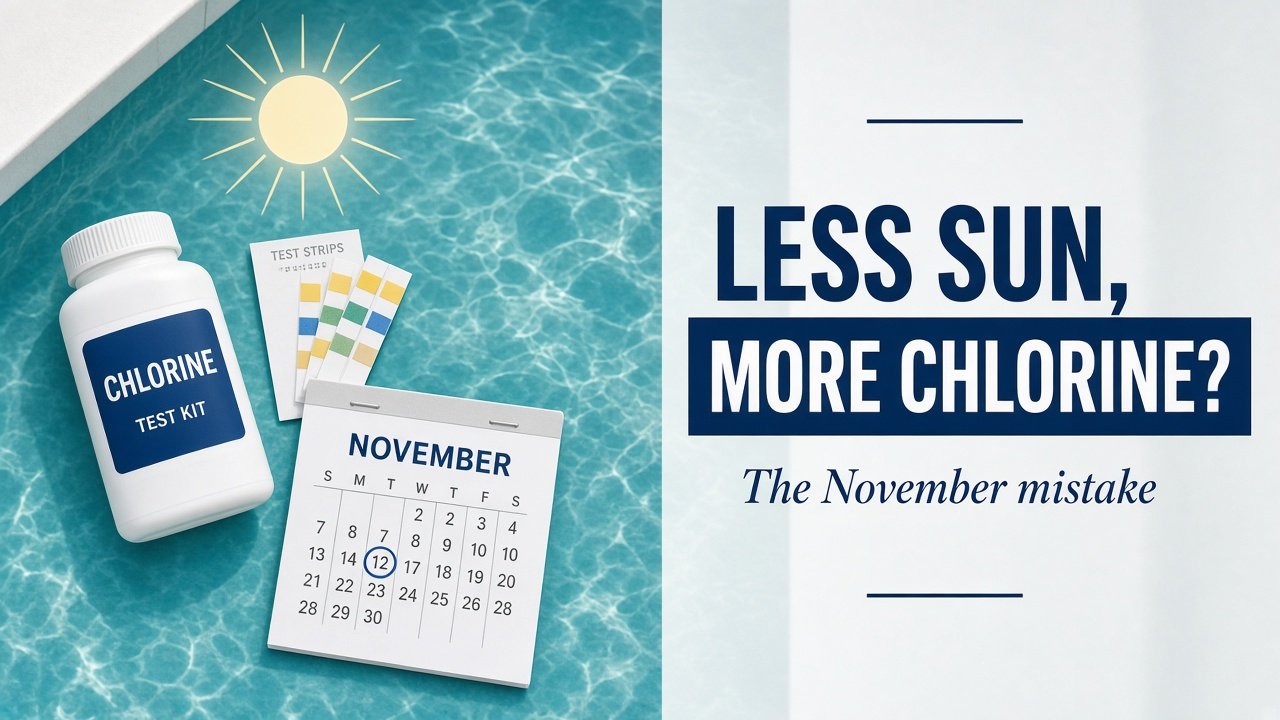
Here’s something many Florida pool owners notice without understanding why: in November, the same amount of chlorine seems to last much longer than it did in August. Some people keep adding the same summer dose out of habit and end up with red eyes, faded swimsuits and a strong chemical smell. The reason is simple science, and adjusting to it can save you money and protect your equipment. If you’re dealing with pool chlorine levels in winter issues in Brandon or nearby Tampa Bay communities, this guide is for you.
The Sun Is Chlorine’s Biggest Enemy
Ultraviolet (UV) light from the sun breaks down free chlorine. On an unprotected pool in peak summer sun, a large share of chlorine can be destroyed within just a few hours. That’s why cyanuric acid, also called stabilizer, is added: it acts like sunscreen for chlorine.
In fall and winter, the sun sits lower in the sky, days are shorter and UV intensity drops considerably. Less UV means less chlorine is destroyed each day.
Cooler Water Means Slower Demand
Water temperature matters just as much. Bacteria and algae grow faster in warm water, and chemical reactions also happen faster. When Florida pools cool into the low-to-mid 70s, organisms grow more slowly, so chlorine is consumed more slowly. Fewer swimmers also mean less sweat, sunscreen and body oils entering the water.
- Less UV radiation
- Cooler water temperatures
- Fewer swimmers and less organic load
- Slower algae and bacteria growth
The Risk of Using Summer Doses in Fall
If you keep adding the same amount of chlorine you used in July, levels can climb too high. Excess chlorine can cause:
- Skin and eye irritation for swimmers
- Faster fading of swimsuits and pool accessories
- Damage to vinyl liners, seals and some equipment over time
- Wasted money on chemicals you don’t need
Chlorine tablets also lower pH slightly over time, and they contain stabilizer. Overusing them can push cyanuric acid too high, which reduces chlorine’s effectiveness. It’s a hidden problem many owners discover only after a water test.
But Don’t Cut Back Too Much
The opposite mistake is also common. Some homeowners assume their pool “doesn’t need anything” in winter. Florida rarely gets cold enough to stop algae completely. Leaves, pollen and rain from cold fronts keep adding contaminants. The goal is to adjust, not to stop.
How to Adjust Pool Chlorine Levels in Winter
- Test free chlorine and pH at least weekly instead of dosing by habit.
- Aim to keep free chlorine within the recommended range for your stabilizer level.
- Reduce tablets in your feeder or chlorinator gradually and watch the results.
- If you have a salt system, lower the output percentage as water cools.
- Check cyanuric acid monthly to make sure it hasn’t built up.
- Re-test after heavy rain from cold fronts, which can dilute chemicals.
Understanding Your Test Results in Cooler Months
Testing is only useful if you know what the numbers mean. Free chlorine is the active sanitizer available to kill bacteria and algae. Combined chlorine, also called chloramines, is chlorine that has already reacted with contaminants. If you notice a strong “chlorine smell,” it is often chloramines, not too much free chlorine. In that case, the pool may actually need a shock to burn off those compounds.
Cyanuric acid is another number to understand. Stabilizer doesn’t break down easily and only leaves the pool through splash-out, backwashing or dilution. In the dry fall season, when rain is less frequent, it can slowly accumulate, especially if you rely on stabilized tablets. Many pool professionals relate the ideal free chlorine level to the stabilizer level, so a pool with higher cyanuric acid needs more free chlorine to stay protected.
Finally, keep an eye on pH. Cooler water doesn’t stop pH drift, and tablets can slowly push it down. Balanced pH helps chlorine work efficiently and protects surfaces and equipment, so it’s worth checking every time you test chlorine.
Frequently Asked Questions
What chlorine level should a pool have in winter?
Keep free chlorine around 1-3 ppm, adjusted to your cyanuric acid level, just like summer.
Why does my pool need less chlorine in November?
Weaker sun breaks down less chlorine and cooler water slows bacteria and algae growth.
Keep reading: learn about cutting pump hours in fall and preventing calcium scale.
Conclusion
Chlorine lasts longer in November because the sun is weaker, the water is cooler and fewer people are swimming. Recognizing that change helps you avoid over-chlorination, protect your pool surfaces and keep chemical costs down without risking algae.
Final Recommendations
Test instead of guessing, lower your chlorine dose or salt cell output gradually, and keep an eye on stabilizer. Seasonal changes are exactly where professional experience pays off. Pro Quality Pools adjusts your chemistry to the season on every weekly visit, so your water stays safe, comfortable and balanced all year long.
Need Help With Your Pool in Brandon and Nearby?
Pro Quality Pools is a family-owned pool cleaning company serving Brandon, Valrico, Riverview, FishHawk, Seffner and Dover, Florida. Explore our pool cleaning and maintenance services or contact us today for a free quote.