Why the Dry Season Is the Best Time to Clean Your Pool Screen Enclosure

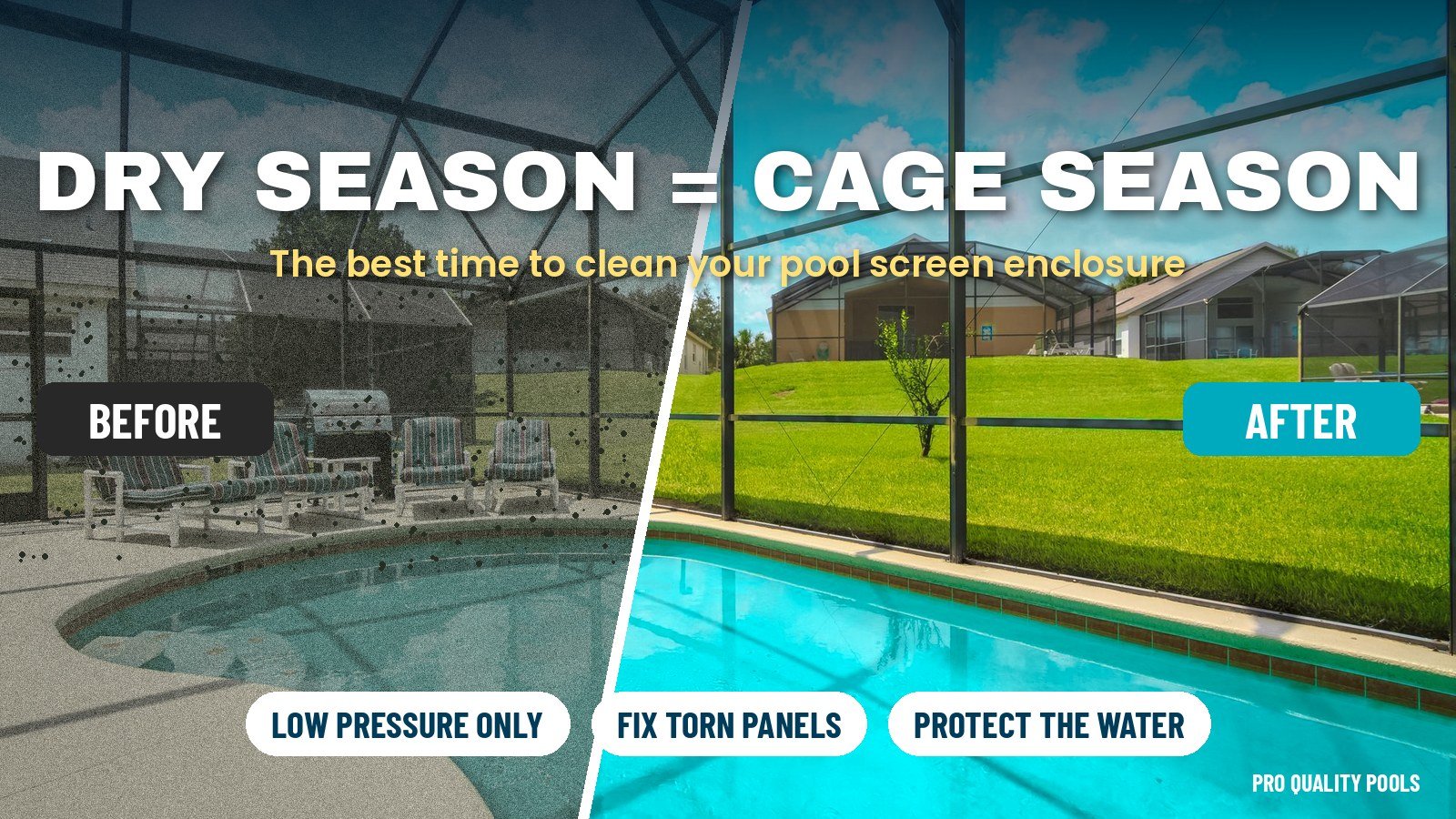
Look up the next time you’re in your lanai. If the aluminum frame has gray streaks, the screen looks dusty or the corners are dotted with black spots, your cage is overdue for attention. In Florida, the dry season, which runs roughly from November through May, is the best window of the year for pool screen enclosure cleaning. For homeowners in Brandon, Valrico and across the Tampa Bay area, here’s why timing matters and how to do it right.
Why the Dry Season Is the Best Time
- Fewer afternoon storms. In summer, a daily thunderstorm can soak your work and splash dirt right back onto the screens. In fall, you get many dry days in a row.
- Mild temperatures. Cleaning a cage at 95°F with high humidity is exhausting. November mornings are comfortable.
- Mold and mildew dry out. Summer humidity feeds the black and green growth on frames and screens. Cleaning it off now, when it can’t immediately come back, gives you a longer-lasting result.
- Before the holidays. A clean enclosure makes a real difference if you’re hosting Thanksgiving or Christmas outside.
- Before spring pollen. Starting the pollen season with clean screens makes them easier to maintain.
What Builds Up on a Pool Cage
Over a Florida summer, the enclosure collects a mix of things that affect both how it looks and how it protects your pool:
- Mold and mildew on gutters, beams and the screen mesh.
- Dust, sand and pollen that slowly clog the mesh.
- Spider webs, wasp nests and insect remains, including oily residue from lovebug season (more in our post on lovebugs in pool).
- Bird droppings and oak debris on the roof panels.
- Leaves and gunk in gutters that overflow onto the deck.
When it rains, much of that buildup washes down into your pool. That adds organics and phosphates that consume chlorine and feed algae.
How to Do Pool Screen Enclosure Cleaning Safely
- Use low pressure. A pressure washer on a high setting can tear screens and pop the spline out of the frame. Use a wide fan tip and keep a good distance, or use a garden hose with a spray nozzle.
- Choose a gentle cleaner. A mild soap solution or a product made for screens and aluminum is usually enough. Avoid strong bleach mixtures in large amounts, since runoff goes straight into the pool and onto your plants.
- Work top to bottom. Start with the roof and gutters if you can safely reach them, then the walls, and finish with the deck.
- Use a soft brush. A long-handled soft brush lifts mildew from frames without scratching the paint.
- Rinse well. Leftover soap attracts dirt.
- Protect the pool. Run the pump during and after cleaning, skim the surface and empty the skimmer basket when you’re done. Test the water the next day.
Never climb onto the enclosure roof. Screen panels and thin beams can’t hold a person. For high sections, hire a professional.
Repair Before You Clean (or Right After)
Cleaning is the perfect moment to inspect everything closely:
- Torn or sagging panels: even a small tear lets in leaves, frogs and insects. Re-screening one panel is inexpensive compared to a full rescreen.
- Loose spline: the rubber cord that holds screens in the frame dries out in the sun and pops loose.
- Missing screws and loose brackets: summer winds can loosen hardware.
- Door closers and latches: make sure the door closes and latches by itself, which is important for child safety.
- Corrosion: white powder or pitting on aluminum near the ground or the pool can indicate corrosion that needs attention.
Don’t Forget the Deck and Tile
Once the cage is clean, the rest of the area will look dull in comparison. Take the opportunity to rinse the deck, wipe the pool furniture and check the tile line. White crust on the tile is usually calcium scale, which builds faster during the dry season. Learn more in our guide to calcium scale in your pool.
How Often Should You Clean Your Enclosure?
For most Tampa Bay homes, a full cleaning once or twice a year keeps the enclosure in good shape. Homes near lakes, ponds or large oaks may need it more often. A light rinse of the lower panels every month or two keeps dust and webs from building up.
Frequently Asked Questions
Can I pressure wash my pool screen enclosure?
Yes, but only with low pressure and a wide fan tip held at a distance. High pressure can tear screens and pull out the spline.
What’s the best time of year to clean a pool cage in Florida?
The dry season, from about November through May, offers dry days, mild temperatures and less chance of mold coming right back.
Conclusion
Your pool screen enclosure works hard all summer, protecting the pool from leaves, bugs and debris. The dry season is the ideal time to return the favor. A gentle cleaning and a quick repair check keep it looking good, protect your water and make your lanai ready for the holidays.
Final Recommendations
Pick a dry, calm morning this month, use low pressure and mild cleaner, repair torn panels and loose spline, and run the pump while you work. Keep the area clean with light rinses through spring. And while you take care of the cage, let us take care of the water: our weekly service keeps your pool clean and balanced all season.
Need Help With Your Pool in Brandon and Nearby?
Pro Quality Pools is a family-owned pool cleaning company serving Brandon, Valrico, Riverview, FishHawk, Seffner and Dover, Florida. Explore our pool cleaning and maintenance services or contact us today for a free quote.