Saltwater Pool Cell Care in Cooler Florida Weather

Cooler mornings can change how a saltwater pool behaves, even when the afternoon still feels warm. In Brandon, Valrico and the Tampa Bay area, November is a good time to check your salt chlorinator’s operating conditions rather than automatically turning its output up or down. A saltwater pool still needs chlorine, and clear water alone does not tell you whether enough is present.
Start with three things: a water-temperature reading, a reliable free-chlorine and pH test, and the manual for your exact chlorinator. Together, they help separate normal seasonal behavior from a problem that needs attention.
Why cooler water changes salt-cell operation
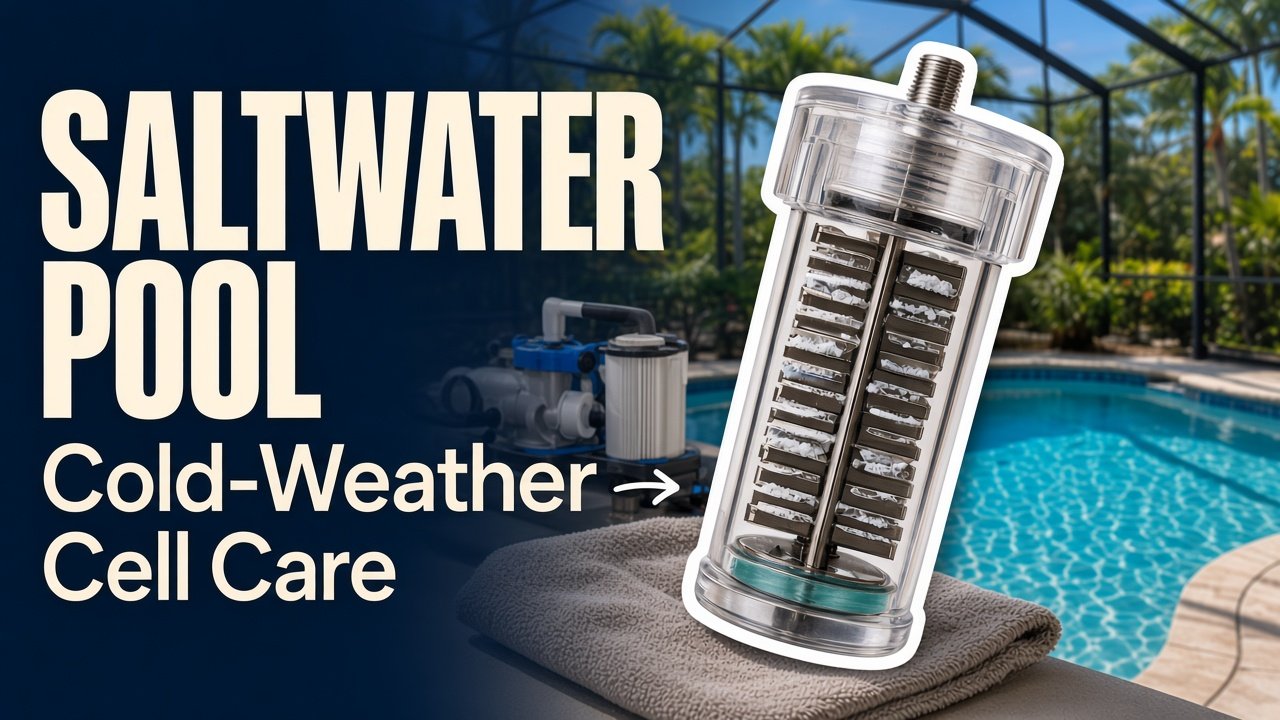
A salt cell uses electricity to convert dissolved salt into chlorine while water flows through it. Its ability to operate depends on temperature, flow, salinity and the condition of its electrodes. Some models reduce output or stop producing chlorine below a specified water temperature to protect the equipment. That threshold is not universal.
For example, Pentair’s IntelliChlor documentation describes a cold-water cutoff around 52°F, with a stated tolerance. That is an equipment-specific example, not a temperature every Tampa pool reaches in November and not a rule for all brands. Read the actual water temperature and your controller’s message before assuming the cell has failed.
A practical cooler-weather checklist
Test before changing the output setting
Measure free chlorine and pH using your kit’s instructions. Record the date, water temperature and current output setting. Check the stabilizer level and other balance parameters on the schedule recommended for your pool. Compare the results with the product labels, equipment manual and a qualified pool professional’s guidance; do not choose a setting from a neighbor’s pool.
A percentage on the controller is not a chlorine reading. Production also depends on how long the system runs and whether the cell is actually generating. After an adjustment, retest rather than assuming the problem is solved. Our guide to seasonal chlorine demand explains why shorter days do not eliminate the need for testing.
Read alerts and check the basics
Look for cold-water, low-flow or salt-related warnings and write down the exact message. From a safe position, note water level, visible leaks and whether normal circulation is present. A dirty basket or filter can contribute to circulation problems, but never bypass a flow switch or force a chlorinator to run without adequate flow.
Do not add bags of salt solely because a display changed during a cold spell. Confirm salinity with an appropriate independent test and follow the manufacturer’s temperature-related guidance. Adding unnecessary salt creates another problem and is not a repair for a damaged sensor or restricted flow.
Inspect only as the manual permits
Check the manual’s inspection schedule and safe shutdown procedure. If you are not comfortable isolating equipment and releasing pressure correctly, have a qualified professional inspect it. White scale may need attention, but routine acid washing without evidence of deposits can shorten cell life. Never scrape electrodes with metal tools or improvise a cleaning mixture.
Cleaning method, protective equipment and disposal requirements depend on the model and cleaner. This article intentionally does not provide an acid recipe. Ask a professional to handle chemical cleaning if you are unsure, and correct the underlying water-balance issue rather than repeatedly treating deposits. See also our explanation of calcium scale during Florida’s dry season.
If the cell stops producing chlorine
Keep testing the water and arrange a compatible sanitizing plan with your pool professional. Do not assume a cold-water standby message means the pool can go without sanitizer. Never mix chlorine products, put chemicals in an unapproved location, or use a universal dose from the internet. Follow each product’s label and keep swimmers out until water quality meets the applicable guidance.
Persistent alarms, damaged connections or unexplained low chlorine deserve diagnosis. Electrical faults belong with a qualified professional, not an improvised repair beside the pool.
Frequently asked questions
Should I turn off my saltwater system for November?
Not simply because the calendar changed. Follow the equipment’s temperature limits and use test results to guide a seasonal operating plan. Florida pools are not all winterized the same way.
Does a cold-water warning mean I need a new cell?
Not necessarily. It may be normal protection for that model. Check the manual and measured temperature; seek help if the warning persists outside the specified operating conditions.
Does a saltwater pool still need regular cleaning?
Yes. Salt generation does not remove leaves, brush walls or maintain the filter. Pro Quality Pools offers weekly maintenance with cleaning, chemical balancing and equipment inspection. Ask about care for your Brandon-area pool without assuming a cell replacement is necessary.
Sources and equipment guidance
Consult the Pentair IntelliChlor installation and user’s guide for that product’s operating limits, and the CDC’s home pool water testing guidance. Your own equipment manual takes priority for model-specific procedures.