How vacuuming the pool really works

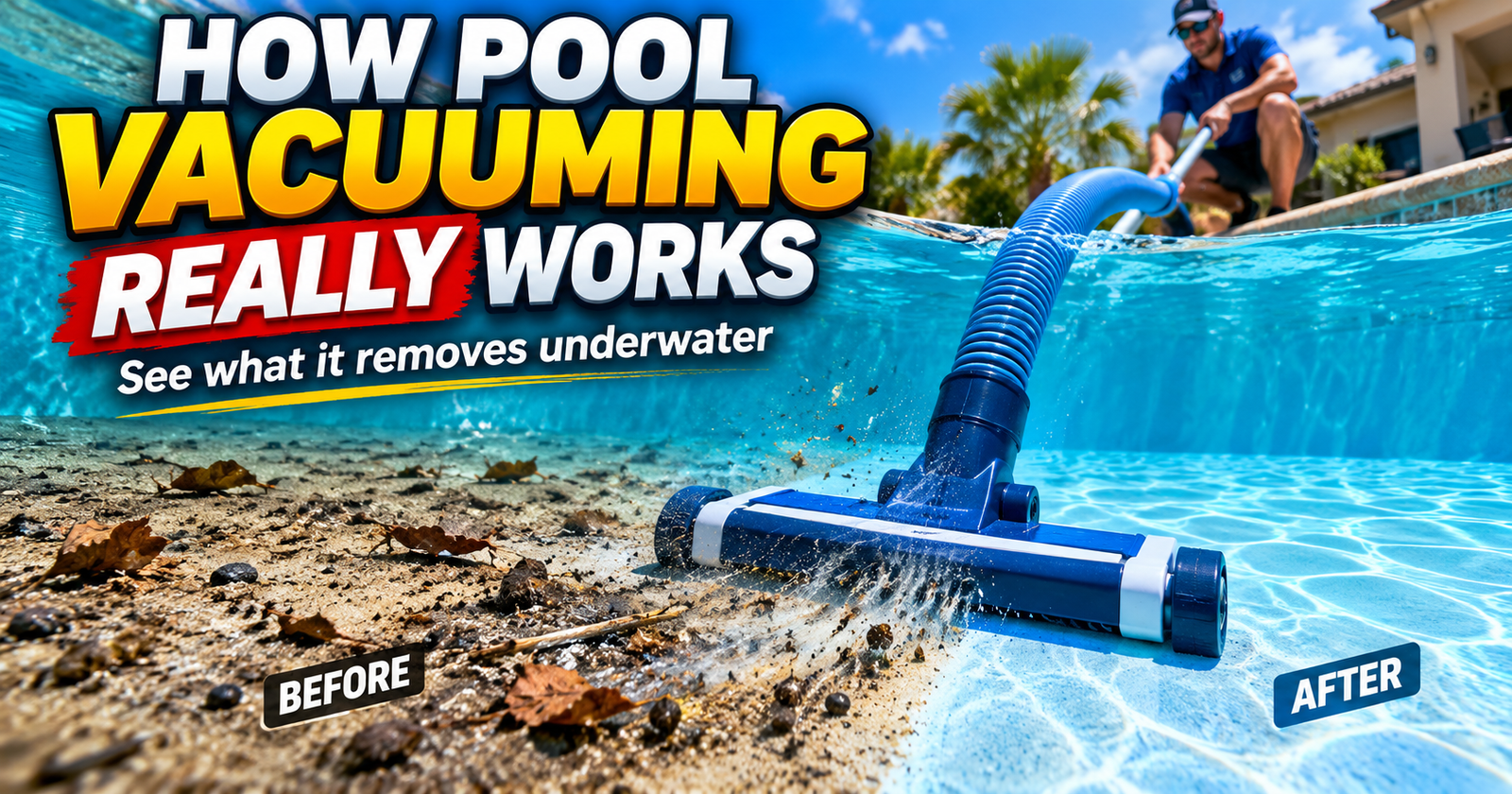
Vacuuming the pool floor seems as simple as running a vacuum cleaner over a living room rug, but underwater, the rules change entirely. It is not about sucking up dirt by brute force, but rather moving water currents with great patience so as not to stir up the bottom.
Why going fast ruins the job
Water is heavy and offers resistance. When the vacuum head goes down to the floor, any sudden movement creates an invisible current that lifts the dirt before it can be swallowed:
- Floating dust: If moved too quickly, the water pushes particles upward instead of sucking them in. The pool might look clean when the job is done, but hours later, all that dust simply falls back to the floor.
- The vacuum head trap: The device only pulls water through a small slot close to the ground. If it lifts off the bottom, it loses suction power, and the water simply flows around the dirt without moving it.
The water’s journey step by step
Vacuuming isn’t just about walking a long hose around; it is a closed circuit where water travels through pipes until it returns completely clean:
| Step | What happens inside | Why it matters |
| Filling the hose with water | All the air is pushed out before connecting the hose to the wall. | If air enters the pump, the motor runs dry and can burn out. |
| The pump basket | It catches large leaves, rocks, or twigs. | It prevents hard objects from breaking the spinning impellers that push the water. |
| The filter | Water passes through fine sand or a paper cartridge. | It traps loose dirt so the return jet shoots out crystal clear water. |
Curious facts almost no one knows
Behind this process are invisible details that explain why a pool sometimes refuses to clear up:
- The filter spits out the finest dust: The microscopic dust resting on the bottom is so thin that it passes straight through the grains of sand in the filter and returns to the pool. To completely remove it, sometimes the only option is to bypass the filter and send that dirty water straight down the street drain.
- Water can boil cold inside the hose: If the hose gets kinked or completely blocked, the extreme suction force creates vacuum bubbles. When these bubbles crash at high speed against the pump’s motor, they implode with enough force to chip away at the machine’s plastic or metal over time.
- Vacuuming changes the water’s chemistry: By agitating the water so much and forcing it through pressurized pipes, natural gases trapped in the liquid are released into the air. This can slightly alter the chemical balance of the water, even without adding a single chemical product.
Vacuuming well is a game of patience: whoever moves the pole slowly finishes sooner, and whoever rushes ends up cleaning everything twice.