When to clean, repair, or replace a pool filter

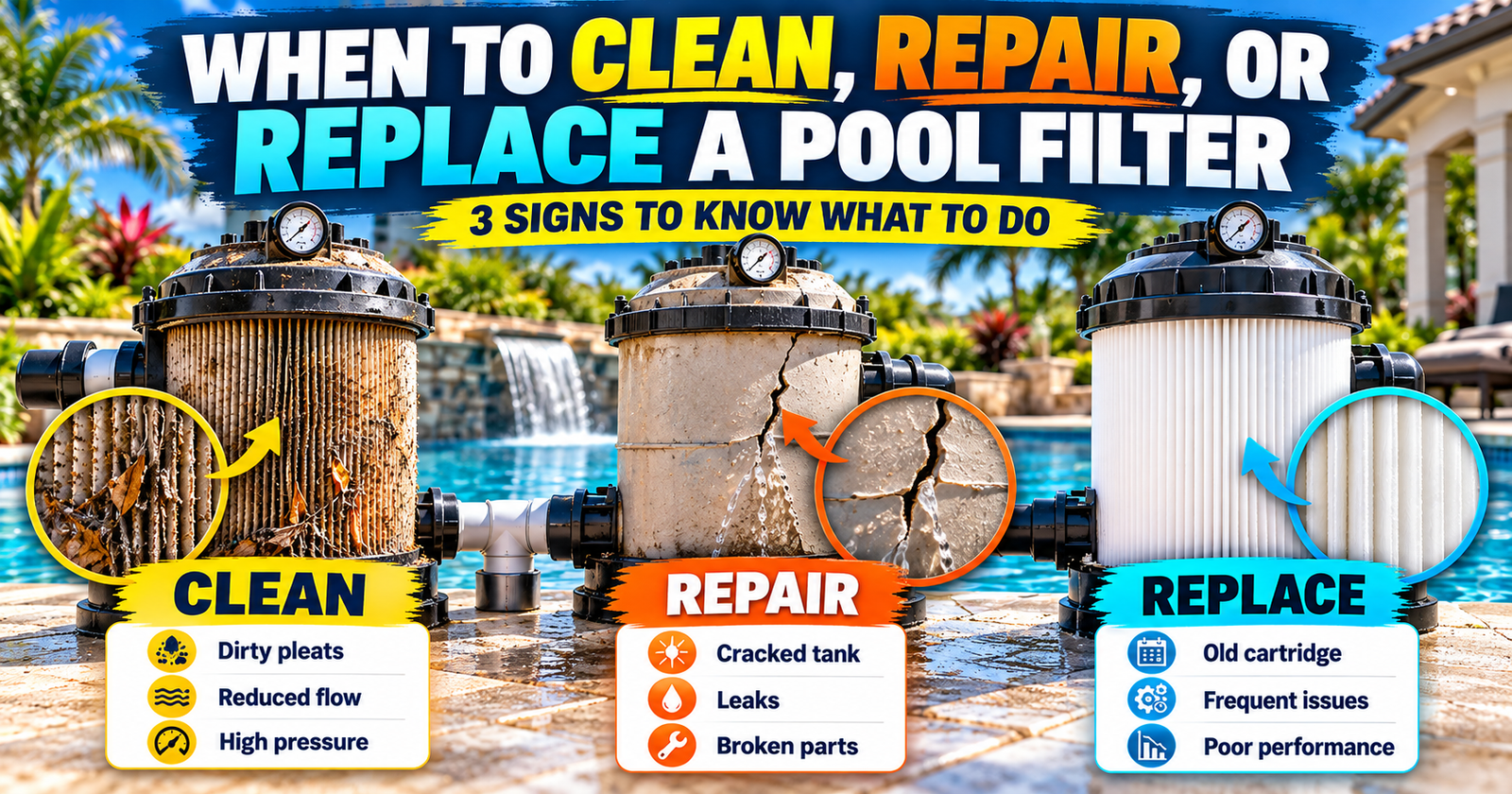
Crystal clear water hides a complex ecosystem where the filter acts as the kidney of the entire hydraulic system. At first glance, water movement might seem sufficient, but on a microscopic level, thousands of particles, oils, and bacteria are in constant circulation. Understanding the physical and hydraulic signals of the filtration equipment prevents this delicate balance from collapsing.
The exact moment to clean
Cleaning does not depend on a strict schedule, but rather on the pressure and physics of the water flow. The pressure gauge is the primary indicator: when the pressure rises between 8 and 10 PSI above the clean baseline, the system has reached its retention limit.
However, there is a lesser-known phenomenon called channeling. If the filter (especially sand filters) accumulates too much dirt and cleaning is delayed, the water, always seeking the path of least resistance, will bore micro-tunnels through the mass of debris. As a result, water passes through the tank without being cleaned at all. The pressure gauge might even show a deceptive pressure drop that appears normal, but water quality will degrade rapidly because the filter bed has been compromised.
- The hidden chemical indicator: If free chlorine levels drop inexplicably fast despite no excess sun exposure or bather load, the filter tank is harboring bacterial colonies. The sanitizer is being entirely consumed inside the filter fighting trapped debris, indicating that a backwash or a deep cleaning of the cartridges is urgent.
Signs that demand a repair
A failure does not always dictate a complete equipment replacement. External water leaks are obvious, but internal leaks are the true silent destroyers of clean water.
- Return dust: If, while vacuuming the bottom, a fine dust immediately re-enters through the return jets, the filter media is not saturated; it is being bypassed. In multiport valves, there is a small rubber gasket known as a spider gasket. When it becomes worn, dried out, or pinched, dirty water crosses the internal channels and mixes with the clean water. Replacing this part solves the vast majority of problems where the filter appears not to be working.
- Sand on the bottom: If small mounds of sand appear directly below the return jets, the laterals (the slotted plastic tubes at the bottom of the sand tank) have developed cracks. They require fully emptying the tank and immediately replacing these parts before the tube structure collapses and dumps the filter bed into the pool.
- Acoustic cavitation: A high-pitched whistling or constant gurgling near the top lid is not a normal flow function. It indicates a millimeter-sized air suction leak in the O-rings or the air relief valve, which drastically reduces hydraulic efficiency.
The point of no return: When to replace
All filtration material suffers inevitable mechanical degradation over time, even if the equipment is kept impeccably clean.
In cartridge filters, a brown or grayish color is not the end of their lifespan. The definitive indicator of structural death is the snapping of the banding (the horizontal threads hugging the pleats) or when the synthetic fabric starts fraying and looking “furry.” Once the pleated geometry loosens, the paper collapses on itself, and water pushes past it without filtering.
For sand filters, deterioration happens on a microscopic and tactile level. Over the years, the constant friction of high-speed water erodes the sharp edges of every silica grain. The filter media polishes and becomes completely smooth, taking on the texture of river rocks. Even if the sand looks visually clean, its smooth surface is physically incapable of trapping microscopic particles (20 to 40 microns). If the water remains cloudy despite perfect chemical balance, the sand has lost its abrasive retention capacity and must be replaced.
As for the outer tank housing, any hairline fissure in the fiberglass or thermoplastic body dictates a total and immediate equipment replacement. A cracked tank operating under constant pressure is a structural hazard that does not tolerate resins, patches, or external sealants.
Conclusion and final recommendations
The filtration system is the hydraulic backbone that sustains the delicate balance of the water. Its maintenance shouldn’t rely on delayed reactions to cloudiness, but rather on anticipating its mechanical and pressure indicators. To maximize the lifespan and efficiency of the equipment, considering the following technical guidelines is vital:
- The cleaning paradox: A freshly cleaned filter does not operate at its maximum retention capacity. An initial, slight accumulation of debris acts as an additional net, reducing the pore size of the filter media and allowing it to trap microscopic particles that would normally escape. Because of this, washing obsessively on a schedule, before the pressure gauge differential indicates it, is counterproductive to achieving absolute clarity.
- Biofilm and calcification neutralization: Simple backwashing or rinsing with pressurized water removes loose dirt, but it is ineffective against body oils, sunscreens, and calcium hardness scale. These elements stick to the cartridges or sand, gradually cementing the interior until the filter bed becomes a solid, impermeable block. Applying chemical soaks with specific enzymes and degreasers at the end of each season is essential to dissolve this invisible structure.
- Respecting transit speed: Efficient filtration is a contact retention process, not brute force. If the water flow is excessively fast (usually from running the pump at maximum RPMs or an imbalance between motor power and tank capacity), physical pressure will push the dirt right through the filter media, forcing it back into the pool. Maintaining slower, constant transit speeds ensures particles get trapped without subjecting the filter’s internal parts to premature structural fatigue.