Lovebug Season: Why Those Flying Couples Are Bad News for Your Pool

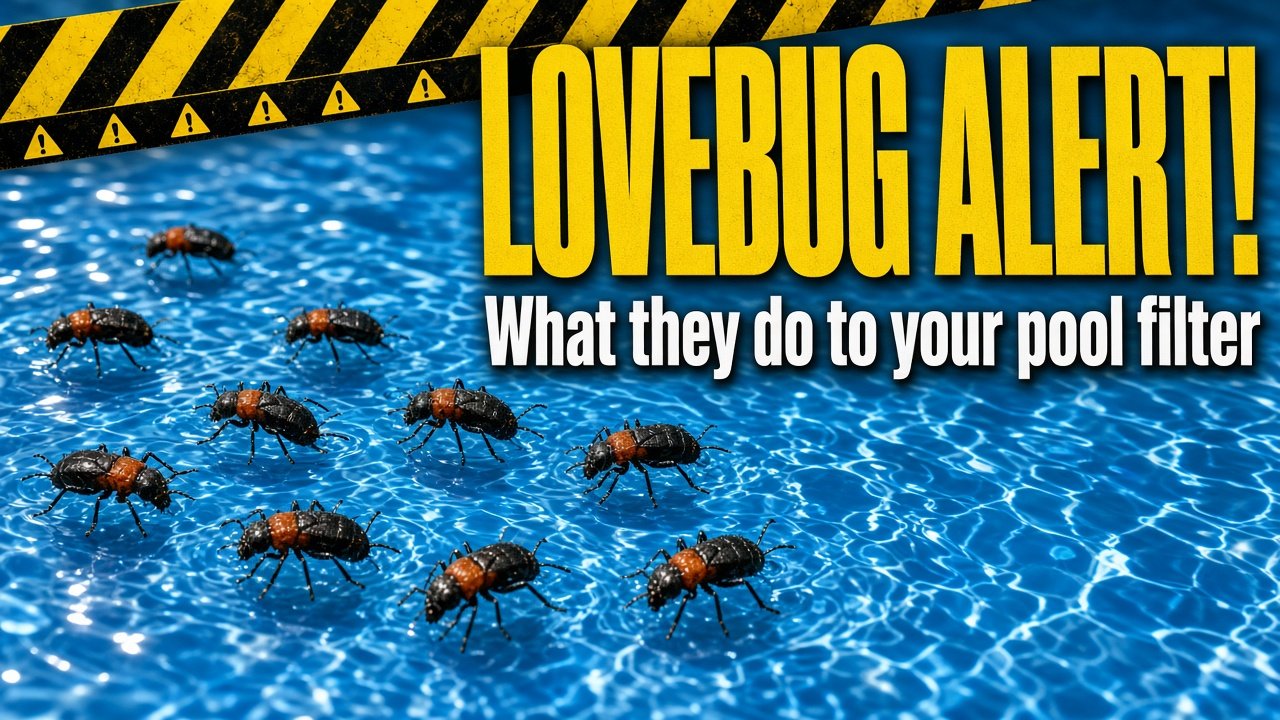
If you’ve noticed little black-and-red flying couples floating in your skimmer, stuck to your pool cage or covering the water’s surface, you’ve met one of Florida’s strangest seasonal visitors: the lovebug. They show up twice a year, in late spring and again in late summer through fall, and many pool owners have no idea how much they can affect water quality. If you’re dealing with lovebugs in pool issues in Brandon or nearby Tampa Bay communities, this guide is for you.
What Exactly Are Lovebugs?
Lovebugs are small flies (Plecia nearctica) known for flying attached in mating pairs. They don’t bite or sting, and they’re harmless to people. Their fall flight typically peaks around late August through October, and they are especially attracted to warm, light-colored surfaces, car exhaust and, yes, sunny bodies of water like your pool.
Why Your Pool Attracts Them
Lovebugs are drawn to heat and reflective surfaces. A sunlit pool deck and the shimmering water surface can act like a magnet. Once they land on the water, the surface tension traps them, and within hours your skimmer basket can be full of them.
The Hidden Problem: Organic Load
A few bugs are just a nuisance. Thousands are a chemistry problem. Every insect is organic material, made of proteins and fats, that your chlorine has to break down. During heavy lovebug days:
- Free chlorine can drop faster than usual.
- Body oils may leave a greasy film or ring at the waterline.
- Decomposing insects add nutrients that can feed algae.
- Skimmer and pump baskets clog, reducing circulation.
Their bodies are also slightly acidic, which is why they damage car paint if left too long. On pool tile and coping, buildup can contribute to stubborn waterline marks.
How to Get Lovebugs Out of Your Pool
- Skim often: daily skimming during peak days keeps bugs from sinking and decomposing.
- Empty baskets: check the skimmer and pump baskets every day or two.
- Watch chlorine: test more frequently and maintain proper free chlorine levels.
- Clean the waterline: wipe tile with a pool-safe tile cleaner to remove oily residue.
- Use an enzyme product: enzymes help break down oils and organic waste, easing the load on chlorine.
- Rinse your cage and deck: a quick hose-down prevents bodies from washing into the pool with the next rain.
Can You Keep Them Away?
You can’t eliminate lovebugs, but you can reduce how many end up in your water. They’re most active in the late morning and afternoon and rest at night. Keeping the pool covered during peak flight hours, if practical, makes a difference. Some homeowners notice fewer bugs in screened pool enclosures, though small gaps still let some in. Avoid insecticides around the pool, which can contaminate the water.
When to Call a Professional
If you see a slimy feel on walls, persistent cloudiness, or chlorine that disappears within a day, the organic load may be more than routine maintenance can handle. A shock treatment, filter cleaning and thorough brushing are usually needed.
What Lovebug Season Does to Your Filter
Most homeowners focus on what they can see floating on the surface, but a large share of the problem ends up inside the filter. Small insect fragments, oils and decomposing material pass the baskets and get trapped in the filter media. Over a heavy lovebug week, filter pressure can rise faster than normal, and flow drops. Less flow means weaker skimming, poorer chlorine distribution and a higher chance of cloudy water.
Keep an eye on your filter pressure gauge. When it climbs about 8–10 PSI above its clean starting point, it’s time to clean the cartridge, backwash a sand filter or clean a DE filter, following the manufacturer’s directions. Cartridge filters especially benefit from a degreasing cleaner after bug season, because insect oils can coat the pleats and reduce filtration even after rinsing.
Cleaning the filter at the end of the fall flight is a simple step that restores circulation and helps your pool enter the cooler months clean and efficient.
Frequently Asked Questions
When is lovebug season in Florida?
Twice a year, usually late April-May and again late August-September, sometimes lingering into fall.
Do lovebugs hurt pool water?
Yes. Their bodies add organic load, use up chlorine and leave an oily film that clogs filters.
Keep reading: learn about brown tannin stains from leaves and chlorine needs in November.
Conclusion
Lovebugs are harmless to people, but in large numbers they quietly drain your chlorine, clog your equipment and leave oily residue. Knowing they come every fall helps you get ahead of the problem instead of reacting to a cloudy pool.
Final Recommendations
Skim daily during peak season, keep baskets empty, test chlorine more often and use an enzyme to fight oily buildup. If you’d rather skip the bug duty, Pro Quality Pools handles skimming, basket cleaning and water balance every week, keeping your pool clear through every Florida season.
Need Help With Your Pool in Brandon and Nearby?
Pro Quality Pools is a family-owned pool cleaning company serving Brandon, Valrico, Riverview, FishHawk, Seffner and Dover, Florida. Explore our pool cleaning and maintenance services or contact us today for a free quote.