How taking periodic baths in your pool improves your mental health

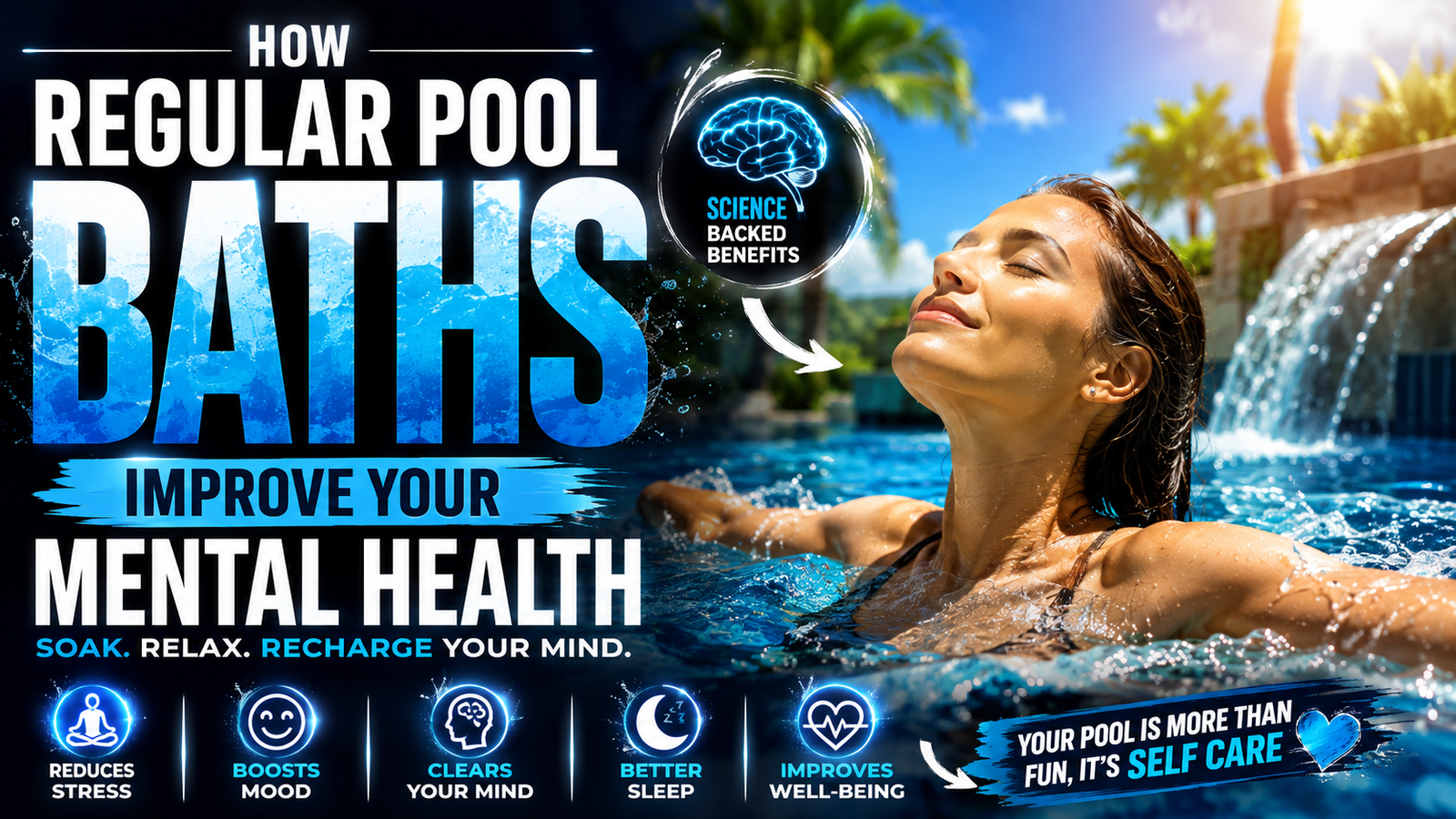
Water has been recognized for centuries for its therapeutic properties, but the neurological and psychological impact of regularly immersing oneself in a controlled aquatic environment goes far beyond simple muscle relaxation. Interacting with a body of water maintained in optimal conditions triggers a series of little-known biological responses that act directly on the nervous system, mitigating chronic stress and mental fatigue.
The reduction of proprioceptive load
When a human body is submerged in water, it experiences a reduction of up to 80% of its weight due to buoyancy. This physical phenomenon drastically decreases what neurology calls the “proprioceptive load.” Proprioception is the mechanism by which the brain constantly tracks the body’s position against Earth’s gravity.
By suspending this physical force, the brain enters a state of energy conservation. That enormous processing capacity, which is usually spent maintaining posture and balance, is freed up and redirected to the prefrontal cortex. This facilitates subconscious emotional processing and allows the mind to organize complex thoughts without voluntary effort.
pH harmony and invisible “micro-stress”
There is a deep link between the chemistry of the environment and the human body’s stress response. The natural pH of human tears and mucous membranes hovers exactly around 7.4.
When water is meticulously balanced to reflect this exact pH level, the organism does not detect the environment as a hostile medium. Conversely, if the water is slightly more acidic or alkaline, the skin and eyes send subconscious alert signals to the brain, generating constant “micro-stress.” An aquatic environment with perfect chemical balance eliminates this imperceptible sensory friction. With no irritation to process, the nervous system can shut down its alert systems and enter a state of genuine rest.
Visual patterns and alpha brain waves
A body of water maintained in a state of crystalline purity is not only visually pleasing but also functions as a neuro-optical tool. When light passes through a clean, moving water surface, it projects undulating reflections known in physics as dynamic fractals.
Cognitive science has shown that observing these fluid patterns induces the production of alpha brain waves in the human brain. These waves are directly associated with states of deep meditation and “relaxed alertness,” inducing a mental calm similar to what an individual experiences just before entering the deep sleep phase.
Acoustic isolation and the vagus nerve
Sound travels differently beneath the surface, eliminating high and chaotic frequencies from the outside environment. Submerging the ears creates an environment of partial sensory deprivation that halts the excess stimuli that saturate the mind daily.
Even more interesting is what happens when water comes into contact with the temperature receptors on the face. This simple act triggers the “mammalian dive reflex.” This ancient biological reflex immediately stimulates the vagus nerve, causing an automatic and involuntary drop in heart rate. This biological process stops cortisol production in its tracks and physically mitigates anxiety symptoms in a matter of seconds, without the individual having to perform any conscious breathing exercises.
The act of periodically submerging oneself represents a powerful environmental intervention. Interacting with a purified and perfectly balanced aquatic environment facilitates a comprehensive neurological reset, allowing the mind to repair daily wear and tear and regain its clarity.