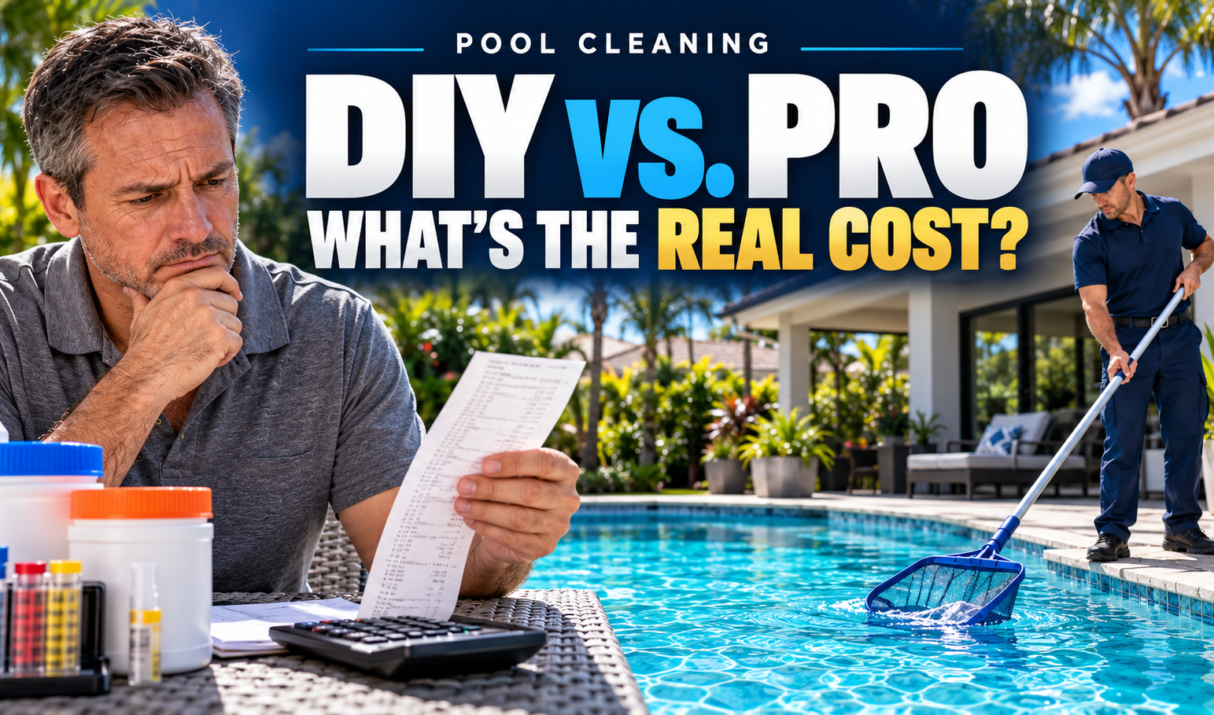

When calculating the monthly budget for a home with a pool, there is a common belief that the DIY pool cleaning cost is low, because handling the maintenance yourself is synonymous with immediate savings. At first glance, the math seems simple: buy a couple of buckets of chlorine, skim the leaves out with a net
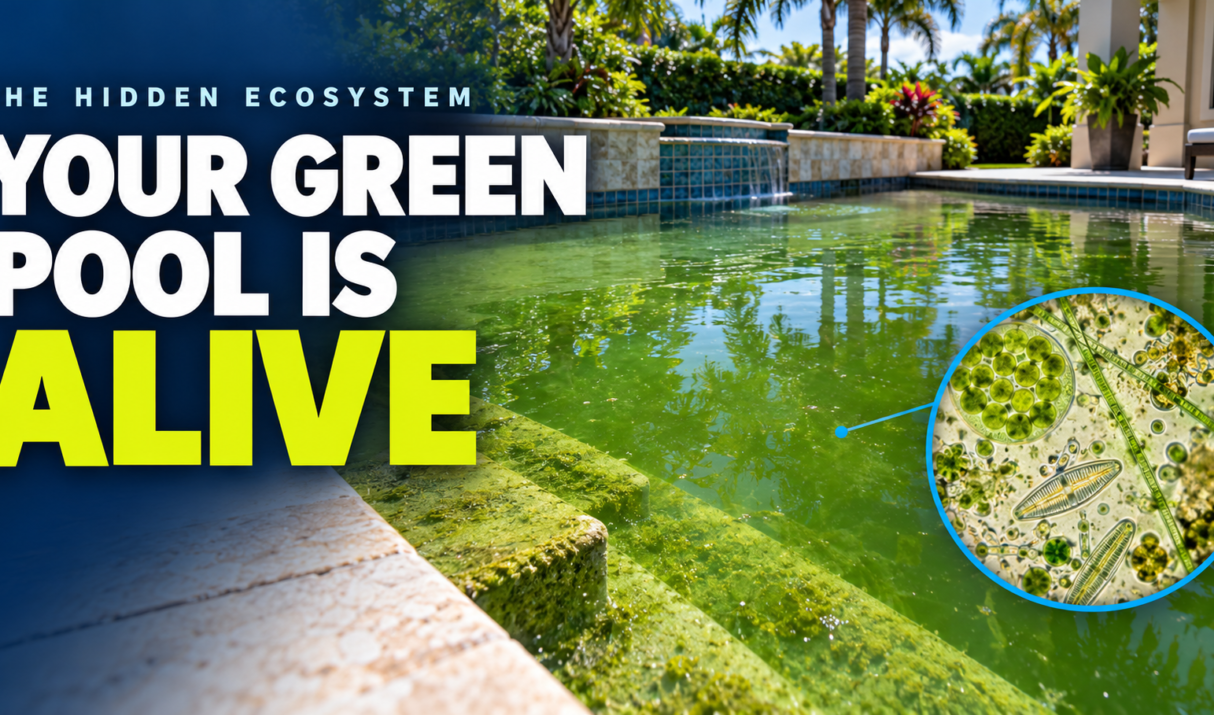
When pool water loses its clarity and takes on an emerald or swampy hue, it hasn’t simply “gotten dirty.” What is actually taking place in a green pool ecosystem is a complete biological transition: an artificial, sterile body of water has been reclaimed by nature, turning into a living, complex, and self-sustaining habitat. Understanding how
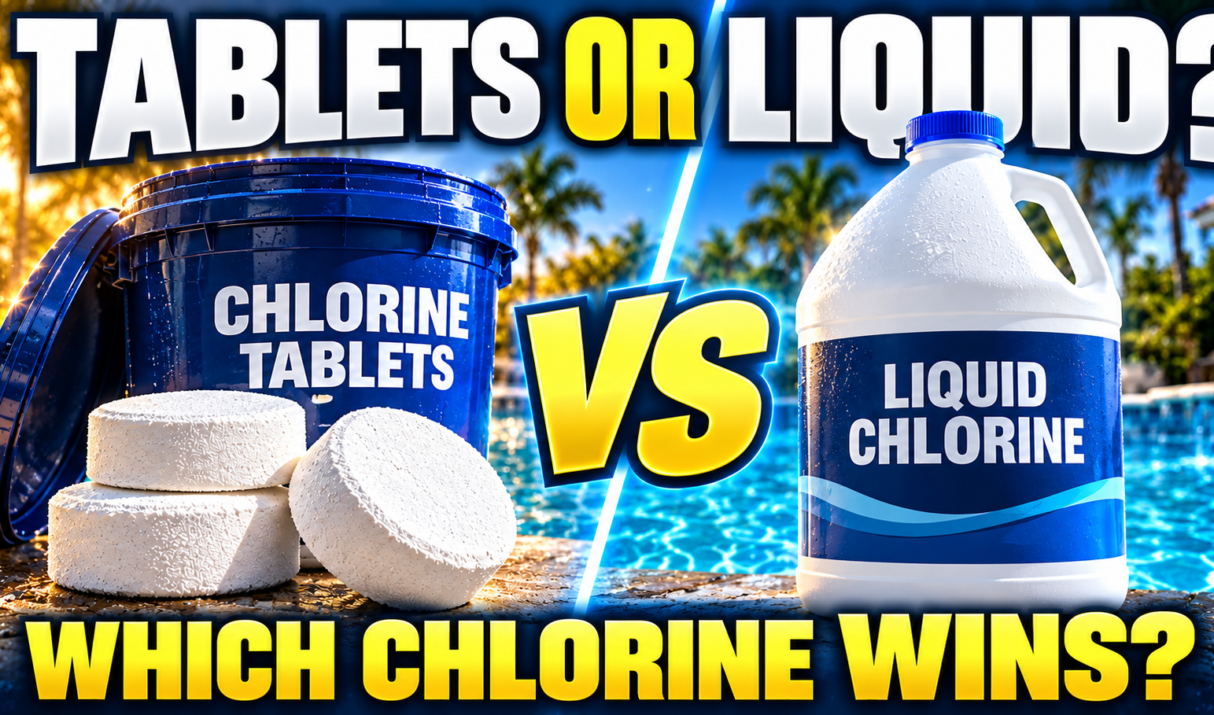
When approaching swimming pool water maintenance, a fundamental question, the classic chlorine tablets vs liquid chlorine dilemma, often arises: whether to use slow-dissolving solid tablets or pour liquid chlorine directly into the water. At first glance, both products seem to fulfill the exact same purpose of keeping the water crystal clear and free of bacteria.
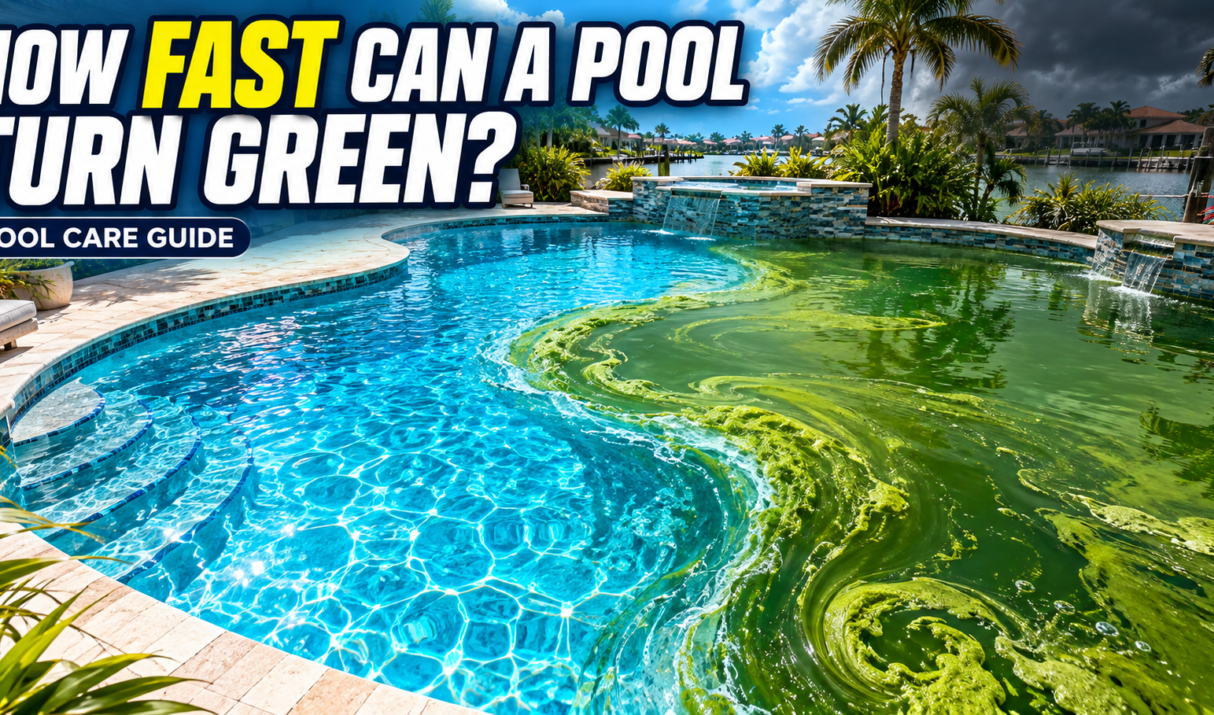
The drastic change from a crystalline oasis to a greenish pond is a phenomenon that seems to occur overnight. And, in fact, from a biological and chemical standpoint, pool water can go from being perfectly clear to acquiring a deep green color in just 24 to 48 hours. To understand the speed of this transformation,

Water has a particular physics that, when ignored, turns a recreational environment into a silent risk. Water safety usually focuses on vigilance, but the very structure and maintenance of the environment dictate much of the real prevention measures. The suction of the filtration system Few understand the mechanical force operating underwater. Circulation pumps act like

Maintaining truly safe and crystal-clear pool water goes far beyond skimming leaves from the surface; it requires constant technical management. The decision between taking on this responsibility or delegating it depends on the ability to handle invisible chemical variables and the internal workings of the hydraulic system. Lesser-known chemical and mechanical factors Comparison: Autonomous Management