How long does it take for a pool to turn green

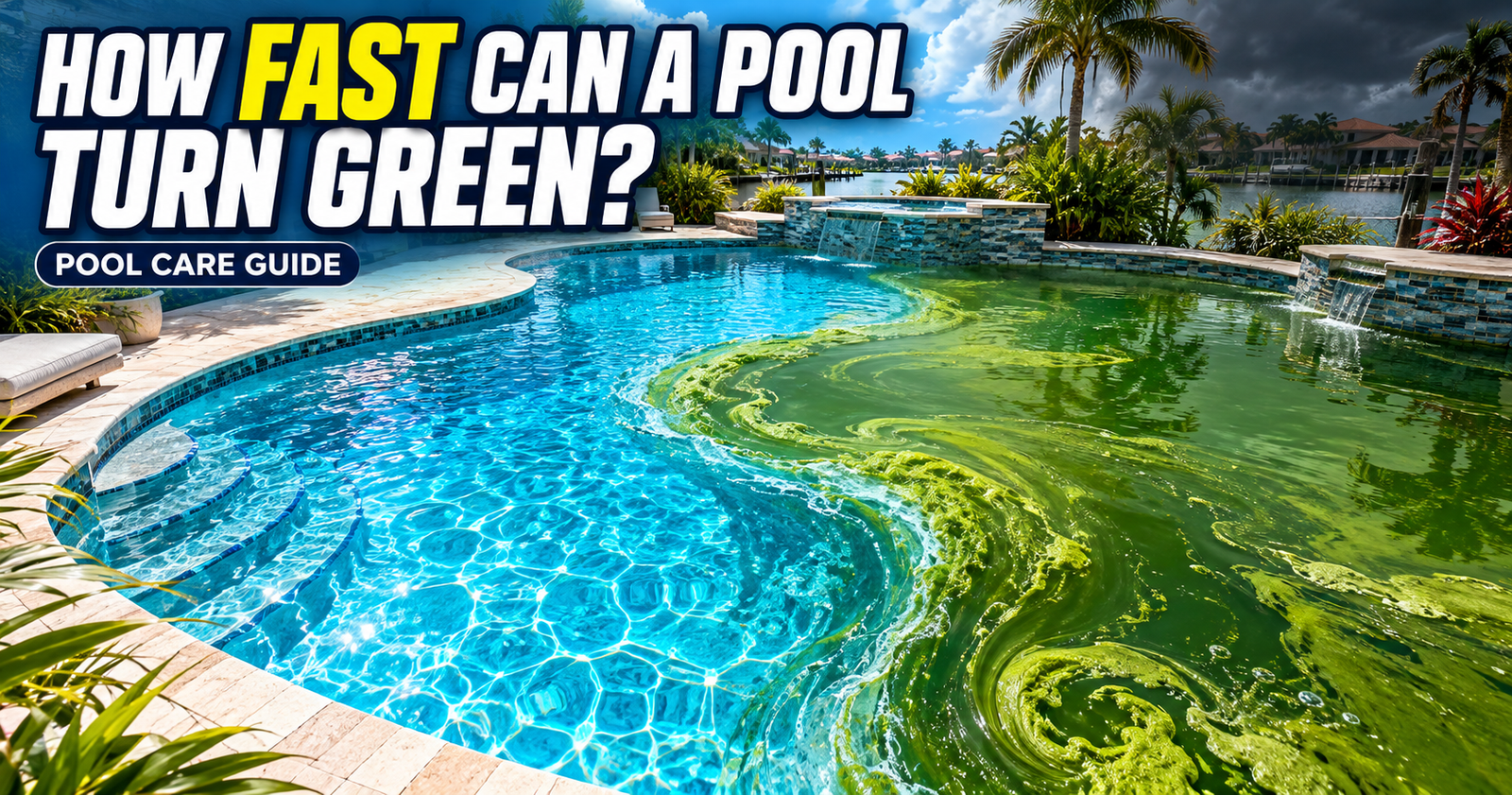
The drastic change from a crystalline oasis to a greenish pond is a phenomenon that seems to occur overnight. And, in fact, from a biological and chemical standpoint, pool water can go from being perfectly clear to acquiring a deep green color in just 24 to 48 hours.
To understand the speed of this transformation, it is necessary to analyze the microscopic environment of the water. Algae spores are constantly present in the air, wind, and rain; they simply float waiting for the ideal conditions to proliferate. When the chemical balance breaks down, these spores find the perfect habitat to multiply at an exponential rate.
The chemistry behind the accelerated transformation
The green color is usually associated solely with a lack of chlorine, but the process is much more complex. For an algae infestation to colonize a pool in less than two days, three specific factors must align: a low level of active sanitizer, warm temperatures (generally above 77°F / 25°C), and the presence of food at a microscopic level. With high temperatures and direct sunlight, algae cells can double every few hours.
However, there are chemical triggers that accelerate this process and are rarely discussed outside technical circles:
The chlorine smell deception (Combined Chlorine)
There is a popular belief that if a pool smells strongly of chlorine, it is protected. The chemical reality is exactly the opposite. That characteristic odor does not come from the active chlorine that sanitizes (free chlorine), but from chloramines (combined chlorine). Chloramines are the byproducts left over when chlorine has already attacked contaminants. A strong smell means that the useful sanitizer has been depleted, leaving the pool completely vulnerable to an algae outbreak in the coming hours.
Cyanuric Acid Lock (Chlorine’s “sunscreen”)
Cyanuric acid (CYA) is added to the water to protect chlorine from degradation by the sun’s ultraviolet rays. It works as a sunscreen for the sanitizer. However, if the CYA level rises too much (usually due to the constant use of stabilized chlorine tablets), a phenomenon called “chlorine lock” occurs. In this state, even if chemical tests show very high levels of chlorine in the water, it is “sequestered” and cannot kill algae. The pool can turn green in a matter of hours, even with chlorine readings that would seem more than sufficient.
The invisible buffet: Phosphates and rain
Algae need nutrients to survive, and their main food source is phosphates. These compounds enter the water through dust, nearby lawn fertilizers, cosmetics, and, surprisingly, rain. A heavy storm not only dilutes the pool’s chemicals but also injects nitrogen and phosphates directly into the water. This is why pools often turn green a day after a thunderstorm; the rain has served a banquet for the algae spores that already resided in the water.
The green that isn’t alive: Metal oxidation
A little-known technical fact is that not all green pools are full of algae. If the water turns a bright emerald green but remains completely clear (without cloudiness or slippery walls), the problem is not biological, but metallic. This happens in minutes or hours when chemical shocks are applied in water with high levels of copper (often from low-quality algaecides or old plumbing). The chlorine oxidizes the copper instantly, creating a reaction similar to the one that gives the Statue of Liberty its characteristic green color.
Conclusion
The degradation of water to a greenish hue is not a slow process that takes weeks, but a rapid chain reaction that, under favorable conditions of heat and light, culminates in 24 to 48 hours. Water is a dynamic ecosystem; its clarity is the result of a very fine chemical balance. When that balance fails—whether due to inactive chlorine, excess stabilizers, or a nutrient overload after a rain—microscopic spores take control of the environment at a surprising speed, altering the color and quality of the water almost immediately.
Final recommendations
To prevent the rapid proliferation of algae or water oxidation, it is essential to apply preventive measures based on chemical stability:
- Monitor cyanuric acid (CYA): Maintain stabilizer levels between 30 and 50 parts per million (ppm). If the level exceeds 70 ppm, the only effective solution is to partially drain the pool and add fresh water to prevent chlorine lock.
- Evaluate free chlorine versus total chlorine: Perform regular tests to ensure the free chlorine level remains between 2.0 and 4.0 ppm. If there is a noticeable difference between free chlorine and total chlorine, an unstabilized shock treatment is necessary to destroy chloramines.
- Preventive treatment after rain: Add a light dose of liquid shock and a phosphate remover treatment immediately after heavy storms to neutralize the nitrogen introduced by the rain before algae can feed on it.
- Routine mechanical brushing: Algae develop an invisible protective biofilm on the walls before blooming and tinting the water. Brushing surfaces weekly breaks this microscopic barrier, allowing the sanitizer to penetrate and eliminate spores before the 48-hour cycle begins.