the pool pump function lifespan

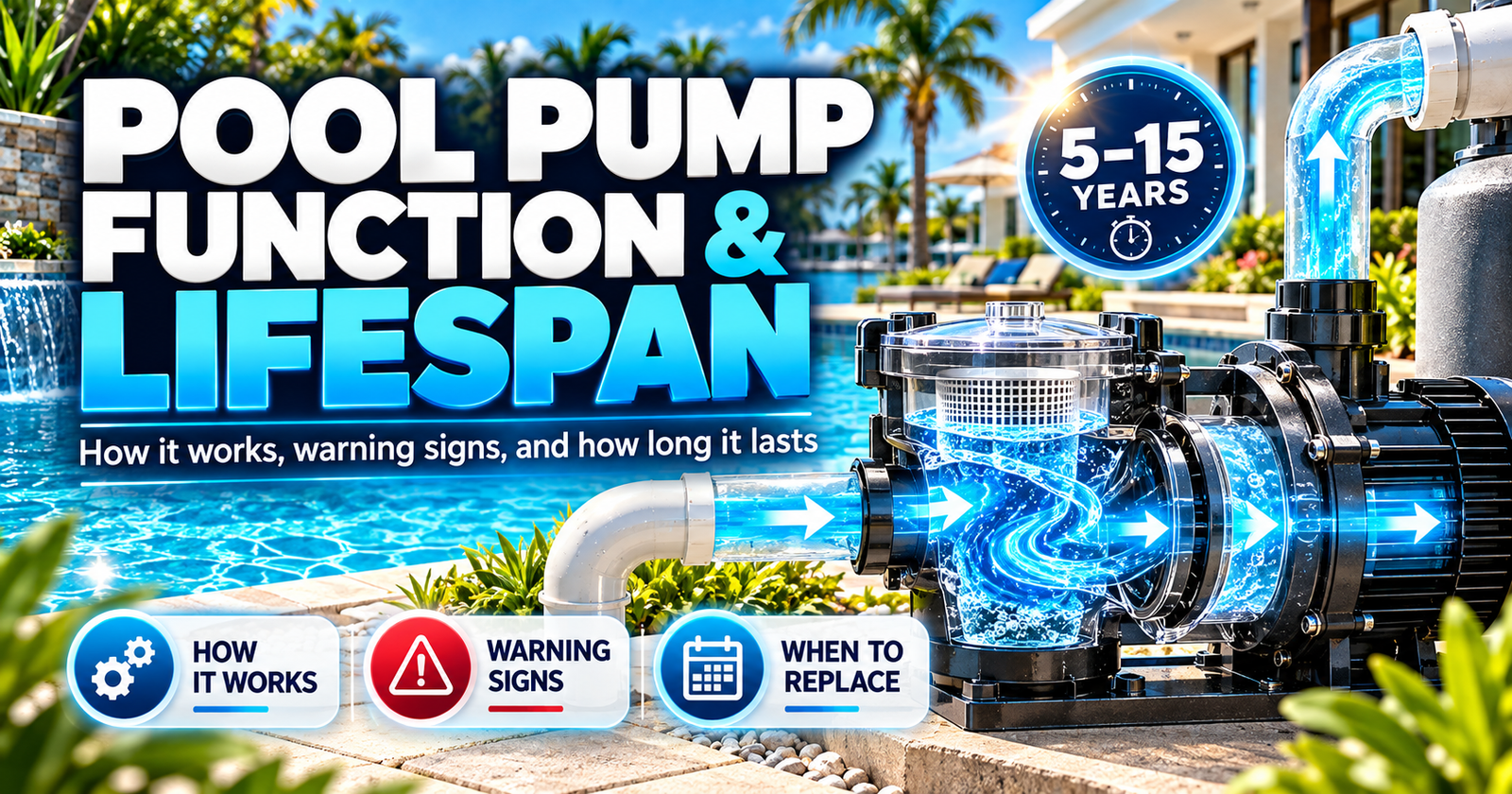
Stagnant water is the ideal environment for deterioration. For a closed aquatic ecosystem to maintain its purity, it requires calculated and uninterrupted movement. At the center of this operation lies an essential electromechanical component that works silently to prevent water degradation.
The circulatory system
The primary function of the equipment can be understood using the same logic as a human heart. Its task is to create a vacuum that draws surface and deep water from the pool, push it under high pressure into the filtration system to separate microscopic dirt particles, and return it purified through the return jets.
Without this dynamic push, water chemistry collapses. Sanitizers settle at the bottom without taking action, thermal layers separate, and oxygenation stops, creating the perfect scenario for algae growth.
Operating cycle and wear
No mechanical system subjected to constant friction and hydration is designed to operate endlessly. Under normal conditions, with well-calculated hydraulics and adequate ventilation, the average lifespan ranges between 8 and 12 years.
However, internal components such as the stator, bearings, and the mechanical seal (the small piece that prevents water from flooding the electric motor) undergo invisible degradation. When these components operate under hydraulic stress, that lifespan range can plummet to just 3 or 4 years.
Physical phenomena and uncommon facts
Beyond the basic need to keep the baskets free of blockages, the inside of the system experiences complex physical events that are rarely discussed, yet they dictate the success or failure of the equipment:
- Cavitation (water that “boils” cold): If the suction flow is blocked, the pressure inside the equipment drops so drastically that the water literally begins to boil at room temperature, creating millions of microscopic vapor bubbles. When these bubbles collide with the spinning impeller, they implode. That implosion is so violent that it tears off microscopic pieces of plastic or metal, destroying the impeller from the inside out and generating a sound similar to grinding rocks.
- The excess power trap: There is an intuitive tendency to believe that a larger motor guarantees better cleaning. Physically, the opposite occurs. Installing equipment with too much horsepower for the pipe diameter or the filter capacity pushes water at an excessive speed. This forces dirt right through the filter sand or cartridges without being trapped, resulting in chronically cloudy water and disproportionate electrical consumption.
- Thermal heat death: Although this equipment processes thousands of gallons of cold water daily, the main cause of its failure is not water, but heat. The rear section (the electric motor) relies exclusively on ambient air circulation to cool down, while the front section (the wet end) uses the water flow itself to dissipate friction. If installed in an airtight, unventilated enclosure, or left running dry with no water to cool it, the equipment will internally scorch.
- The mathematics of “turnover”: On a technical level, the measure of success is not how many hours the system is on, but the concept of the “turnover rate.” The engineering goal is to have 100% of the total water volume pass through the filter at least once every 24 hours. With a correctly calculated flow rate, this mathematical goal can be achieved in 6 to 8 hours of operation, making non-stop running unnecessary and inefficient.
Conclusion and final recommendations
Preserving the lifespan of this equipment does not solely depend on the superficial cleaning of the baskets, but on constant, technical observation of its operating environment. To maximize the durability of the electromechanical system, it is imperative to consider the following advanced practices:
- Preventive acoustic monitoring: Sound is the first indicator of a critical failure, long before any water leaks become visible outside. A change in the frequency of the electrical hum or a high-pitched, vibrating squeal signals that the internal mechanical seal has failed, allowing water vapor to start rusting the rear bearings. Intervening at the first acoustic change usually requires minor parts and prevents thermal collapse or total motor replacement.
- Inactivity management: There is a common belief that turning the equipment off during long periods of disuse extends its life. Physically, the opposite happens. The internal rubber components are designed to be kept lubricated by constant water flow. A prolonged shutdown dries out, shrinks, and cracks these seals. When turning the system back on weeks later, rupture and water leakage are almost inevitable. It is vital to schedule short daily circulation cycles, even during winterization or off-seasons.
- Reading hydraulic resistance: The pressure gauge located on top of the filter is rarely associated with the motor, but it actually functions as its stress monitor. As the filter becomes saturated with particles, resistance to flow increases. This forces the suction head to exert exponential effort to move the same volume of water, raising the temperature of the copper windings. Keeping the system pressure at minimal operating ranges is the most effective indirect measure to protect the heart of the equipment.
Ultimately, operational success lies in understanding that this machine is not just an isolated extractor, but the core of an interconnected hydraulic circuit. Its long-term survival is strictly dictated by the balance and harmony maintained across all other components of the aquatic structure.