Why pool water becomes acidic and you start to taste that flavor in your mouth.

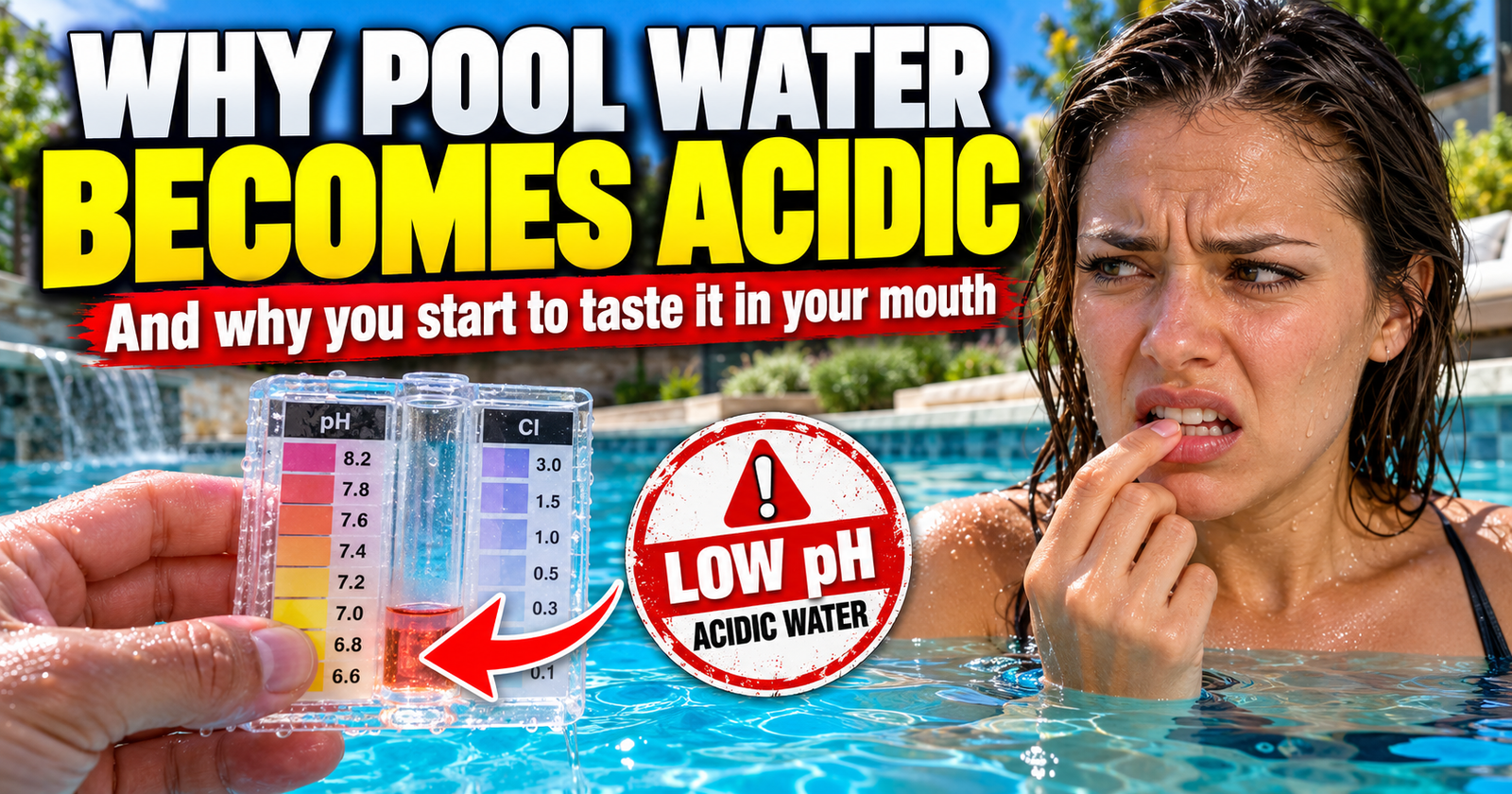
Submerging yourself in the water and suddenly noticing a sour, sharp, or even metallic taste in your mouth is not a product of your imagination. This phenomenon is a direct, physical sign that the aquatic environment has undergone a chemical alteration—specifically, a drop in its pH levels, becoming acidic. To understand why this happens, it is necessary to view the water not simply as a liquid, but as a chemical ecosystem in constant motion.
The pH, or potential of hydrogen, measures how acidic or alkaline a substance is on a scale from 0 to 14. The human body, specifically areas like the eyes and the mucous membranes of the mouth, has a natural pH that hovers between 7.3 and 7.4. When the water drops below 7.2, it becomes acidic compared to human biology. Upon contact with taste buds and saliva, the contrast is so stark that the brain immediately processes it as a sour or harsh flavor.
But what pushes the water toward that acidity? There are common factors, such as rain, which naturally contains carbonic acid and lowers the pH after a storm. However, the most aggressive triggers are often less known.
One frequently ignored factor is the silent accumulation of cyanuric acid. This compound is used as a “sunscreen” for chlorine, preventing the sun from evaporating it. Since most commercial chlorine tablets already contain this acid, their continuous use causes levels to skyrocket without anyone noticing. As it accumulates, it not only blocks the disinfecting capacity of the chlorine but also persistently drags the pH down, creating that acidic environment perceived on the palate.
Another little-known fact involves galvanic corrosion and the dissolution of metals. When water becomes acidic, it acquires corrosive properties and begins to “eat away” at submerged metallic components, such as ladders, heat exchangers, or copper pipes. As they dissolve at a microscopic level, these metals (especially copper and iron) become suspended in the water. When this water enters the mouth, the metal ions react with saliva, dramatically intensifying that bitter, metallic taste that many people confuse with “too much chlorine.”
Additionally, there is a process called carbon dioxide (CO2) degassing. Water contains dissolved CO2, which acts as a natural anchor to keep the pH stable. If the total alkalinity of the water plummets due to poor chemical management, the water loses its capacity to retain this gas. As CO2 is released into the atmosphere, the fragile equilibrium collapses, causing violent fluctuations that almost always end in a state of severe acidity.
Implications for the system and health
This state of acidity does not stop at a simple sensory annoyance when swallowing a little water; it triggers destructive consequences for both the infrastructure and human biology.
On the structural and mechanical system: Water is, by nature, an “insatiable solvent.” When it lacks the necessary minerals to balance its pH, it will relentlessly seek them out in its environment. This causes a phenomenon known as aggressive leaching, where the water extracts calcium directly from the plaster, tiles, or cement grout, leaving rough surfaces that feel like sandpaper. In parallel, the internal components of the equipment (such as heater coils) suffer micro-perforations. This dissolved metal not only destroys the equipment from the inside out but, upon oxidizing, stains the walls with cyan or black pigments that adhere to the porosity created by the acidity itself.
On human health: Biologically speaking, submerging into an acidic environment strips the skin of its protective lipid mantle, causing accelerated moisture loss and opening pores to invisible irritations. Even more surprising is the impact on the oral cavity: tooth enamel, the hardest substance in the body, begins to demineralize when exposed to low-alkalinity liquids. Frequent exposure to acidic water microscopically erodes teeth over time. Finally, the acidity accelerates a chemical reaction that releases trichloramines (combined chlorine) into the air. This heavy, volatile gas settles just above the surface of the water and, when constantly inhaled during swimming, causes deep respiratory irritation that many people mistakenly confuse with asthma or seasonal allergies.
Conclusion
That sour or metallic taste perceived in the mouth is the body’s first alarm against an aquatic ecosystem that has lost its balance. Acidity is the result of a chain reaction involving the accumulation of stabilizers, the loss of dissolved gases, and the consumption of alkalinity. Ignoring this sensory warning allows the water to transform into a corrosive force that silently devours the materials of the mechanical system and compromises the body’s natural defenses, from the skin to tooth enamel and the respiratory system.
Final recommendations
- Prioritize alkalinity over pH: You should never attempt to adjust the pH without first measuring and correcting the total alkalinity (ideally between 80 and 120 ppm). Alkalinity is the pH’s protective shield; if it is low, the water will have no defenses to prevent it from becoming acidic.
- Inspect surfaces and metals: If the walls feel unusually rough to the touch or blue-green stains appear near the water returns, it is an unmistakable sign that the water has been in an acidic state for weeks and is already dissolving the internal equipment.
- Rotate chlorination methods: To avoid the accumulation of cyanuric acid, it is recommended to alternate between stabilized chlorine (in tablets) and unstabilized chlorine (liquid or powder), preventing the water from becoming chemically locked.
- Leverage aeration: Turning on waterfalls, fountains, or pointing the return jets toward the surface helps oxygenate the water. This mechanical movement releases carbon dioxide naturally, which gently raises the pH without the need to add additional chemicals.