What Determines the Price of Pool Cleaning Services in Florida

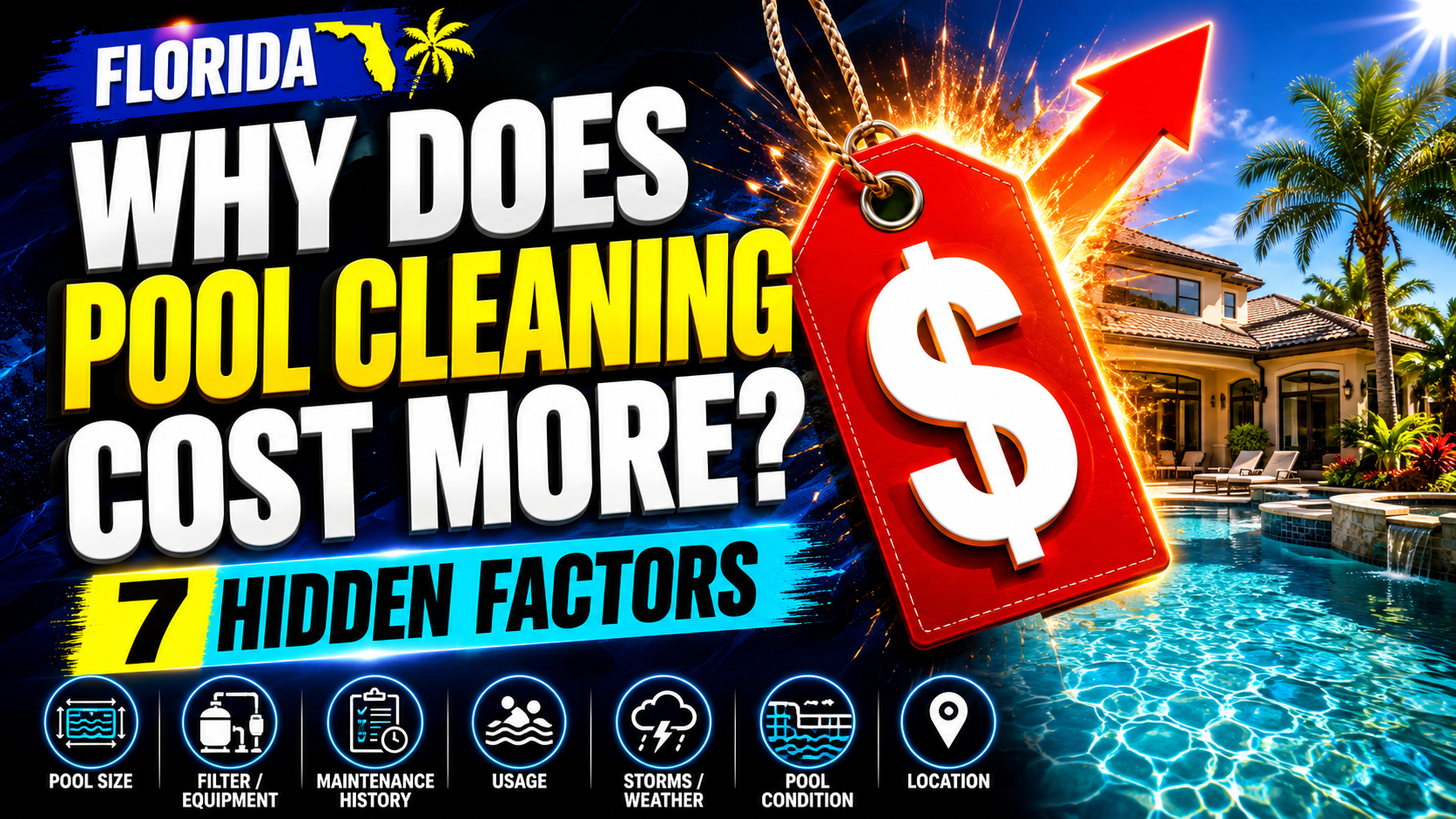
In Florida, pool cleaning prices are not set randomly. They depend on several real factors that affect both the time required and the amount of work involved. Below are the key elements that truly influence pricing — going beyond the obvious.
Pool Volume in Gallons
The exact number of gallons is one of the most important factors when determining the price of pool service. A 10,000-gallon pool does not require the same amount of time or chemicals as a 25,000 or 30,000-gallon pool.
Larger volumes take more time to vacuum, brush, and treat evenly. Any chemical adjustment also requires more product and takes longer to stabilize. Professional services often base their pricing on gallons because this directly impacts both chemical usage and labor hours per visit.
Condition of the Filtration System and Pump
Many pricing differences come from the actual condition of the equipment rather than the appearance of the water. Old filters, compacted sand, clogged cartridges, or pumps with low pressure prevent the water from cleaning properly, even after regular service.
When the equipment is not working efficiently, the pool gets dirty faster and requires more chemicals and manual labor. This usually increases the service price because the technician has to compensate for the equipment’s deficiencies with extra work and products.
Previous Maintenance History
A pool that has received consistent, regular maintenance is generally less expensive to maintain than one that has been neglected or serviced irregularly.
Pools with poor maintenance history often have built-up scale, stubborn algae, and deep chemical imbalances. Bringing them back to good condition requires more time, stronger treatments, and sometimes several consecutive visits. This is why initial service prices are often higher when taking over a neglected pool.
Heavy Pool Usage
Not all pools are used the same way. A family pool used mainly on weekends costs less to maintain than one with heavy daily use, such as vacation rentals (Airbnb), homes with frequent parties, or properties with many swimmers.
High bather loads introduce more body oils, sunscreen, sweat, and organic matter, which increases chlorine consumption and clogs filters faster. These pools usually require more frequent visits or more thorough service, which naturally raises the monthly cost.
Circulation Problems and Dead Zones
Many Florida pools have areas where water does not circulate well — such as corners, steps, behind ladders, or around attached spas. These “dead zones” collect dirt and algae much faster than the rest of the pool.
When circulation issues exist, the technician must spend extra time manually brushing these areas and applying targeted treatments. This increases the time needed per visit and therefore affects the overall price of the service.
Impact of Storms on Long-Term Costs
Florida’s frequent summer storms don’t just dirty the pool temporarily. After a heavy storm, the water chemistry often stays unbalanced for several days. Chlorine gets diluted, nutrients enter the water, and algae blooms can appear quickly.
Pools that are more exposed to storms or lack good protection usually need more recovery visits and extra shock treatments throughout the year. This increases the overall annual maintenance cost and can affect the regular service price.
Hard Water and Mineral Buildup
In many areas of Florida, the water contains high levels of calcium and other minerals. Over time, these minerals deposit on the walls, waterline, and inside the equipment.
This buildup makes surfaces rougher (which allows algae to stick more easily) and can reduce the efficiency of filters and heaters. Pools with hard water problems often require deeper cleanings and specialized treatments more frequently, which raises the long-term cost of maintenance.
Understanding these factors helps explain why two pools of similar size can have very different service prices. The cost depends not only on size or how dirty the water looks, but also on equipment condition, maintenance history, usage level, and the specific challenges each pool faces in Florida. This information allows homeowners to better evaluate quotes and understand what they are actually paying for.