How to Know Which Pool to Build to Save on Cleaning and Maintenance

Imagine this: you finally have your own pool at home. The kids are splashing around, you’re relaxing after work… and suddenly you realize every weekend has turned into a race against the clock to keep the water crystal clear. Brushing the walls, running the vacuum, balancing chemicals, scooping leaves… Wasn’t this supposed to be relaxing?
The truth is, most pool headaches don’t come from using it — they come from how it was built. The good news? If you make the right choices from the very beginning, you can have a pool that stays clean with far less effort and far less money over the years.
Here’s a clear, practical guide on exactly what to consider so your pool becomes something you enjoy instead of something you have to constantly manage.
1. The Pool Material: This Decision Makes the Biggest Difference
This is the single most important choice when it comes to how much time you’ll spend cleaning.
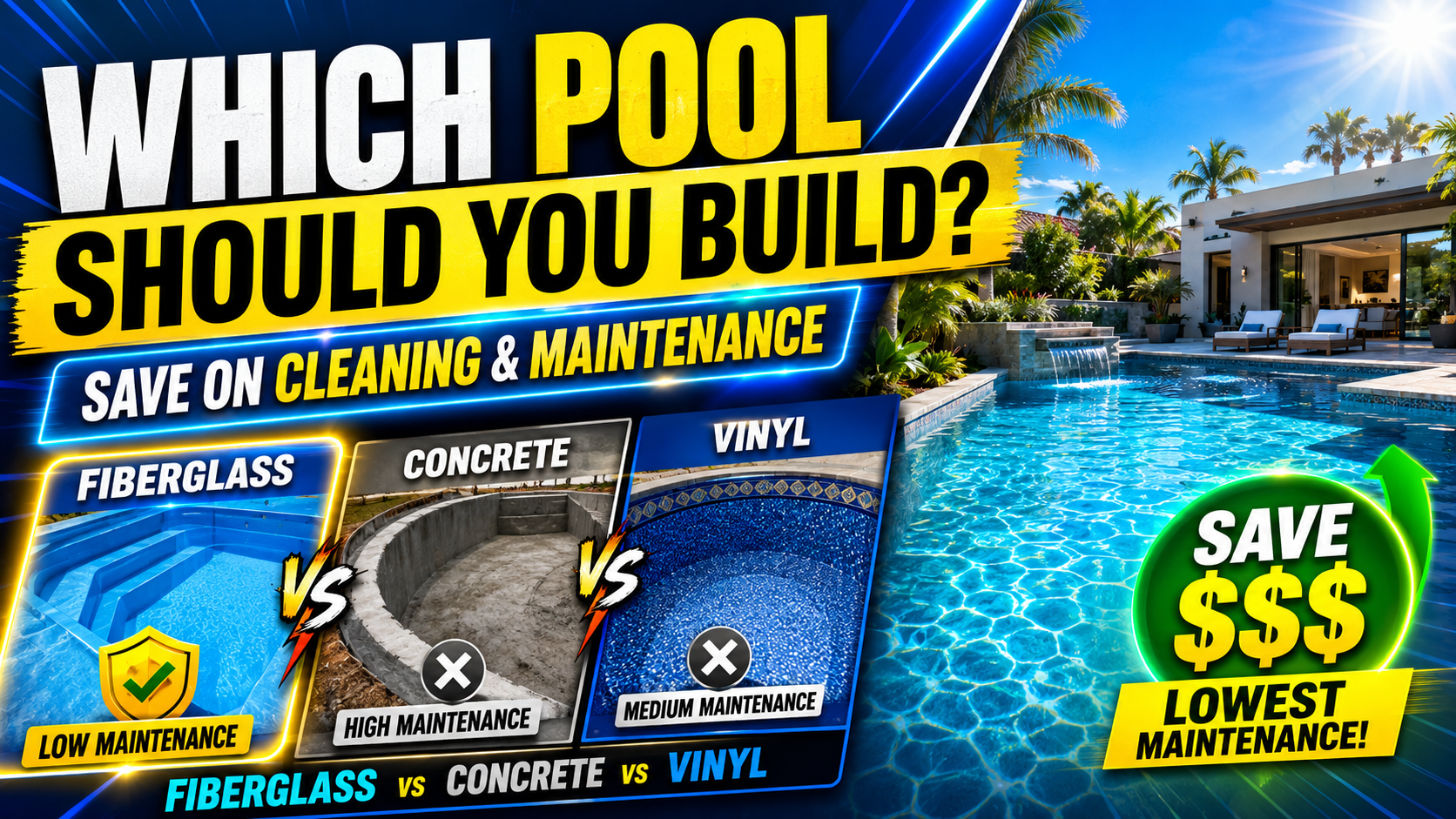
- Fiberglass pools: These have a smooth, non-porous gelcoat surface. Dirt and algae don’t stick easily, so they require much less brushing, fewer chemicals, and way less overall cleaning time. They’re generally the easiest to maintain long-term and can be installed quickly (usually in 1–2 weeks).
- Concrete (gunite) pools with traditional plaster: These look beautiful and can be fully customized, but the surface is porous. Algae and stains find places to hide, which means more weekly brushing, occasional acid washing, and a major (and expensive) resurfacing every 10–15 years. They require the most ongoing maintenance.
- Vinyl liner pools: A solid middle option. The liner is smooth and relatively easy to clean, but you’ll need to budget for replacing it every 8–12 years (depending on sun exposure and usage). It’s usually more affordable upfront, but that recurring replacement cost is something to plan for.
Bottom line: If saving time and money on cleaning is your top priority, fiberglass is usually the winner for most people. It’s not always the cheapest to build, but it’s typically the least expensive to own and maintain year after year.
2. Size and Shape: Simple Almost Always Wins
This is where a lot of people go wrong — thinking “bigger is better.”
A very large pool means more water volume, more surface area, and more cleaning time. An overly complicated shape (lots of tight curves, built-in benches, multiple steps, or fancy freeform designs) creates dead zones where water doesn’t circulate well and debris collects. Those corners and ledges become constant headaches.
Best choices for low maintenance:
- Simple shapes: rectangle, oval, or soft curves
- Minimal (or no) islands, submerged benches, or steps that break water flow
- Size that actually matches how your family will use it (not just how big your yard is)
A well-designed, simpler pool can often be cleaned in half the time of a complicated one.
3. Filtration and Circulation: The Heart of an Easy-to-Maintain Pool
Even with the best surface material, if the water doesn’t move properly, you’ll have problems.
What really makes a difference:
- An oversized filtration system (bigger than the minimum required for your pool volume)
- Return jets positioned so water circulates evenly throughout the entire pool (avoiding “dead zones”)
- A variable-speed pump — it uses less electricity and lets you run gentler, more efficient circulation cycles
- A properly sized and placed skimmer
Good circulation means dirt gets pulled into the filter instead of sticking to the walls or floor. This is one of the things that becomes very obvious once summer hits.
4. Technology and Accessories That Do the Work for You
This is where you can go from “I have to clean the pool” to “the pool basically cleans itself”:
- Robotic pool cleaner: One of the best investments you can make. It does in 2–3 hours what would take you an entire afternoon.
- Automatic safety cover or thermal blanket: Dramatically cuts down on leaves, dust, and debris entering the water. It also reduces evaporation and helps maintain temperature. Many owners say this changes everything.
- Saltwater chlorinator: The water feels softer and you use fewer manual chemicals.
- Smart monitoring systems: These alert you on your phone if pH or chlorine levels go off. You catch problems before they become big ones.
- In-floor cleaning systems: More expensive upfront, but fantastic if you want near-zero maintenance.
5. The Surroundings Matter Too
It might seem secondary, but it has a big impact:
- Avoid planting trees that drop lots of leaves right next to the pool.
- Choose decking or hardscaping around the pool that doesn’t track dirt or sand into the water.
- Good orientation and some wind protection can significantly reduce how much debris blows in.
Plan With Daily Life in Mind
Building a pool isn’t just about picking a pretty design from a catalog. It’s about deciding how you want to live with it for the next 15–20 years.
The pools that cause the least headaches usually have:
- A smooth, easy-to-clean surface
- A simple shape
- Strong, well-planned water circulation
- Smart technology chosen thoughtfully
- Landscaping that doesn’t constantly feed it dirt and leaves
If you’re in the planning stage, take the time to speak with a few professionals and specifically ask about maintenance costs at 5 and 10 years, not just the construction price. That long-term difference is what really determines whether you’ll enjoy your pool… or always be stressed about it.
The best pool isn’t the biggest or the most expensive — it’s the one that lets you swim without worrying.
Are you leaning toward a certain type of pool already, or are you just starting to explore options? Tell me in the comments what matters most to you (time, budget, size, etc.) and I’ll help you narrow it down for your specific situation.