What causes algae growth in a pool

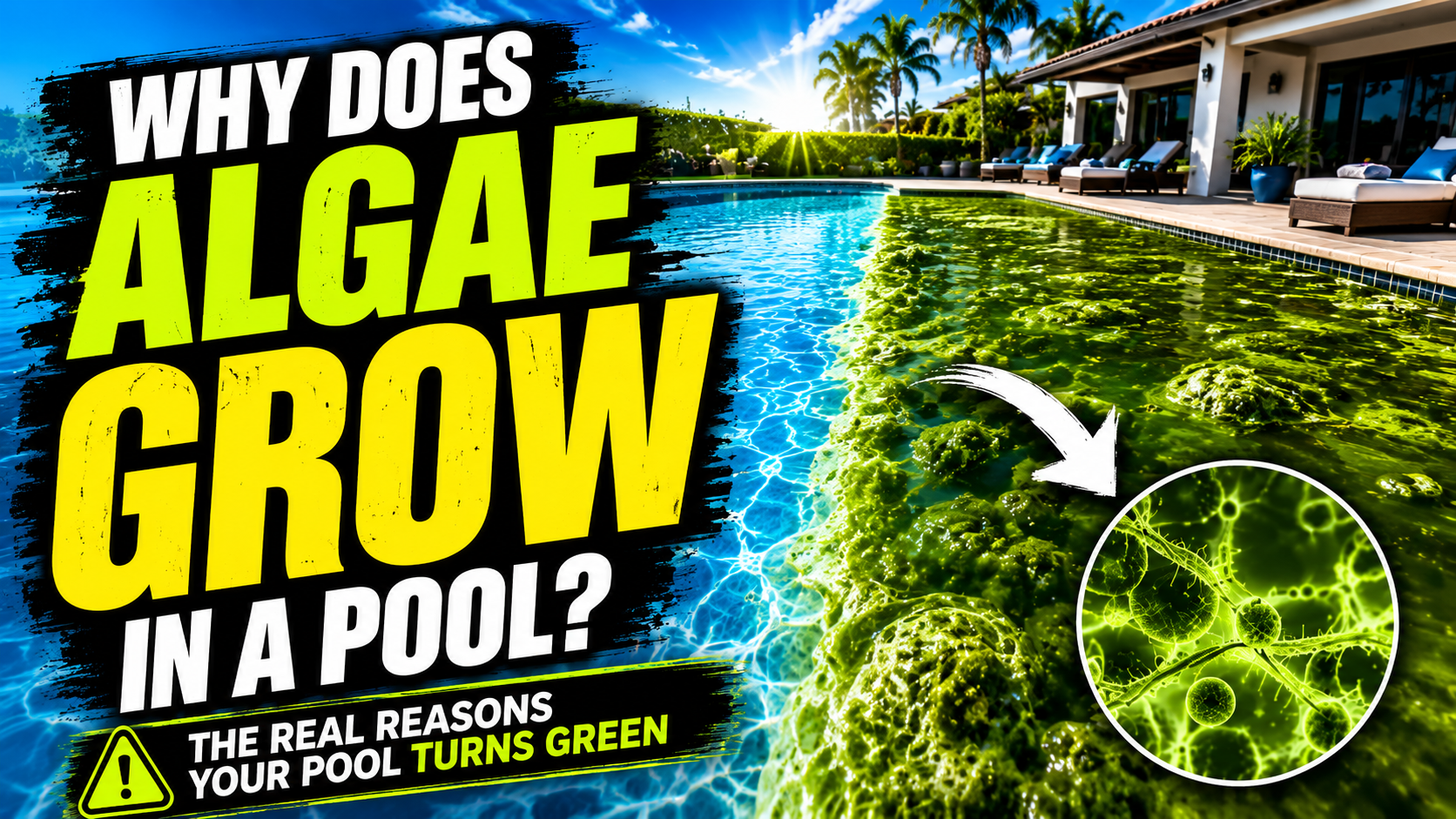
A crystal-clear pool can transform into a cloudy, greenish ecosystem in a matter of days. This phenomenon, far from being a mystery, is a predictable biological reaction that occurs when certain environmental and chemical conditions align. Understanding the mechanics behind this invasion is the first step to keeping the water in pristine condition.
The constant arrival of microscopic invaders
Algae do not spontaneously generate in the water; they arrive from the outside. Algae spores are microscopic and omnipresent in the environment. They are constantly transported by gusts of wind, raindrops, and even insects.
However, there is one entry point that often goes unnoticed: everyday objects. If a swimsuit, diving gear, or inflatable toy was recently used in a lake, ocean, or river, it is highly likely to transport dormant spores directly into clean water.
The invisible feast: Phosphates and nitrates
For spores to flourish and multiply, they need a nutrient-rich environment. Their primary diet relies on nitrates and, above all, phosphates. It is often assumed that water is clean simply because it is clear, but phosphates accumulate in unconventional ways:
- Personal care products: Sunscreens, body lotions, and cosmetics are rich in phosphates. Upon entering the water, they dissolve and become direct food for algae.
- Airborne pollution: Dust kicked up by the wind from nearby gardens and lawns often carries fertilizer particles rich in phosphorus and nitrogen.
- Tap water: In many urban areas, tap water or tanker water used to fill the pool is already treated with orthophosphate-based corrosion inhibitors, introducing the problem from the very first fill.
The physics of water: “Dead zones”
A chemically perfect chlorine level is not enough if the water is static. Algae thrive in environments where they can attach without resistance.
Growth almost always starts in so-called “dead zones.” These are areas where water circulation and flow are poor, such as behind stainless steel ladders, in sharp corners, inside underwater light niches, or on shallow steps. The lack of friction from constantly moving water allows spores to settle and form a protective biofilm before the sanitizer can take action.
Little-known facts about algae survival
The behavior of these microorganisms is much more complex and resilient than popular wisdom suggests:
- Mustard algae survive outside of water: This type of algae, with a yellowish hue often confused with pollen or sand, has extraordinary resistance. It can live in a dormant state outside the water for days. It survives on dry towels, cleaning brushes, and hoses. If the water is purified but the accessories are not disinfected in parallel, the algae will simply return upon the next use.
- Black algae are not actually algae: Those dreaded dark spots on the walls that look like ink are actually colonies of cyanobacteria. What makes them nearly indestructible is that they secrete a waxy capsule that repels standard chemicals. Furthermore, they develop microscopic “roots” that manage to penetrate deeply into porous surfaces like plaster or concrete. Brushing the surface only removes the top layer; the root remains intact and sprouts again weeks later.
- The window of vulnerability after rain: A summer storm not only brings new water and spores, but the rain also washes down carbonic acid and other air pollutants that drastically alter the water’s pH within hours. Algae take advantage of this rapid pH drop, which temporarily weakens the effectiveness of the sanitizing agent, to multiply exponentially before the chemical balance can be restored.
Controlling this growth does not depend solely on the amount of chemicals in the water, but on a rigorous balance between uninterrupted mechanical circulation and molecular-level nutrient deprivation.