Should I eat at the edge of my pool

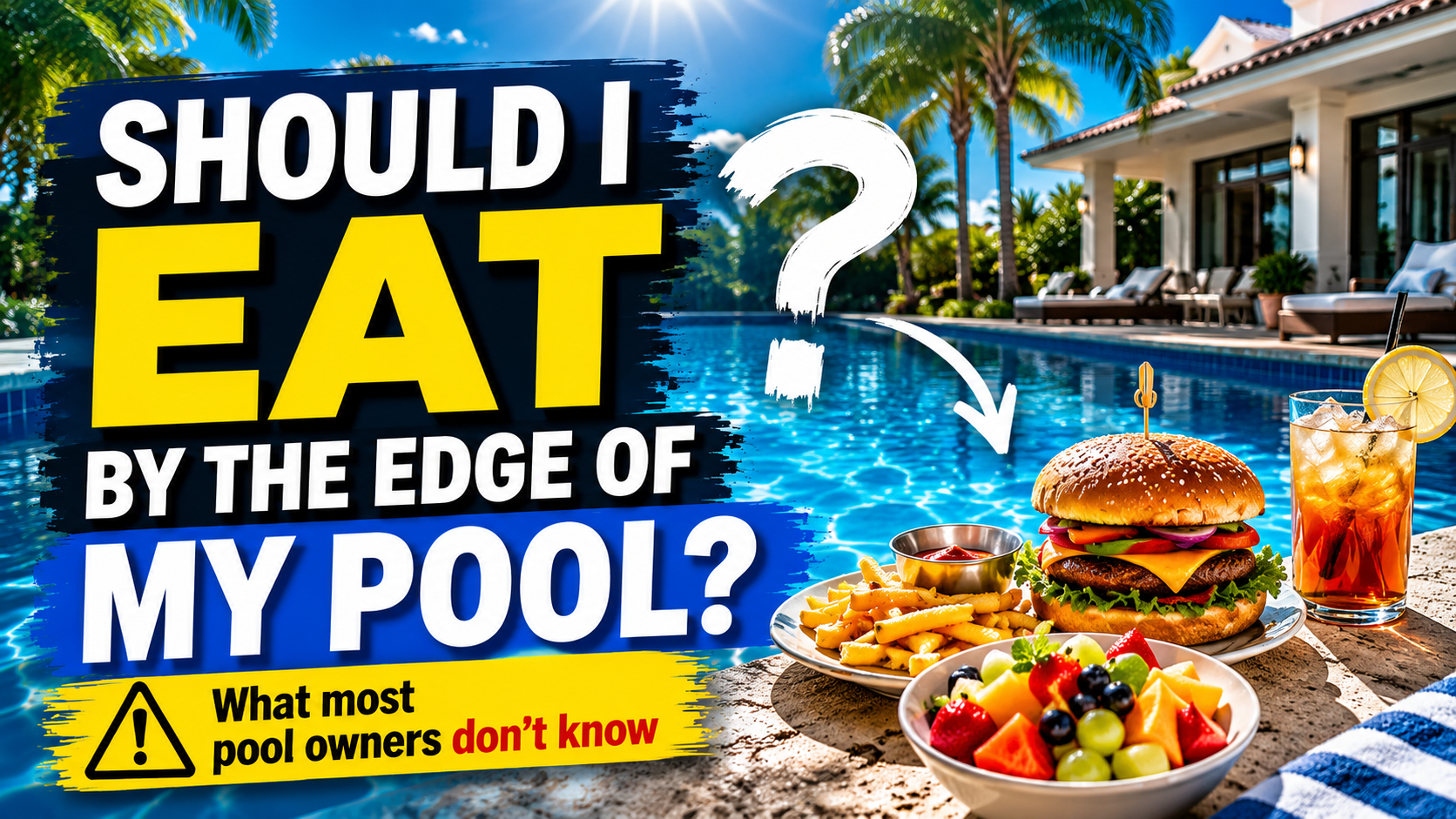
Enjoying a bite to eat just a few inches from the water seems like the perfect scene for a day of relaxation. However, when observing this practice from the perspective of water behavior and hydraulic system management, the combination of food and pools reveals chemical dynamics that escape the naked eye.
Beyond the obvious risk of breaking glass or the typical annoyance of attracting insects, there are microscopic alterations that severely affect the balance of the aquatic ecosystem.
The impact of hidden phosphates
When baked goods, breads, or meats are consumed near the aquatic perimeter, it is inevitable that tiny particles fall to the ground or are carried by the wind. These foods contain high levels of phosphates. In water chemistry, phosphates act as a super fertilizer for algae. A microscopic amount of crumbs introduces enough compounds to drastically reduce the effectiveness of the sanitizer, allowing the water to take on a greenish tint in a matter of hours after sun exposure, without the source of the problem being obvious.
Lipid chemistry and filter saturation
Eating fried foods or snacks transfers invisible oils to the skin. Upon reentering the water, these dietary lipids detach and float to the surface. The real technical complication arises when these fats combine with minerals present in the water, such as calcium.
This molecular mixture creates a dense biofilm that:
- Adheres to the waterline of the tiles, forming a hardened crust.
- Is sucked into the filtration system, where it coats and blocks the micropores of cartridge filters or sand beds.
- Reduces the efficiency of the equipment pressure and purification by up to 40 percent, straining the motors.
Sugars, bacteria, and the creation of chloramines
Accidentally spilling a few milliliters of soda, cocktails, or natural juice seems harmless due to its rapid dissolution in thousands of gallons of water. However, the introduced sugars act as immediate fuel for bacterial development.
The chlorine in the system is forced to aggressively oxidize these organic components. The byproduct of this chemical reaction is chloramines. Interestingly, the strong and characteristic pool smell that irritates the eyes and dries the skin is not caused by an excess of chlorine, but by the presence of these chloramines, formed when fighting organic invaders like the sugars from beverages.
The effect of the evaporation microclimate
A physical phenomenon rarely considered is the wind dynamic over the water surface. Constant evaporation generates a subtle temperature difference between the aquatic surface and the surrounding dry area. This creates a thermal air current, a sort of micro breeze, whose traction tends to suck in lightweight elements. Light crumbs, napkins, and small debris are literally dragged toward the center of the water by this physical current, making it almost impossible to keep residues out of the pool basin, even if one is careful.
The proximity of food to the aquatic environment requires considering that the water is a closed and highly reactive ecosystem. Any accidental introduction of organic matter generates a domino effect that compromises water clarity, altering parameters that demand heavy corrective chemical treatments to restore the sanitary balance.