Too Cold to Swim? The Real Florida Pool Water Temperature in November

Every November we hear the same question from homeowners in FishHawk, Riverview and Brandon: “Is it already too cold to swim?” The honest answer surprises most people. The air may feel crisp in the morning, but your pool still holds a lot of summer heat. Understanding the real Florida pool water temperature in November helps you decide when to swim, when to heat, and how to keep the water healthy while the weather cools down.
Air Temperature Lies. Water Temperature Doesn’t.
Water stores heat far better than air. On a 58°F November morning, your pool might still read 74°F. That’s why the water can feel almost warm when you jump in at sunrise, and why you may see a light mist rising off the surface after a cool night.
The difference also works the other way. After several breezy, cool days in a row, the water slowly catches up with the weather, and it takes a few warm, sunny days to bring it back up. Pools change gradually, not overnight.
What’s the Typical Florida Pool Water Temperature in November?
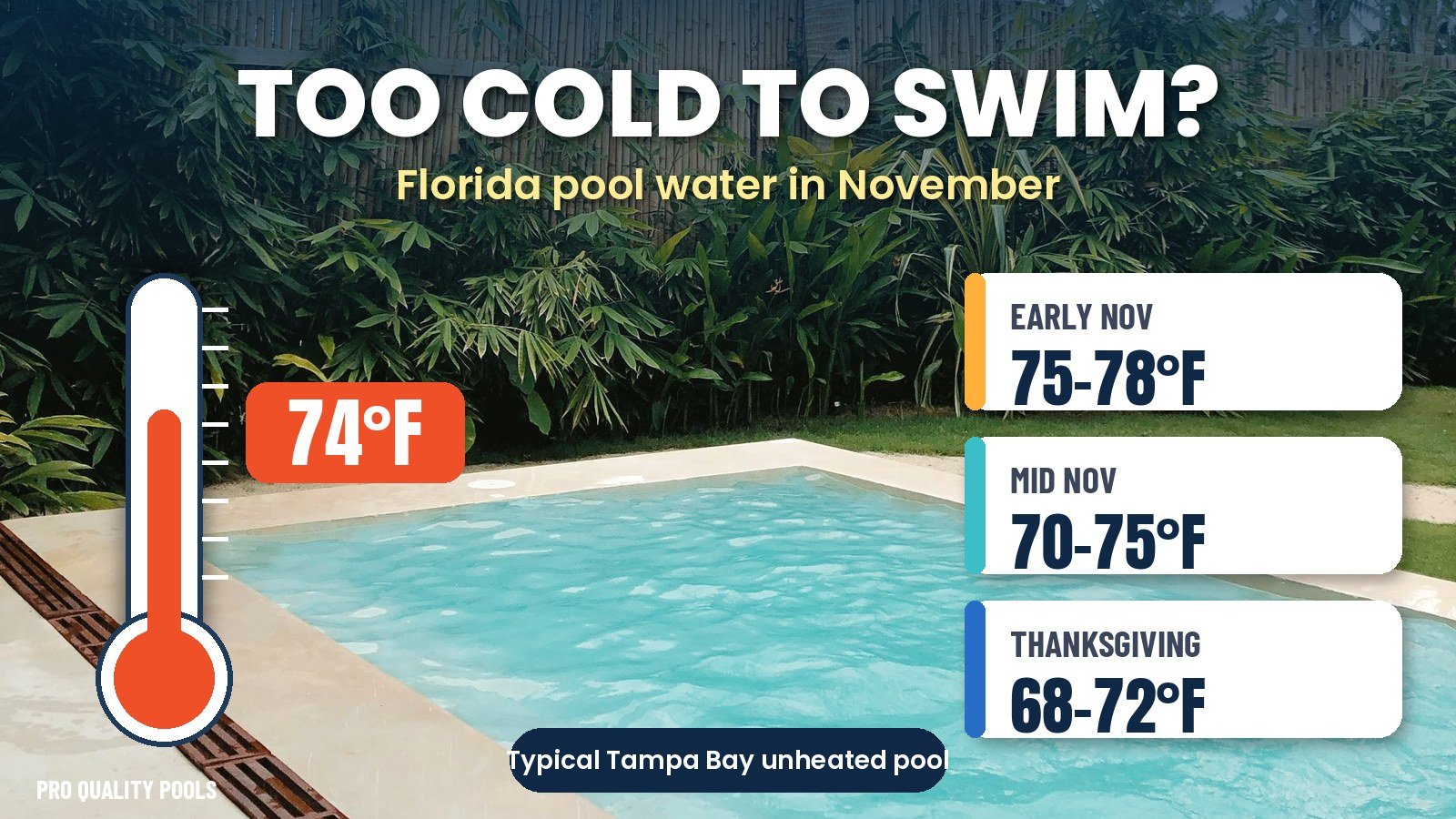
In the Tampa Bay area, an unheated, sunny, screened pool usually follows a pattern like this:
- Early November: often in the mid to high 70s°F after a warm October.
- Mid November: low to mid 70s°F, dipping into the high 60s after a strong cold front.
- Late November and Thanksgiving week: commonly in the high 60s to low 70s°F.
Those are typical ranges, not guarantees. Your own pool may run warmer or colder depending on several factors.
What Makes Your Pool Warmer or Colder Than the Neighbor’s?
- Sun exposure: a pool that gets full afternoon sun can stay several degrees warmer than one shaded by the house or by oak trees.
- Wind: open, breezy yards lose heat faster. A screen enclosure helps a bit.
- Night covers: a solar cover at night can hold in a lot of the day’s heat.
- Water features: waterfalls, sheer descents and fountains are beautiful, but they cool the water quickly on breezy nights.
- Pool size and depth: larger, deeper pools change more slowly than small plunge pools.
So, What Temperature Is Comfortable?
Comfort is personal, but here is a simple guide most swimmers agree with:
- 80°F and up: comfortable for almost everyone, including kids and older adults.
- 76–79°F: refreshing. Great for laps and active swimmers.
- 70–75°F: brisk. Fine for a quick dip on a sunny afternoon, chilly for long play.
- Below 70°F: cold for most people. Short swims only, unless you heat the pool.
How to Keep Swimming Comfortably Longer
- Swim in the afternoon. Water is usually warmest between 2 PM and 5 PM after a full day of sun.
- Use a solar cover at night. It is the cheapest way to hold heat.
- Turn off water features when you’re not enjoying them.
- Consider a heat pump if you want to swim comfortably through Thanksgiving and the holidays. We compare options in pool heat pump vs solar cover.
- Check your thermometer, not the weather app. A floating or inline thermometer gives you the real number.
Cooler Water Changes Your Pool Care, Too
Lower temperatures are good news in one way: algae grows more slowly and chlorine lasts longer. That does not mean you can stop caring for the water. In fact, many owners accidentally over-chlorinate in November because they keep using summer doses. Our article on pool chlorine levels in winter explains how to adjust.
Cooler water also affects water balance. Water that is cold and low in pH or alkalinity becomes more aggressive toward plaster and metal, while warm water with high calcium is more likely to scale. Keep testing weekly and adjust gradually.
- Keep free chlorine in the normal range, adjusting for your stabilizer level.
- Keep pH around 7.4–7.6.
- Brush walls and steps weekly. Algae slows down in cool water, but it doesn’t stop.
- Keep the skimmer and pump baskets clear of fall debris.
A Quick Word on Safety
Cold water can surprise people, especially children and guests who expect Florida pools to feel like July. Sudden immersion in cooler water can cause a gasp reflex and fatigue faster. Keep supervision rules the same all year, and make sure gates and alarms still work during the cooler months when the pool sees less use.
Frequently Asked Questions
Is 72 degrees too cold to swim in a pool?
For most people 72°F feels brisk but swimmable for a short, active dip, especially on a sunny afternoon. Children and older adults usually prefer 80°F or warmer.
How cold do Florida pools get in winter?
Unheated pools in the Tampa Bay area commonly drop to the mid 60s°F, and sometimes lower during strong cold snaps in January and February.
Conclusion
November in Florida is not the end of swimming season. It’s the start of a smarter one. Your pool still holds plenty of summer heat in early November, and with afternoon swims, a night cover or a heat pump, many families keep using it well past Thanksgiving.
Final Recommendations
Buy a simple pool thermometer and check it a couple of times a week. Swim when the water is warmest, cover the pool at night if you can, and adjust your chemicals for cooler water instead of keeping your summer routine. If you want help keeping the water balanced while the temperature drops, our weekly service includes testing and adjustments every visit.
Need Help With Your Pool in FishHawk and Nearby?
Pro Quality Pools is a family-owned pool cleaning company serving Brandon, Valrico, Riverview, FishHawk, Seffner and Dover, Florida. Explore our pool cleaning and maintenance services or contact us today for a free quote.