How to know if your pool structure needs corrective maintenance

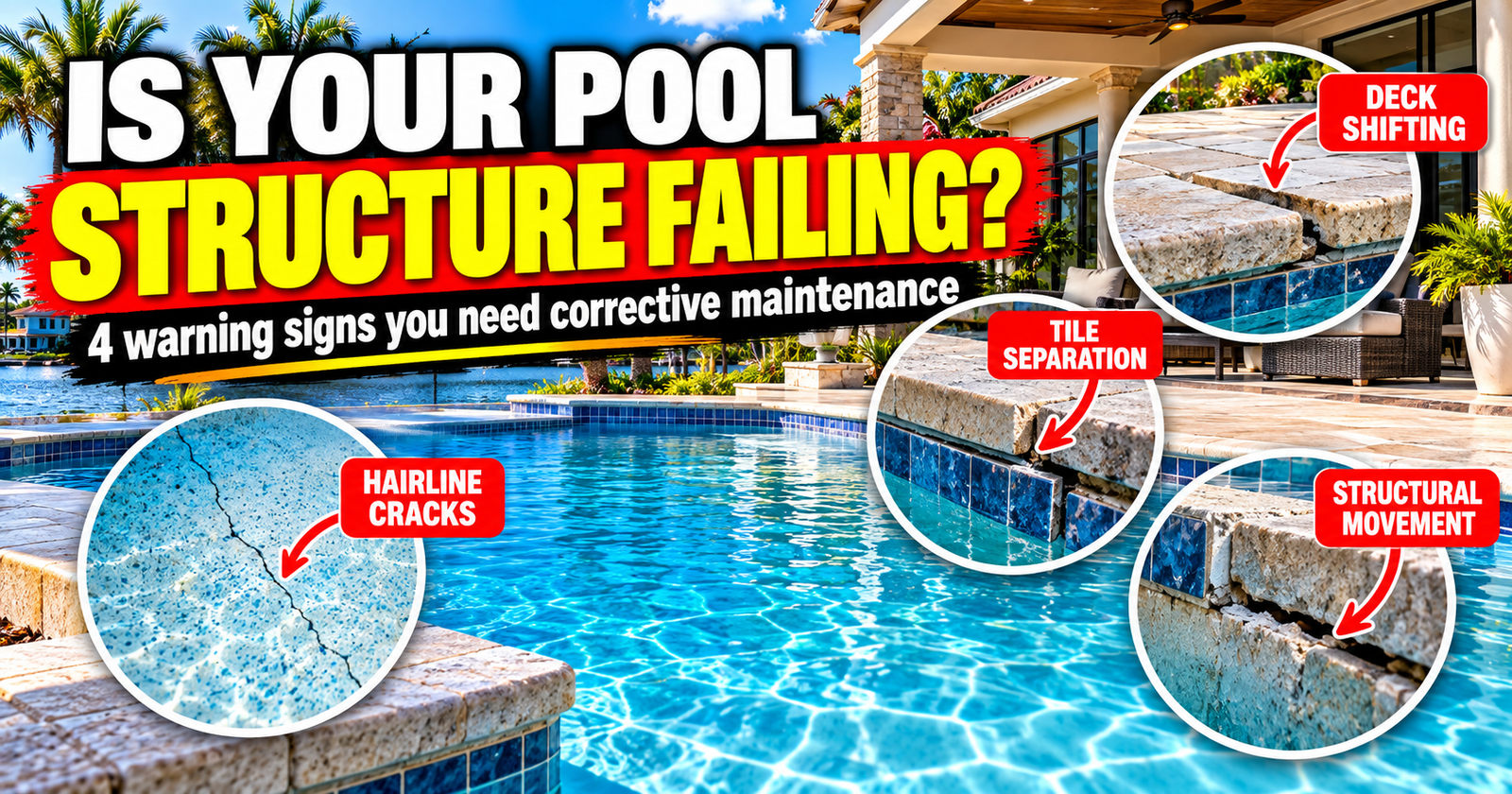
Crystal-clear water often hides what is really happening beneath the surface. Maintaining chemical balance and cleanliness is a standard practice, but the pool structure itself has its own language. Detecting in time when the pool shell or structural framework requires corrective intervention prevents much larger problems. To the naked eye, internal deterioration is often confused with simple dirt or normal cosmetic wear and tear. However, there are highly specific signs that reveal the true integrity of the material.
Below is an analysis of the structural indicators that go far beyond typical visible cracks.
The echo of structural detachment (The acoustic test)
Damage to the surface finish begins long before it becomes visible. A highly effective but little-known diagnostic method is the acoustic delamination test. If the floor or walls are gently tapped with a solid object (like a golf ball or the wooden handle of a tool), the return sound should be firm and dull. If, on the contrary, the impact produces a “hollow” sound, it means the plaster, quartz, or primary coating has separated from the concrete base behind it. This microscopic empty space indicates that the bond has failed; it is the exact prelude to an imminent detachment or a severe structural fracture.
Internal rust tears
It is quite common to spot brown stains and assume that some metal item, like a bobby pin or a toy, fell into the water and rusted. But there is a type of stain known as a “rust tear” or rust bleeding that seems to bleed directly from the pores of the wall, expanding downward. This phenomenon indicates that water has managed to penetrate the material’s porosity and reached the reinforcing steel (the rebar) holding the concrete. When steel rusts inside, it expands up to four times its original size. This expansion exerts massive internal pressure (known as spalling) that will eventually fracture the entire wall. That small stain is not a cleaning issue, but a warning of severe structural stress.
The inexplicable chemical rebellion
Fluctuations in water pH are generally attributed to weather, bather load, or incorrect chemical dosing. However, when the pH constantly and aggressively spikes and demands unusual amounts of acid to stabilize, the source may lie in the structure itself. As cement-based finishes suffer structural failures or degrade with age, the calcium compounds in the material begin to leach (dissolve) directly into the water. The pool is literally dissolving on a microscopic level, chronically altering the water chemistry long before the walls feel rough to the touch.
The osmosis phenomenon in synthetic surfaces
In fiberglass structures, there is a symptom of deep degradation that is rarely diagnosed correctly in its early stages: the appearance of small, dark bumps or “blisters.” They are often confused with black algae outbreaks that resist brushing and chemicals. In reality, this process is called osmosis. It occurs when water penetrates the top protective layer of the gelcoat and reacts with the internal resins of the structure, creating an encapsulated acidic fluid that pushes outward. If these blisters do not receive corrective maintenance (which involves sanding, treating, and resealing the area), the fiberglass loses its integrity, becoming brittle and prone to deep fissures that compromise water retention.
Final recommendations to preserve the structure
Identifying the wear and tear of these materials in time completely changes the perspective on facility care. Once these symptoms manifest, the approach must evolve quickly to prevent catastrophic failures.
To preserve the integrity of the pool shell in the long term, chemical monitoring that goes beyond basic balance is indispensable. If an unusual, aggressive, and constant demand for acid to lower the pH is recorded without weather-related justification, the age and degradation state of the coating must be evaluated rather than simply adding more chemicals to the water. Likewise, during deep brushing routines, it is vital to integrate periodic tactile and acoustic audits, performing the delamination test at least once a year, since listening to the structure is just as important as observing water clarity.
Finally, it is crucial to maintain a strict differentiation of symptoms and timely escalation. Structural warnings, such as encapsulated osmosis or the internal rust bleeding from the rebar, must not be confused with simple dirt or resistant algae. Aggressively scrubbing these anomalies with wire brushes or applying shock treatments will not solve the problem and could accelerate the deterioration of the surface. When these signs appear, standard cleaning protocols have reached their limit, and specialized corrective intervention ceases to be optional, as the damage will continue its destructive advance silently.