How should I apply sunscreen to not affect the functioning of my pool

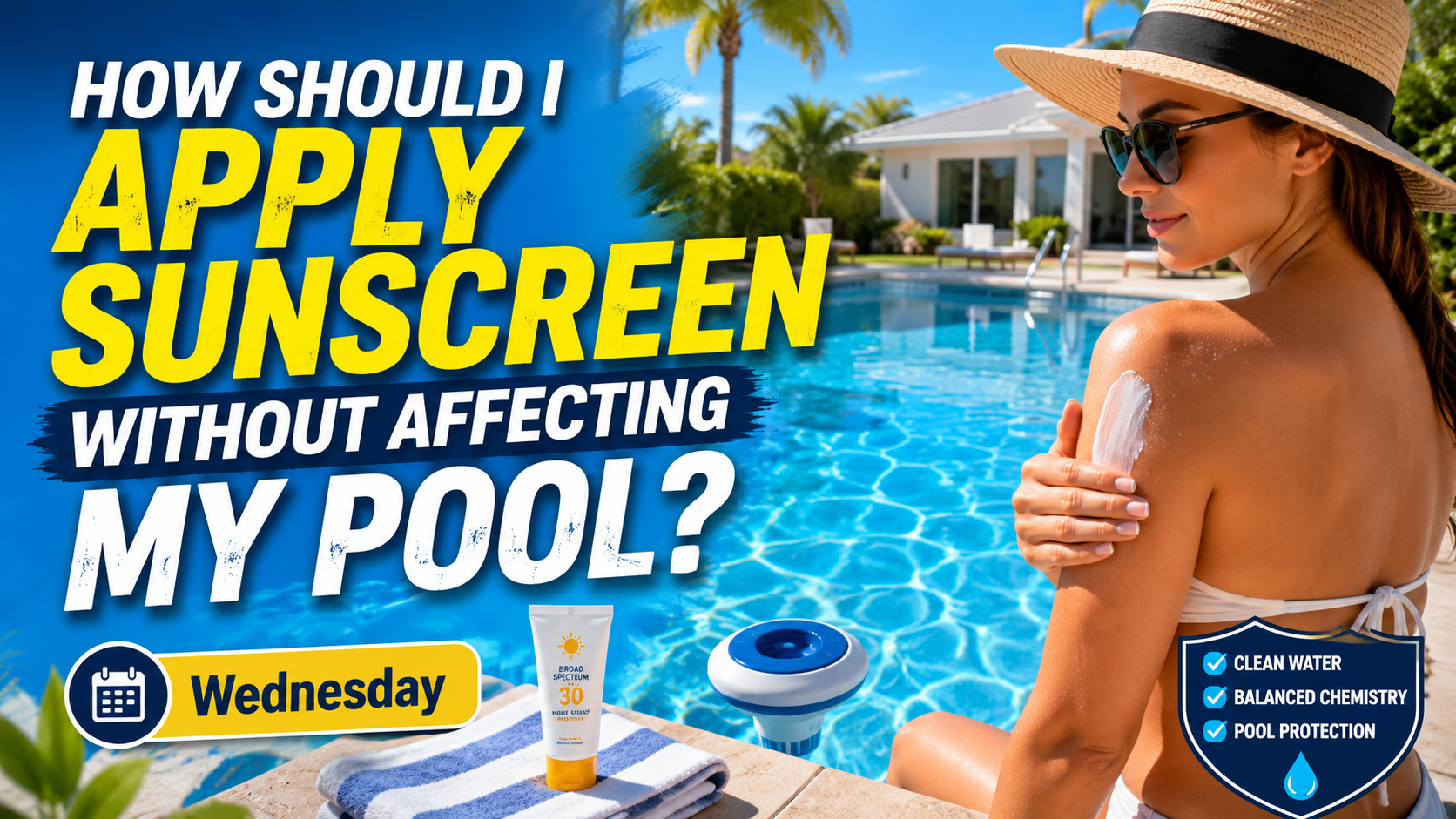
Skincare and water maintenance often enter into a silent conflict. When sunscreen products enter a treated aquatic environment, they don’t just dissolve; they initiate a series of chemical and mechanical reactions that alter the system’s balance.
Understanding the interaction between these lotions and filtration equipment allows for the adoption of application methods that protect both dermatological health and the integrity of the water’s ecosystem.
The chemical interaction with chlorine
Popular knowledge suggests that sunscreen simply dirties the water. However, the real problem happens at a molecular level. Chemical UV filters, such as avobenzone or oxybenzone, have a high oxidation demand.
When these compounds come into contact with the free chlorine in the water, the disinfectant abandons its primary task (eliminating bacteria and pathogens) to attack the lotion’s chemicals. This drastically reduces chlorine levels in a matter of hours, leaving the water vulnerable and generating byproducts called chloramines, which cause eye irritation and that characteristic “pool smell.”
The “channeling” phenomenon in filters
A technical fact that is rarely mentioned is the impact of sun oils on the filter media, especially in sand filters. The lipid (fat) bases of sunscreens do not evaporate or break down easily. Upon being absorbed by the filtration system, they act like a glue.
Over time, these oils clump the filter sand together, forming solid blocks. The water, seeking the path of least resistance, creates tunnels through these blocks. This phenomenon is known as “channeling.” When this occurs, water passes directly through the tunnels without being filtered, returning microscopic particles to the system and causing chronic cloudy water that no chemical product can fix.
Surface tension and skimmer blockage
Another unknown mechanical effect of poor application is the alteration of the water’s surface tension. When sunscreen washes off immediately upon entry, it creates an invisible biofilm on the surface.
This oily layer alters the way floating debris (leaves, dust, insects) moves. Instead of being naturally drawn toward the skimmers (the suction openings at the edge), the debris gets trapped in the oil film or adheres to the ceramic walls or liner, creating a dark scum line that requires manual friction to remove.
The correct application method
To avoid these technical and chemical complications, applying sunscreen must be treated as a process of mechanical adhesion to the epidermis.
- Respect the curing time: Sunscreen should be applied a minimum of 20 to 30 minutes before immersion. This time is not just to prevent sunburn; it is the exact period the volatile carriers in the cream need to evaporate, allowing the active ingredients to bond to the skin instead of sitting on the surface and washing off into the water.
- Prioritize mineral formulas: Using sunscreens based on zinc oxide or titanium dioxide (physical blockers) is mechanically superior for the aquatic environment. Unlike chemical filters, these minerals are biologically inert. They do not react aggressively with chlorine, preserving the chemical balance of the disinfectant.
- The pre-shower rule: Rinsing in fresh water for 60 seconds prior to immersion removes any excess lotion that the skin has not managed to absorb, reducing the load of oils introduced to the filtration system by more than 50%.
Implementing these steps ensures that the protective barrier remains on the skin, allowing disinfection and filtration equipment to operate at maximum capacity without suffering premature wear.