Hurricane Season Ends Nov 30: The Pool Equipment Check Most Owners Skip

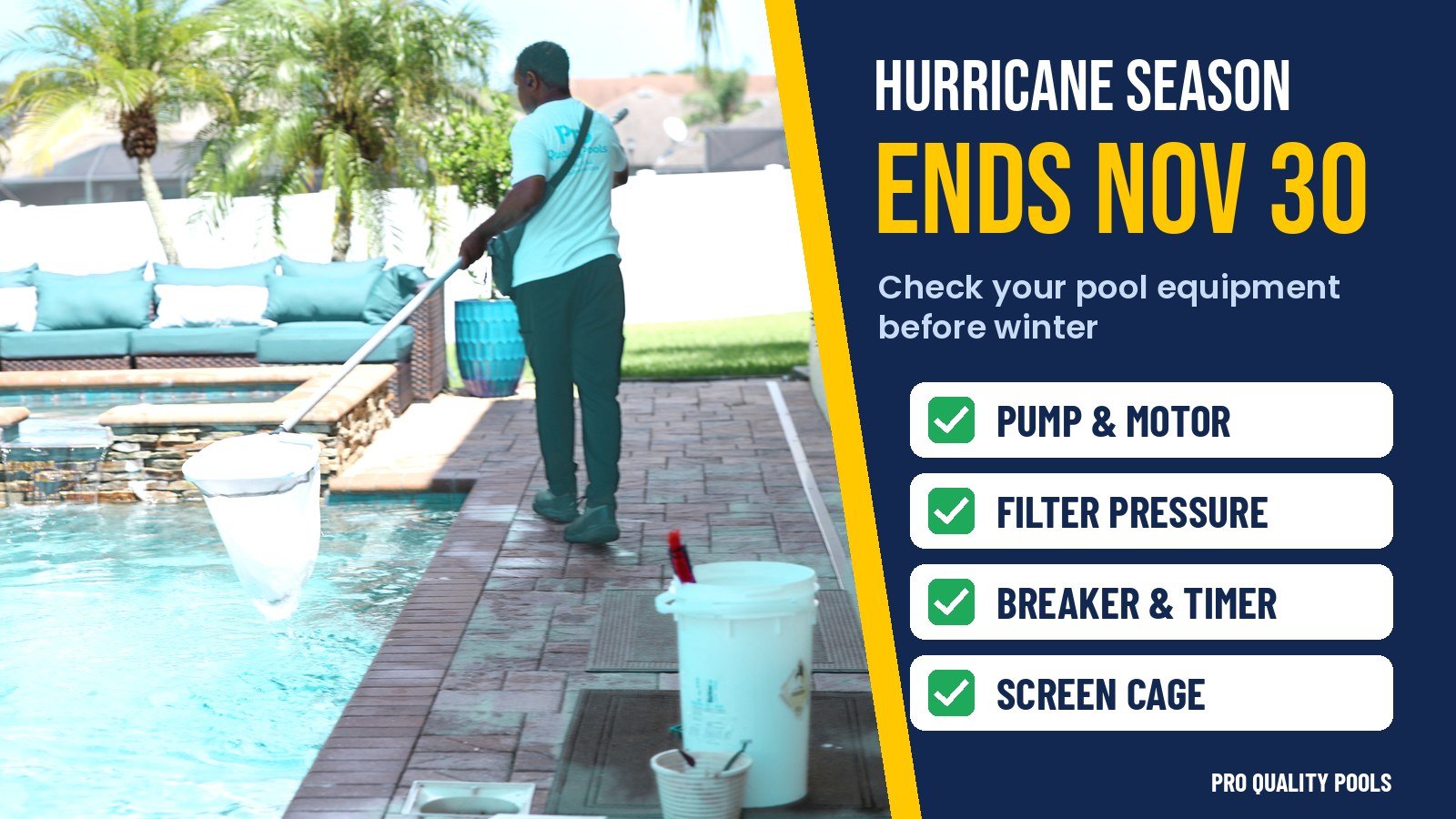
The Atlantic hurricane season officially ends on November 30. For most Florida homeowners, that date brings a quiet sigh of relief and nothing else. But six months of tropical downpours, lightning, power surges and wind leave marks on pool equipment that are easy to miss. A pool equipment check after hurricane season is the smartest thing a Riverview, Brandon or Valrico pool owner can do this month, while the weather is mild and before the cold fronts of winter arrive.
Why the End of the Season Is the Right Time
From June through November, your equipment pad works in the harshest conditions of the year: heavy rain, high humidity, standing water around the pad, power flickers and debris-loaded water after every storm. Problems often start small, like a cracked union, a tired capacitor, or a corroded breaker, and only become obvious later. Fixing them in November, when service schedules are calmer and the pool needs less run time, is cheaper and less stressful than fixing them in an emergency.
Your Pool Equipment Check After Hurricane Season
Walk out to the pad with a flashlight and go through this list. If anything looks wrong, write it down and call a professional before attempting electrical repairs.
Pump and Motor
- Listen for grinding, screeching or a louder hum than usual. Those can be signs of worn bearings.
- Look for water dripping under the pump, which often means a failing shaft seal.
- Check for rust stains on the motor housing or around the vents.
- Make sure the pump lid is clear and tight, without cracks.
To understand how long a pump is expected to last and what wears out first, see our article on pool pump function and lifespan.
Filter
- Note the pressure gauge reading when clean, and compare it now.
- Inspect the tank and clamp band for cracks or bulging.
- Storm debris and dirt can overload cartridges and sand beds. A thorough cleaning may be overdue.
Plumbing and Valves
- Look for white crust, drips or wet spots at unions and glued joints.
- Turn valves gently to make sure they move freely.
- Check that pipes are still supported and haven’t shifted after saturated soil.
Electrical, Timers and Automation
- Look at the breaker panel and timer box for corrosion, rust or signs of insects nesting inside.
- Confirm your timer or automation still shows the correct time. Power outages often reset clocks, and daylight saving time just changed too.
- Test the GFCI outlets and breakers near the pool.
- If you had a nearby lightning strike or surge, watch for equipment that behaves strangely.
Heater or Heat Pump
- Clear leaves, grass and debris around the unit so air can flow.
- Turn it on now to confirm it works before you need it for the holidays.
- Look for corrosion on the coils or panels.
Don’t Forget the Pool Itself
- Screen enclosure: check for torn panels, loose screws and bent frames after summer winds.
- Deck and coping: look for new cracks or loose tiles, often caused by soil movement after heavy rain.
- Drainage: make sure deck drains and yard drainage aren’t clogged with sand and leaves.
- Water chemistry: months of rain dilute stabilizer, alkalinity and calcium. A full water test now resets your balance for winter.
If your pool took on a lot of rain or debris this season, our guide on how to save your pool water after a heavy storm walks you through the recovery steps.
Small Signs That Deserve Attention
- The pump takes longer than usual to prime.
- More air bubbles in the pump basket.
- The water level drops faster than normal evaporation.
- Breakers trip occasionally.
- Water around the pad that wasn’t there before.
These are the early warnings of larger repairs. Addressing them now can extend the life of equipment that costs hundreds or thousands of dollars to replace.
A Good Time to Plan Upgrades
If your pump is old, single-speed and noisy, the end of storm season is a good moment to consider a variable-speed pump. They use far less energy, run more quietly and can qualify for utility rebates in some areas. Planning an upgrade in late fall also avoids the spring rush.
Frequently Asked Questions
When does hurricane season end in Florida?
The Atlantic hurricane season officially runs from June 1 to November 30 each year, although late-season storms are uncommon after mid-November.
What should I check on my pool equipment after a storm season?
Check the pump for noise and leaks, the filter pressure, plumbing joints, electrical boxes and breakers, timer settings, your heater and the screen enclosure.
Conclusion
The end of hurricane season is the perfect checkpoint for your pool. Summer storms quietly wear down pumps, filters, plumbing and electrical parts. A careful look in November, when the weather is calm, helps you catch problems early and start winter with reliable equipment.
Final Recommendations
Walk your equipment pad this month with the checklist above, reset your timers, test the heater and get a full water test. Leave electrical work to licensed professionals. If you’d like a second set of eyes, our technicians inspect equipment as part of every regular visit and will tell you honestly what needs attention and what can wait.
Need Help With Your Pool in Riverview and Nearby?
Pro Quality Pools is a family-owned pool cleaning company serving Brandon, Valrico, Riverview, FishHawk, Seffner and Dover, Florida. Explore our pool cleaning and maintenance services or contact us today for a free quote.