Is a salt chlorination system really cheap

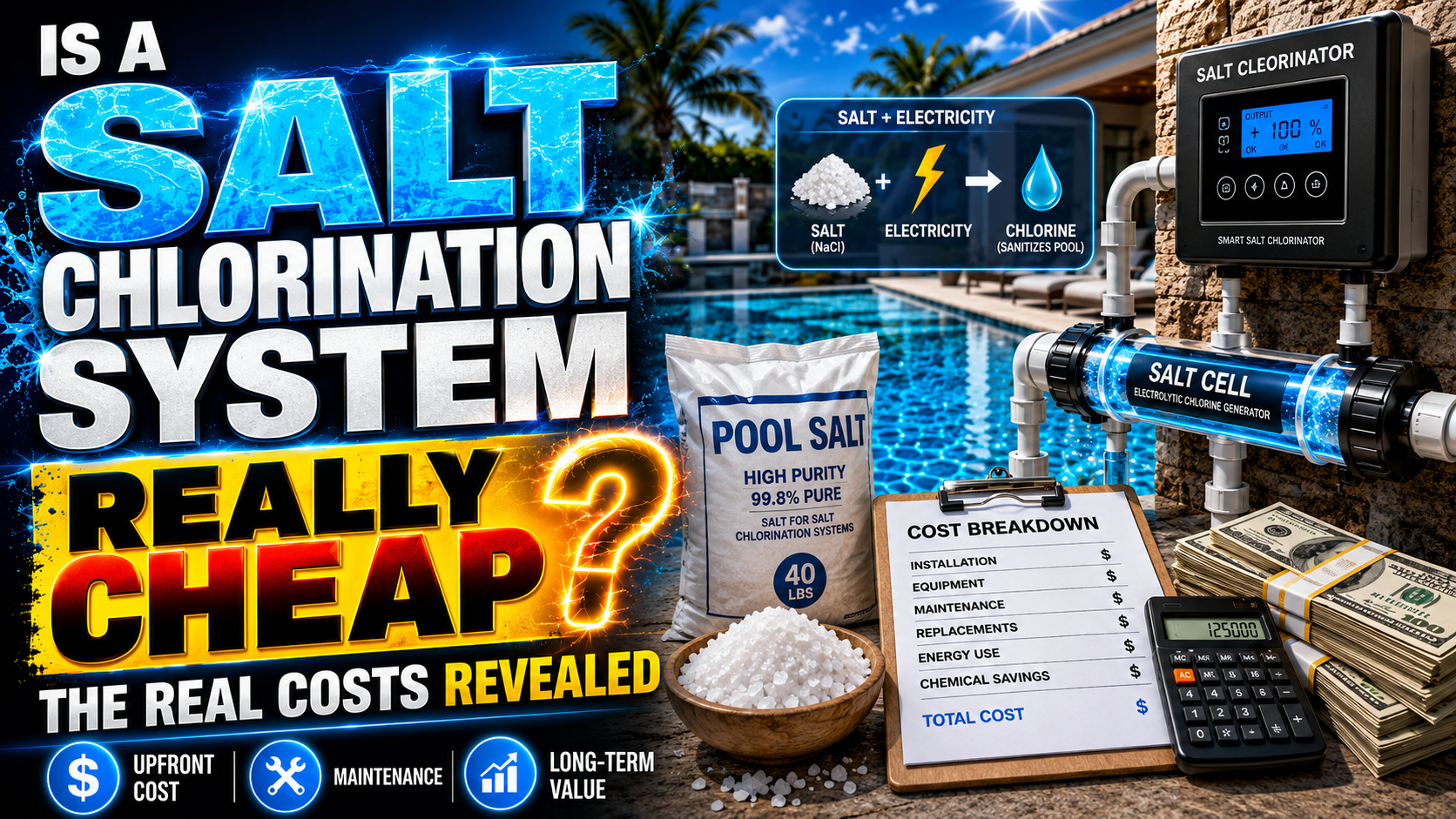
There is a widespread belief that transforming a traditional pool into a saltwater setup completely eliminates chemical maintenance costs. The promise is attractive: add salt once and forget about buying chlorine forever. However, beneath the crystal-clear surface, the financial and operational reality of this equipment is much more complex than marketing suggests.
To determine if this investment is truly economical in the long run, it is necessary to analyze the chemical behavior of the water and the mechanics of the equipment involved, stepping away from commercial myths.
The small underwater factory
Before talking about costs, it is essential to demystify what exactly this system is. A saltwater pool is not a chlorine-free pool; in fact, it is quite the opposite.
The equipment, known as a salt generator or salt cell, works like a small chemical factory installed directly into the plumbing. Through an electrical process called electrolysis, the system takes the salt dissolved in the water (sodium chloride) and separates it, releasing pure chlorine. Once this chlorine fulfills its function of disinfecting, it turns back into salt, and the cycle repeats.
Although the concept of recycling the sanitizer sounds like ultimate savings, this physical and chemical process brings structural consequences that are rarely mentioned.
Technical facts that change the spending perspective
The profitability analysis drastically changes when observing the side effects of the electrolysis process on the pool environment. These are the real factors that determine the true cost:
- The constant battle against pH: An inevitable side effect of salt electrolysis is that it naturally and constantly raises the water’s pH. To prevent the water from becoming cloudy or the chlorine from losing its effectiveness, it is mandatory to counteract this rise by regularly adding muriatic acid. The budget that was previously allocated to buying chlorine tablets must now be largely redirected to the continuous purchase of gallons of acid.
- The 10,000-hour hourglass: The main component of the system, the salt cell (where the electrical magic happens), is not eternal. The ruthenium or iridium plates that make it up wear out with use. Its lifespan is not measured in years, but in hours of operation, averaging about 10,000 hours. In warm climates, where pumps must run longer to keep the water clean, this clock ticks fast. Replacing this cell represents a considerable expense that usually cancels out whatever was saved on chemicals during that period.
- The invisible threat of galvanic corrosion: Saltwater conducts electricity much more easily than freshwater. This accelerated conductivity creates a little-known phenomenon called galvanic corrosion, which silently attacks any submerged metallic component: ladders, light screws, and most critically, the copper core of water heaters. If a “sacrificial zinc anode” (a piece of metal specifically designed to rust and protect the rest of the equipment) is not installed, structural damage can cost thousands of dollars in repairs.
- Accelerated scale buildup: The same electrical plates that generate the chlorine reach very high temperatures during operation. This causes the calcium present in the water to quickly adhere to them, forming scale crusts. If the water has high hardness levels, the cell will frequently require manual acid washes. Each acid wash reduces a percentage of the plates’ lifespan, bringing the time for their expensive replacement closer.
The verdict on real maintenance
When adding up the electrical consumption of the equipment, the constant purchase of acid to balance the pH, the eventual replacement of the generator cell, and the prevention of corrosion damage, the numbers balance out.
A salt chlorination system is not necessarily a way to save money compared to traditional methods. Its true value lies in the quality of the experience: it provides much softer water for the skin and eyes and eliminates the strong chemical odor associated with conventional disinfection methods. It is an investment in comfort and partial automation, not an expense-cutting strategy.