What is the lifespan of a pool systems and structures

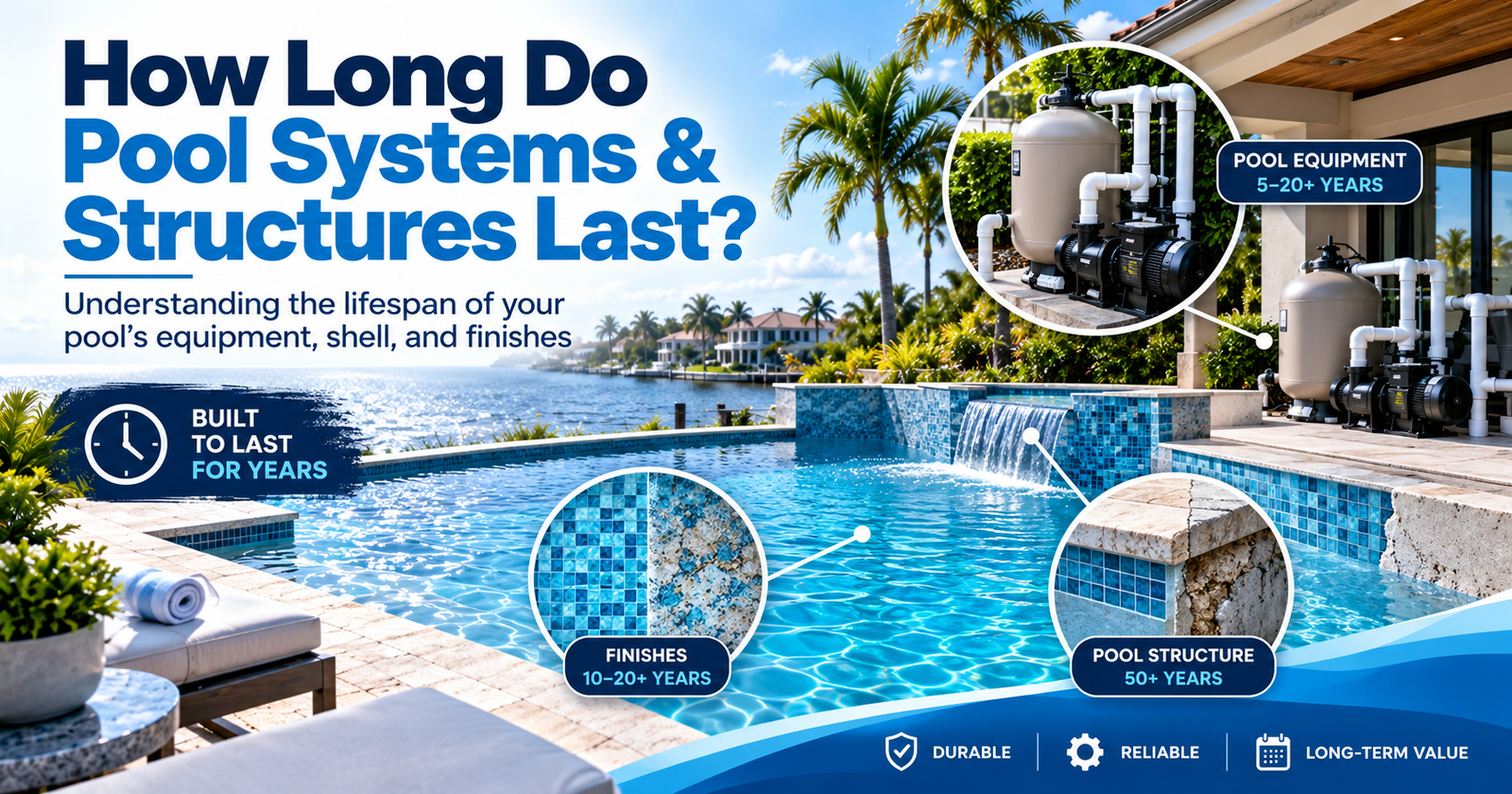
The time an aquatic facility maintains its functionality depends directly on the water’s chemical balance and the precision of its maintenance, rather than the initial manufacturing materials. Below is a breakdown of the actual longevity of each component, the lesser-known physical or chemical factors that dictate their deterioration, and the technical actions required when that time runs out.
Structures and Surfaces
- Concrete and Gunite (50+ years / Interior finish: 10 to 15 years): While the structural shell is nearly permanent, the interior finish (plaster or quartz) wears down. A poorly documented physical phenomenon is that if the water has low calcium hardness levels, it becomes corrosive and begins to leach (extract) calcium directly from the walls, ruining the plaster’s texture in under 5 years.
- What to do at the end of its lifespan: The pool is not replaced; instead, a process called “re-plastering” is performed. When the surface becomes porous or sharp, the structure must be drained, hydro-blasted (sandblasted) to remove the dead layer, treated with a bonding agent, and coated with a new plaster or quartz/pebble mix. To prevent premature deterioration of the new finish, it is crucial to strictly monitor the water’s Langelier Saturation Index (LSI) from the very first day of filling.
- Fiberglass (25 to 30 years / Coating: 12 to 15 years): The shell is durable, but the glossy protective layer (gelcoat) degrades. An excess of stabilizer (cyanuric acid), which is commonly ignored, not only inhibits chlorine’s action but also alters the water’s surface tension. Over time, this promotes the appearance of osmotic micro-blisters in the fiberglass.
- What to do at the end of its lifespan: A surface restoration is necessary. This involves draining, completely sanding the oxidized gelcoat, opening and individually repairing each osmotic blister with fiberglass putty, and finally applying marine-grade epoxy resins or a new sprayed gelcoat layer. This restores the waterproof barrier without having to unearth the entire shell.
- Vinyl Liner (7 to 15 years): Vinyl degradation is rarely due to physical friction. Consistently maintaining free chlorine concentrations above 5 ppm or a highly acidic pH extracts the plasticizers from the material, making it stiff, brittle, and prone to sudden tears.
- What to do at the end of its lifespan: The material cannot be patched on a large scale; it requires a total replacement. During this process, the draining phase is utilized to inspect the underlying floor (usually compacted sand or vermiculite). Uneven areas, hardened footprints, or floor imperfections must be repaired before hanging the new liner. Installation should always be done on a warm day so the new vinyl has the necessary elasticity to stretch to the walls without tearing.
Filtration and Pumping Systems
- Water Pumps (8 to 12 years): The number one cause of premature pump death is not motor wear, but an effect called cavitation. This occurs due to tiny air leaks in the suction line that generate vapor bubbles; as they pass through the system, these bubbles implode with enough force to tear chunks of plastic off the internal impeller in a matter of months.
- What to do at the end of its lifespan: If the electric motor remains intact but water flow drops, only the “wet end” can be rebuilt (replacing the impeller, diffuser, and mechanical seals) for a fraction of the cost. However, if the motor has failed (usually evidenced by a high-pitched squeal from bearings rusted by a water leak), the current standard technical solution is to replace the entire unit with a variable-speed pump, which eliminates the cavitation problem caused by excessive suction and optimizes the system’s hydraulics.
- Sand Filters (Tank: 15+ years / Sand: 5 to 7 years): Contrary to popular belief, sand does not lose its “sharp edges” from water friction. What truly shortens its life is calcification and saturation from tanning oils, which glue the grains together, forming solid rocks that force the water to create direct channeling paths without being filtered.
- What to do at the end of its lifespan: The solidified filter media must be extracted (usually with an industrial vacuum to avoid damaging internal parts). Once empty, it is mandatory to inspect the “laterals” (the fragile plastic flutes at the bottom) for micro-cracks before refilling. During the replacement, a technical upgrade is to substitute silica sand with activated crushed glass, a medium that does not calcify as easily and can trap much more microscopic particles.
- Cartridge Filters (Tank: 10 to 15 years / Element: 1 to 3 years): Cleaning the pleated paper bands with high-pressure water (power washers) or soaking them in acid without degreasing them first bakes the oils directly into the polyester fibers, instantly destroying their porosity and filtering capacity.
- What to do at the end of its lifespan: Collapsed cartridges or those with broken retaining bands must be thrown away and replaced with new ones. The key technical action during this change is to meticulously clean the tank groove and apply a specific silicone or Teflon-based lubricant to the large rubber O-ring that seals the equipment. Petroleum-based products like Vaseline must never be used, as they expand and destroy the rubber, causing immediate pressure leaks.
Underground Plumbing
- PVC Plumbing Systems (40 to 50 years): The pipes are immune to regular water chemistry. The real threats that suddenly reduce their lifespan to zero are millimeter-scale soil settlements around the pool. These generate shear stress at the joints of underground elbows, causing microscopic cracks that are invisible from the surface.
- What to do at the end of its lifespan (or in case of fracture): There is no need to blindly excavate or destroy the entire perimeter of the property. The technical action requires sectoring the plumbing lines, pressurizing them with compressed air or nitrogen, and using geophones (high-sensitivity ground microphones) to listen for the exact vibration of the leak under the concrete or dirt. Once the fault is located, only a small quadrant is excavated, and when replacing the broken pipe, expansion joints or elbows are installed to absorb future tectonic movements or settling without fracturing again.