How to know if a public pool is truly clean

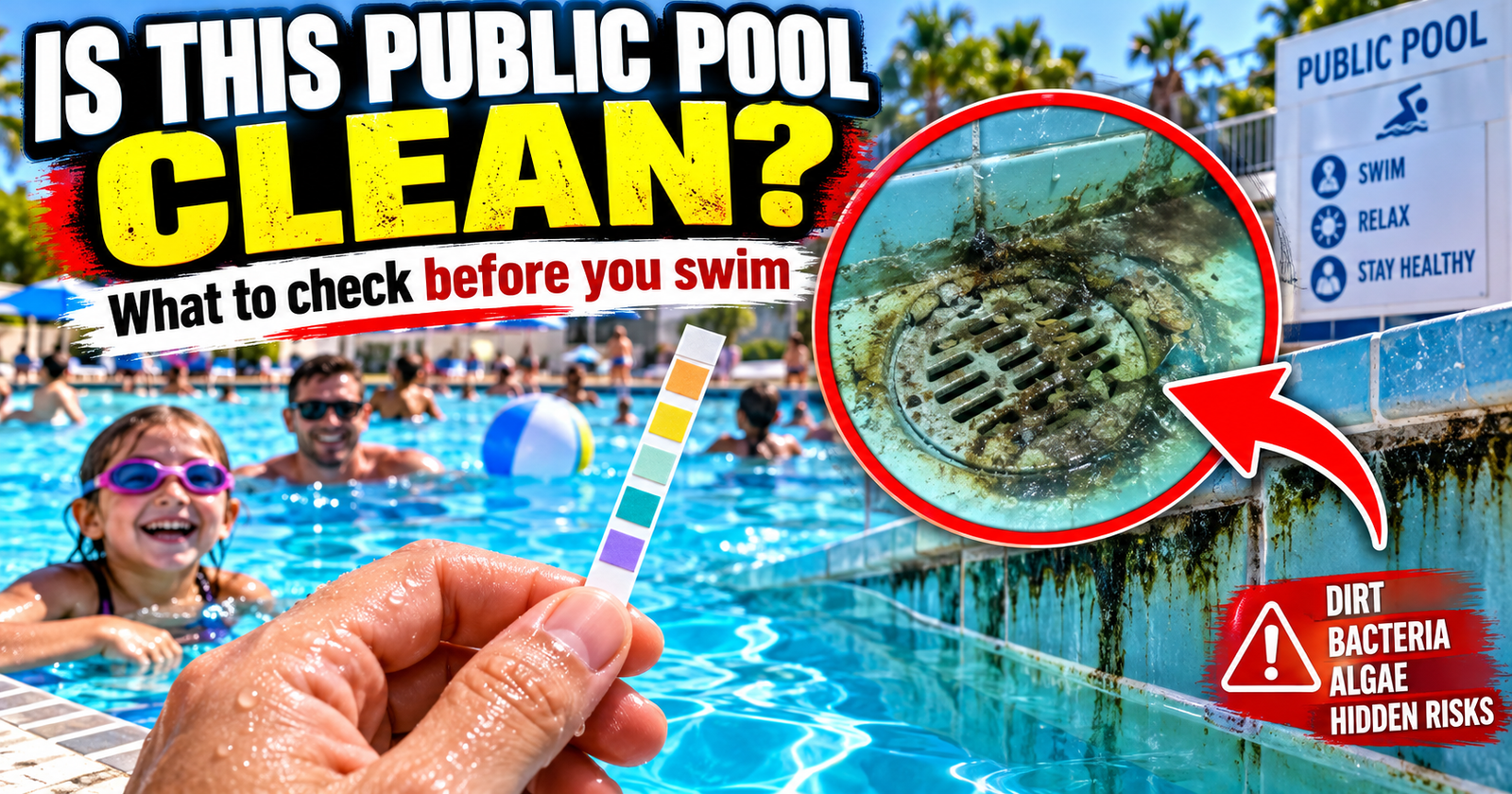
Most people assume that if the water does not look green and has that strong, familiar smell, the pool is spotless. Daily maintenance realities reveal something quite different: water can easily deceive the eye, but a few quick checks can reveal its actual condition within minutes.
The false “clean” smell
- Effective chlorine does not smell: When chlorine is actively doing its job in properly balanced water, it gives off virtually no odor.
- The true origin of the scent: That harsh, eye-stinging smell develops only after disinfectant mixes with sweat, traces of urine, saliva, and sunscreen. A strong, overpowering chemical odor right at the entrance signals that the water is saturated with organic matter and lacks the free chlorine needed to keep sanitizing.
The bubble check and surface motion
- Bubbles that linger: When splashing water creates bubbles that float for several seconds like light foam, or leaves a thin film along the edge, the water is carrying excessive body oils, cosmetics, and suntan lotions. In well-maintained water, bubbles burst and clear immediately.
- Active circulation: Pool water should never sit like a stagnant pond. A gentle, steady current should always guide surface debris toward the perimeter skimmer baskets. Most contaminants float first; if the circulation system fails to pull them in, they simply drift among swimmers.
The touch test: walls and handrails
- The slippery film: Running a hand along the tiles right at the water line or down the metal pool ladder is the ultimate check. A slick, soap-like film indicates a stubborn bacterial layer clinging to surfaces where chemicals are falling short. Underwater surfaces should always feel completely firm and clean.
- Clarity at the bottom drain: Standing by the deep end and looking down at the main drain grate should reveal sharp, crisp outlines. If the edges blur or waver as if viewed through fogged glass, tiny suspended particles are overwhelming the filtration system and water flow is sluggish.