Why the pH is so important in a pool

Clear water can be visually deceiving. At first glance, a crystal-clear pool seems to be in perfect condition, but at a microscopic level, a constant chemical battle is being waged. Right in the exact center of this balance is pH, a measurement that determines how acidic or basic the water is.
Although often perceived as just a simple number on a test strip, this value dictates absolutely everything that happens on a structural, chemical, and biological level within the water. Understanding how it works requires going beyond basic manuals and observing the real reactions happening beneath the surface.
The optical illusion of chlorine
There is a widespread assumption that adding chlorine is the only action needed to guarantee sanitized and safe water. However, the effectiveness of any sanitizer is chained directly to the pH level.
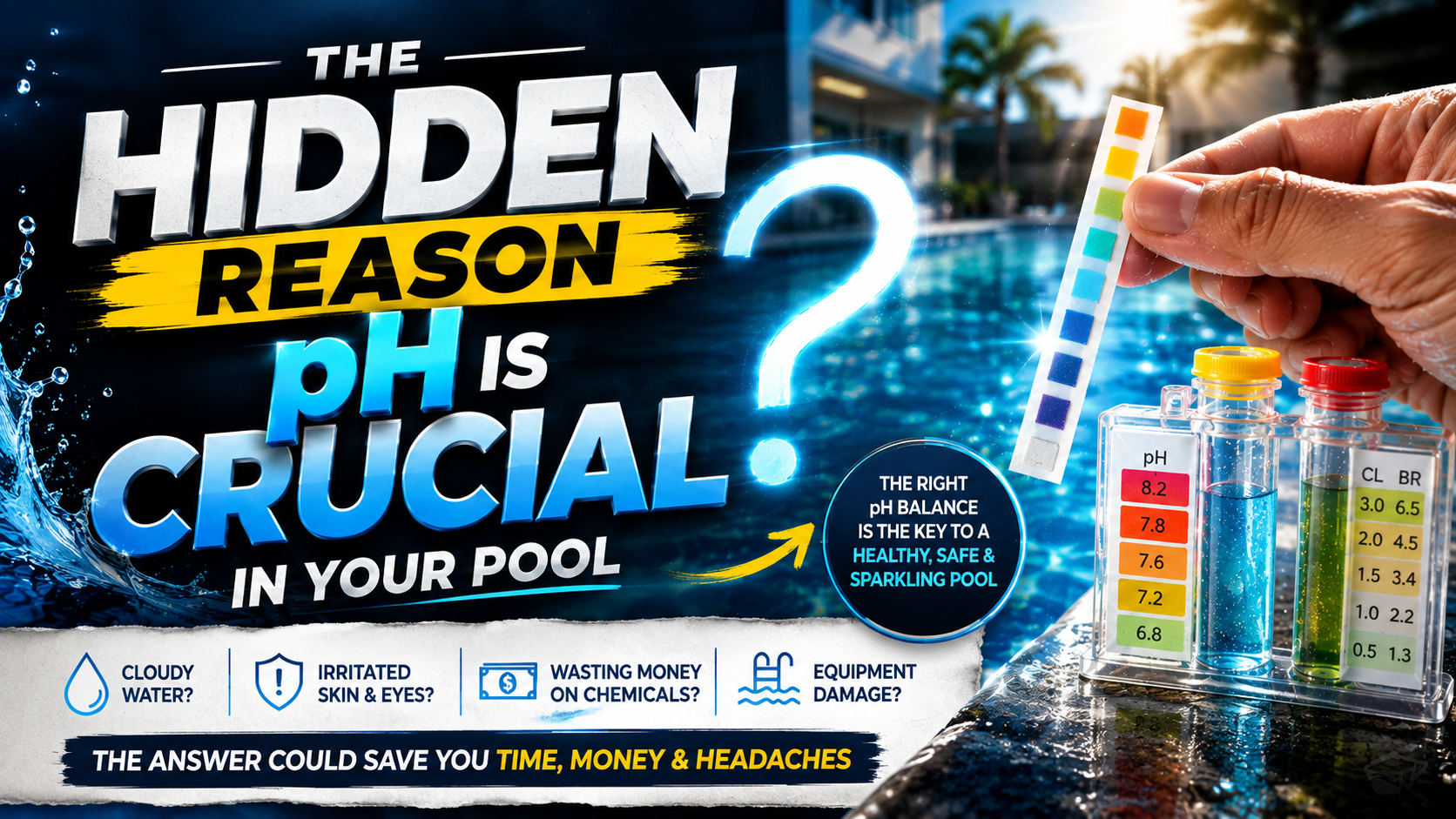
A technical fact rarely discussed is how pH “turns off” chemicals. If the water’s pH rises to a level of 8.2 (slightly alkaline), the chlorine present loses approximately 85% of its sanitizing power. In this scenario, the pool could contain gallons of chemicals floating in it, but bacteria, viruses, and algae will continue to thrive freely because the sanitizing compound is chemically inactive. Maintaining the pH between 7.2 and 7.6 is the only thing that allows chlorine to do the job it was designed for.
The true origin of red eyes
When eyes become red, burn, and tear up after a swimming session, the immediate conclusion is usually that “the water has too much chlorine.” The science behind this proves otherwise.
The tear fluid of the human eye has a natural, exact pH level of 7.4. When pool water deviates from this number, whether becoming too acidic or too basic, it creates a direct conflict with the biology of the eye. It is this difference in pH that extracts the natural moisture from the eyeball, causing irritation. If the water is kept exactly at a 7.4 level, eyes can be opened underwater with minimal or no discomfort, regardless of the presence of sanitizers at normal levels.
The green hair myth
Another fascinating chemical reaction occurs with light or bleached hair. It is commonly assumed that an excess of chemicals bleaches the hair, turning it green. The reality is an invisible metal corrosion process.
When the pH drops below 7.0, the water becomes acidic and, by nature, seeks minerals to balance itself. Failing to find them freely available, the water begins to “eat” the pool’s components, microscopically dissolving the copper found in the heat exchangers of motors and heaters. That dissolved copper remains suspended in the water and is the true culprit that attaches to the proteins in blonde hair, oxidizing and giving it that greenish tint.
The silent destruction of infrastructure
The impact of pH goes beyond the water; it is a matter of structural integrity.
- When it is too low (Acidic): The water becomes corrosive. It literally dissolves the calcium from the plaster or cement walls of the pool, making them rough and porous. Plastics become brittle, and internal metals rust prematurely.
- When it is too high (Alkaline): The water becomes saturated. It can no longer keep minerals dissolved, so calcium precipitates and forms hard white scale on the tiles, clogs filters, and reduces the internal diameter of the pipes, forcing motors to work twice as hard.
The bodyguard of the water
To fully understand pH, it is necessary to mention its stabilizing factor: total alkalinity. pH is highly volatile; heavy rain, sweat, sunscreens, or simply the agitation of the water can cause the level to jump from one extreme to the other in a matter of hours. Alkalinity acts as a chemical “sponge,” absorbing these impacts to prevent the pH from fluctuating wildly.
Achieving perfection in pool water is not about brute force or an excess of products, but about understanding that pH is the conductor of the orchestra. When this number is in harmony, all other chemical, biological, and mechanical elements work effortlessly.