Causes of cloudy water and differences between bleach and chlorine

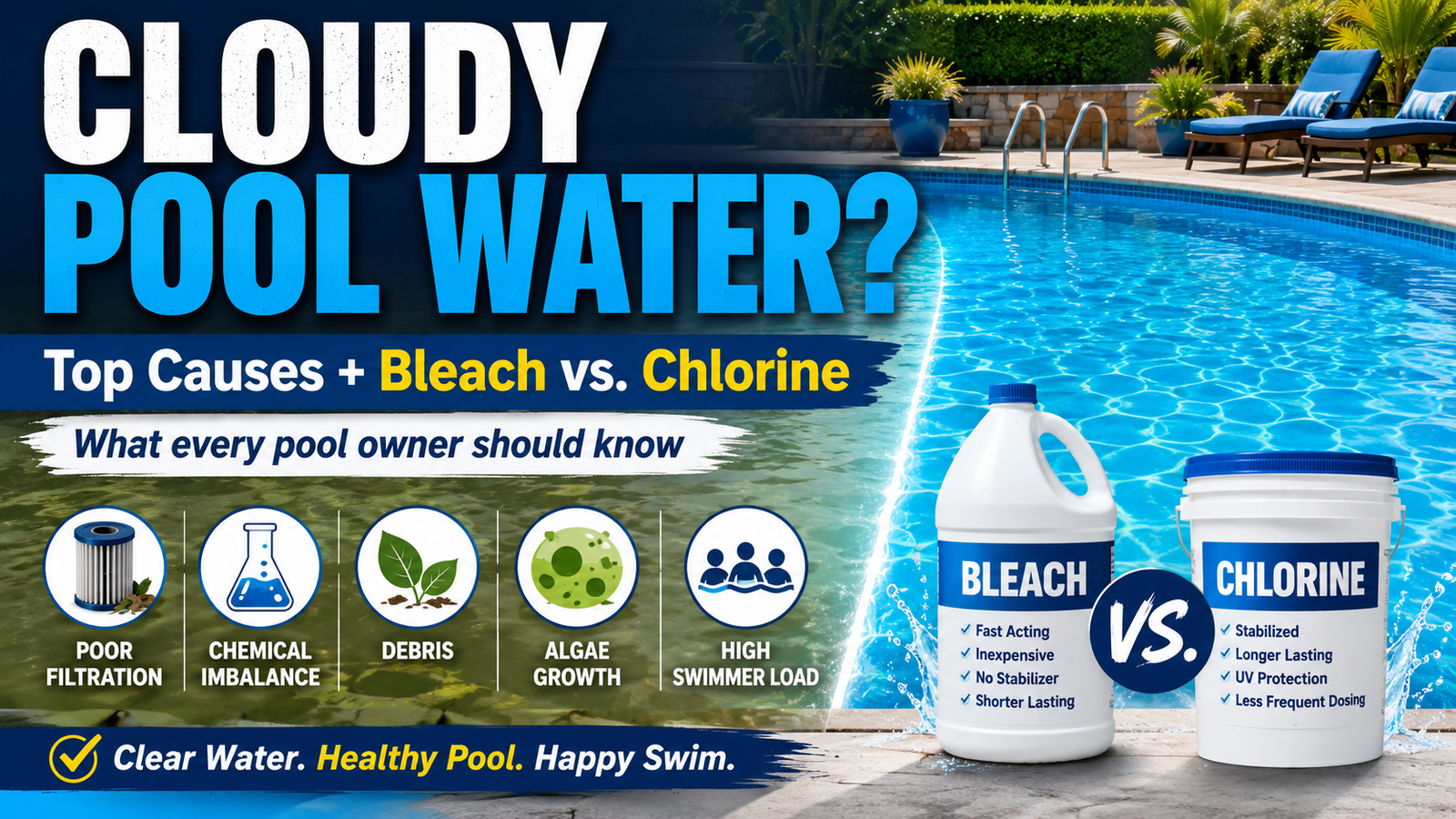
Crystal clear water is not just about filtration; it is the result of a precise chemical balance. When water loses its transparency and turns milky, it is rarely due to simple dust accumulation. There are invisible chemical reactions and common misunderstandings about disinfection products that completely alter this balance.
The invisible causes of cloudy water
- Lockdown by over-protection: A little-known phenomenon is that cloudy water can appear even when chlorine levels read high. This happens because of cyanuric acid, a stabilizer used to shield chemicals from the sun. If its concentration exceeds the limit, it acts as a chemical straitjacket: the chlorine becomes locked and inactive. Microorganisms thrive freely, and the water turns cloudy, fooling traditional test strips.
- The inverse solubility of calcium: Unlike salt or sugar, which dissolve better in hot liquids, calcium reacts the opposite way. A sudden spike in ambient temperature can cause dissolved calcium to precipitate out suddenly. Within hours, the water expels this mineral, creating a chalky, whitish haze that is impossible to remove with just hours of filtration.
- Total Dissolved Solids (TDS) saturation: Water acts like a chemical sponge with a strict retention limit. Microscopic traces of lotions, body oils, and disinfection byproducts gradually accumulate. Upon reaching maximum saturation, the water can no longer absorb anything else. New microparticles remain suspended in the liquid, generating chronic cloudiness.
Chemical differences between bleach and chlorine
- The active ingredient mirage: Both supermarket bleach and water-treatment chlorine share sodium hypochlorite. However, pure chlorine is formulated at concentrations of 10% to 12.5%, while household bleach barely reaches 4% to 6%. Water requires a rapid chemical impact that low concentrations cannot achieve without disrupting the pH balance.
- The polymer and thickener trap: The most critical difference lies in the additives. Commercial bleach is designed to cling to clothes or surfaces, so it contains resins, fragrances, and thickeners. When introduced into large volumes of water, these substances react violently, creating a dense, persistent foam that, paradoxically, clouds the liquid and clogs purification systems.
- The final destiny of salt: A fascinating aspect of pure sodium hypochlorite is its life cycle. As it destroys bacteria and breaks down from ultraviolet rays, its final byproduct is simple sodium chloride (table salt). Any body of water constantly treated with pure chlorine undergoes an invisible transition, slowly becoming imperceptibly saline over time.
What happens if bleach is poured into the water instead of chlorine?
If the decision were made to replace the usual chemical treatment by pouring gallons of supermarket bleach into a large volume of water, the result would not be an economical disinfection, but a disastrous chain reaction.
- Alkaline shock and “calcium soup”: Household bleach contains high amounts of sodium hydroxide (lye) to remain stable in its bottle. When poured, the water’s alkalinity and pH skyrocket instantly. This violent and sudden shift triggers the inverse solubility of calcium mentioned earlier. In minutes, clear water transforms into an opaque, milky liquid, coating walls and pipes with a rough crust of scale.
- The useless fluorescence phenomenon: Many commercial bleaches include optical brighteners, compounds designed to absorb ultraviolet light and emit blue light, tricking the human eye into seeing whiter clothes. In a body of water, these chemicals can cause the liquid to acquire a strange fluorescent glow under certain lighting, giving a false illusion of purity while bacteria continue to multiply unchecked.
- The chemical odor trap: Because bleach has such a low concentration, it never fully oxidizes organic contaminants. Instead of destroying them, the weak chemical fuses with them to create new compounds called chloramines. These are the true culprits behind the distinctive, unpleasant “pool smell” and burning eyes. Paradoxically, by using bleach, the water will smell more strongly of disinfectant than ever, but it will be biologically dirtier.