Why you should not wear cotton clothes in your pool

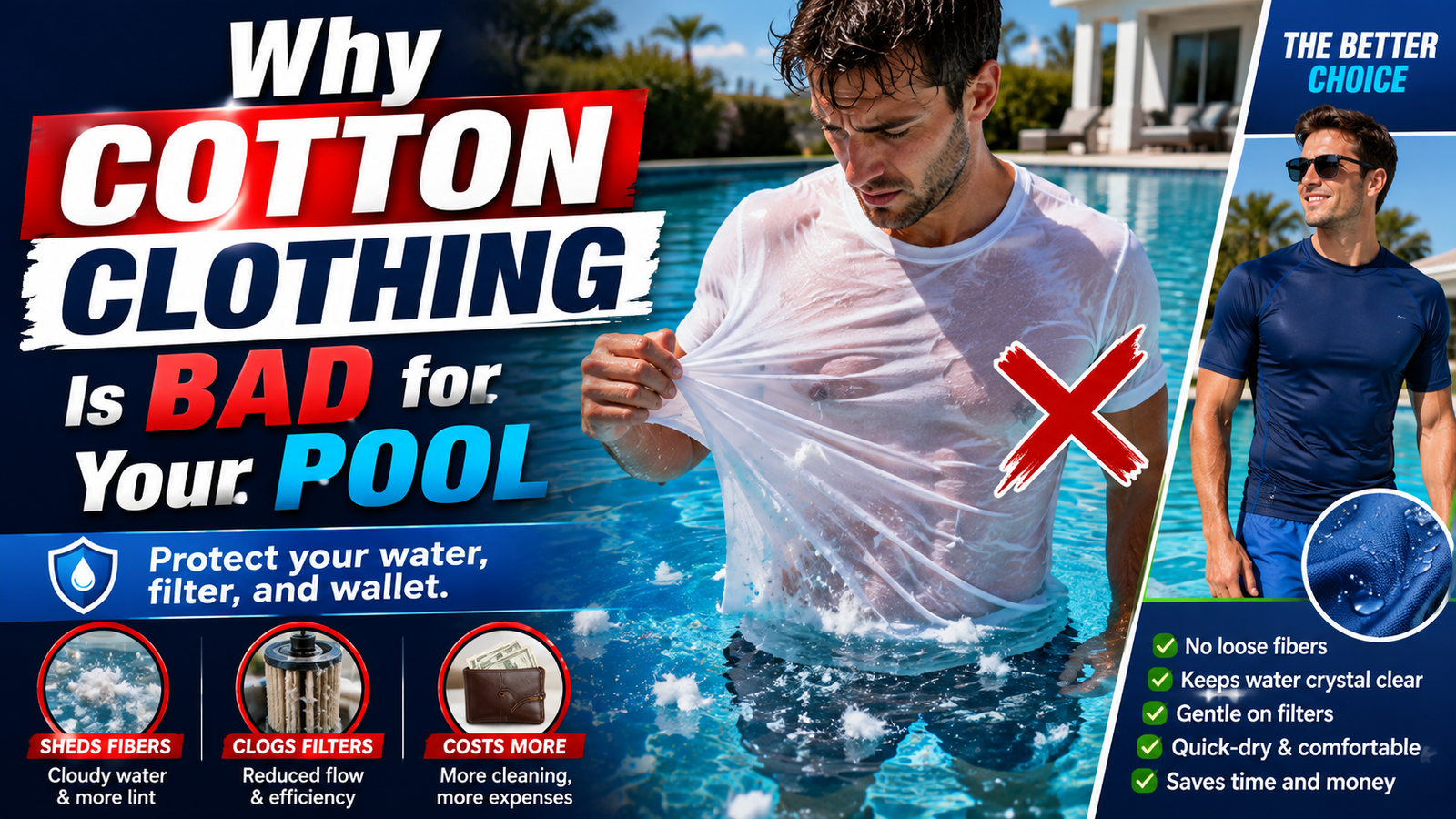
Crystal clear water is the result of a delicate chemical and mechanical balance that can be disrupted by seemingly harmless factors. Introducing cotton garments into this environment triggers a series of microscopic reactions that compromise both water quality and equipment integrity.
The invisible trap of phosphates and detergents Cotton is a highly absorbent cellulose fabric that retains soap and fabric softener residue even after multiple machine washes. These laundry products are loaded with phosphates. In a treated aquatic environment, phosphates act as the ultimate super-nutrient for algae. A single cotton t-shirt can release enough phosphates into the water to neutralize the sanitizer barrier, creating the perfect scenario for a sudden outbreak of mustard or green algae—an imbalance that is often costly to reverse.
Fiber collapse and microscopic snow Unlike synthetic polymers such as lycra or nylon, natural cotton fibers have no structural resistance to chlorine or bromine. Oxidizing chemicals attack and break down the cellulose almost immediately. This causes the garment to release thousands of microfibers invisible to the human eye. This kind of “cotton snow” travels directly through the skimmers into the heart of the circulation system.
Suffocating the filtration system When cotton microfibers reach the filtration system, they behave very differently from dust or leaves. They adhere firmly to the pleats of cartridges or diatomaceous earth grids, weaving a compact film that seals the microscopic pores of the filter. This blockage suffocates the system, spiking the internal pressure of the tank. As a result, the pump is forced to work in overdrive to move the water, which increases electrical consumption and accelerates the thermal wear of the motor.
Accelerated chloramine generation The dense weave of cotton fabric traps and retains organic matter from the skin at a much higher rate than standard swimwear textiles. Upon entering the water, this organic load clashes with the available free chlorine. The chemical reaction depletes the useful sanitizer and generates chloramines, which are the byproducts responsible for the classic, annoying “chemical smell” and burning eyes, completely ruining the water’s balance.