What to do if sand enters your pool

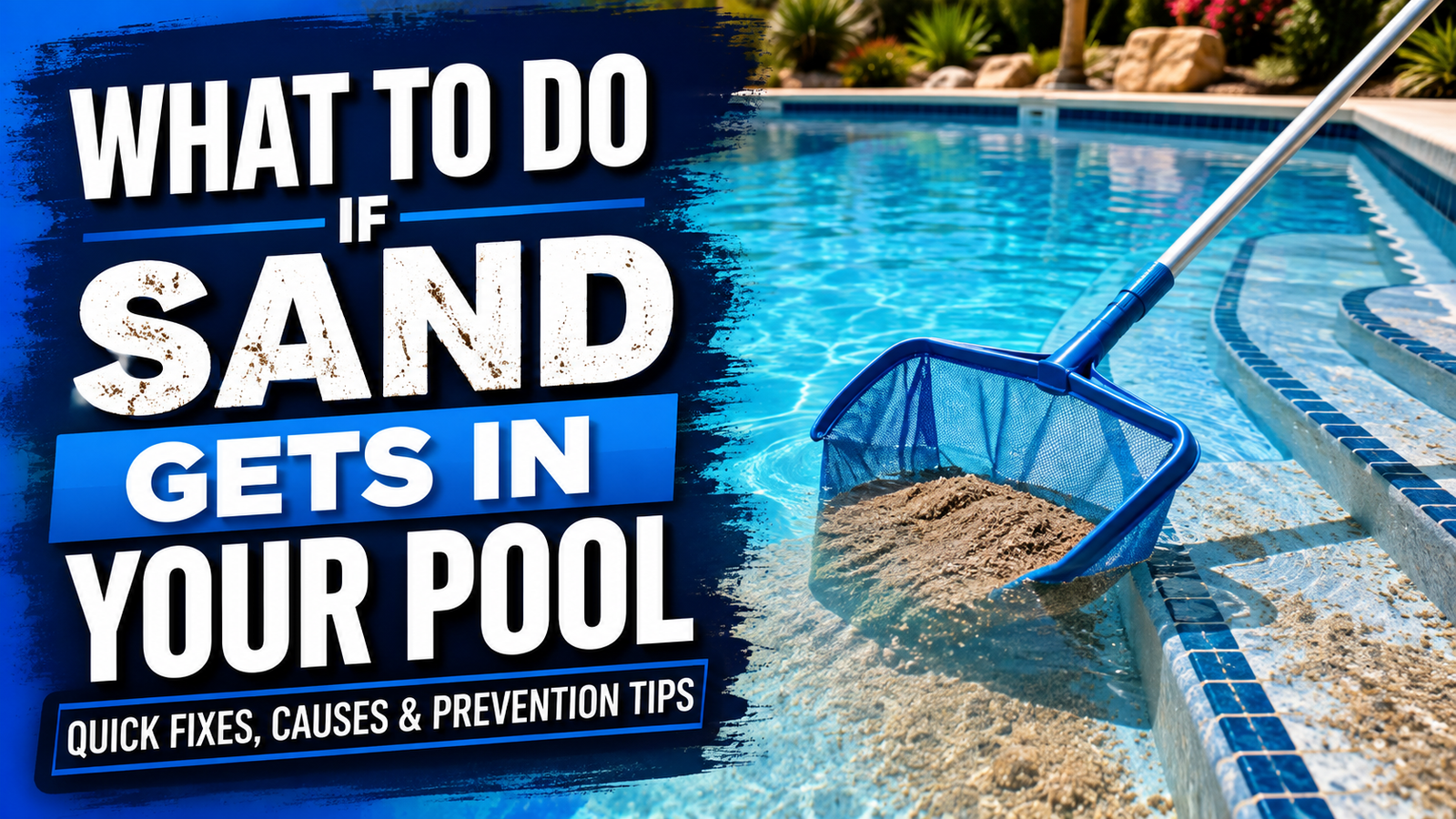
When the pool is located in a coastal area and the mounds of sand come from the beach, the cleaning dynamics change completely. Beach sand is not just inert silica; it carries elements from the ocean that require specific chemical and physical management, very different from a simple mechanical filter failure.
The invisible impact of marine sand
- Silent chemical alteration: Unlike filter sand, beach sand contains calcium carbonate (from microscopic seashell remains) and organic matter. Upon entering the water, this composition quickly consumes free chlorine and silently raises the pH, creating an imbalance that facilitates algae growth.
- The “liquid sandpaper” effect: Sand grains carried by the coastal wind are extremely angular. Allowing automatic cleaners or robots to run over these accumulations is a serious mistake. The wheels and suction flow will rub the grains against the surface, prematurely wearing down the gelcoat in fiberglass pools or severely scratching vinyl liners.
- Biofilm generation: Marine sand is not sterile. It transports bacteria that quickly form protective biofilms around the grains stagnating in the corners. This gelatinous barrier prevents traditional chemicals from penetrating, creating persistent contamination hotspots.
Extraction protocol for coastal environments
- Immobilize automatic equipment: Stop any robotic cleaner. Cartridge filtration systems will saturate and be ruined in minutes by fine beach sand, and sand filters will lose their retention capacity.
- Direct suction to waste: The only safe technique is to use a manual vacuum hose with a wheeled vacuum head (for concrete) or a brush vacuum head (for vinyl). The filter valve must be strictly set to “Waste”. This sucks up the sand and brackish water, expelling it to the sewage system without letting it pass through the filter’s internal sand.
- Using flocculants for “sea dust”: The ocean breeze carries not only heavy grains but also suspended silica dust that gives the water a milky appearance and cannot be trapped by filters. In these cases, a liquid flocculating agent must be applied. This chemical clumps the microparticles together so they fall to the bottom under their own weight overnight, forming a dense layer that is vacuumed to waste the next day.
- Deck zoning: To reduce recurrence, the wet deck area should be pressure-washed, directing the water away from the pool. This prevents foot traffic from acting as a vehicle to reintroduce remnants of dry sand into the water.