How Much Can You Use Your iPhone in the Pool?

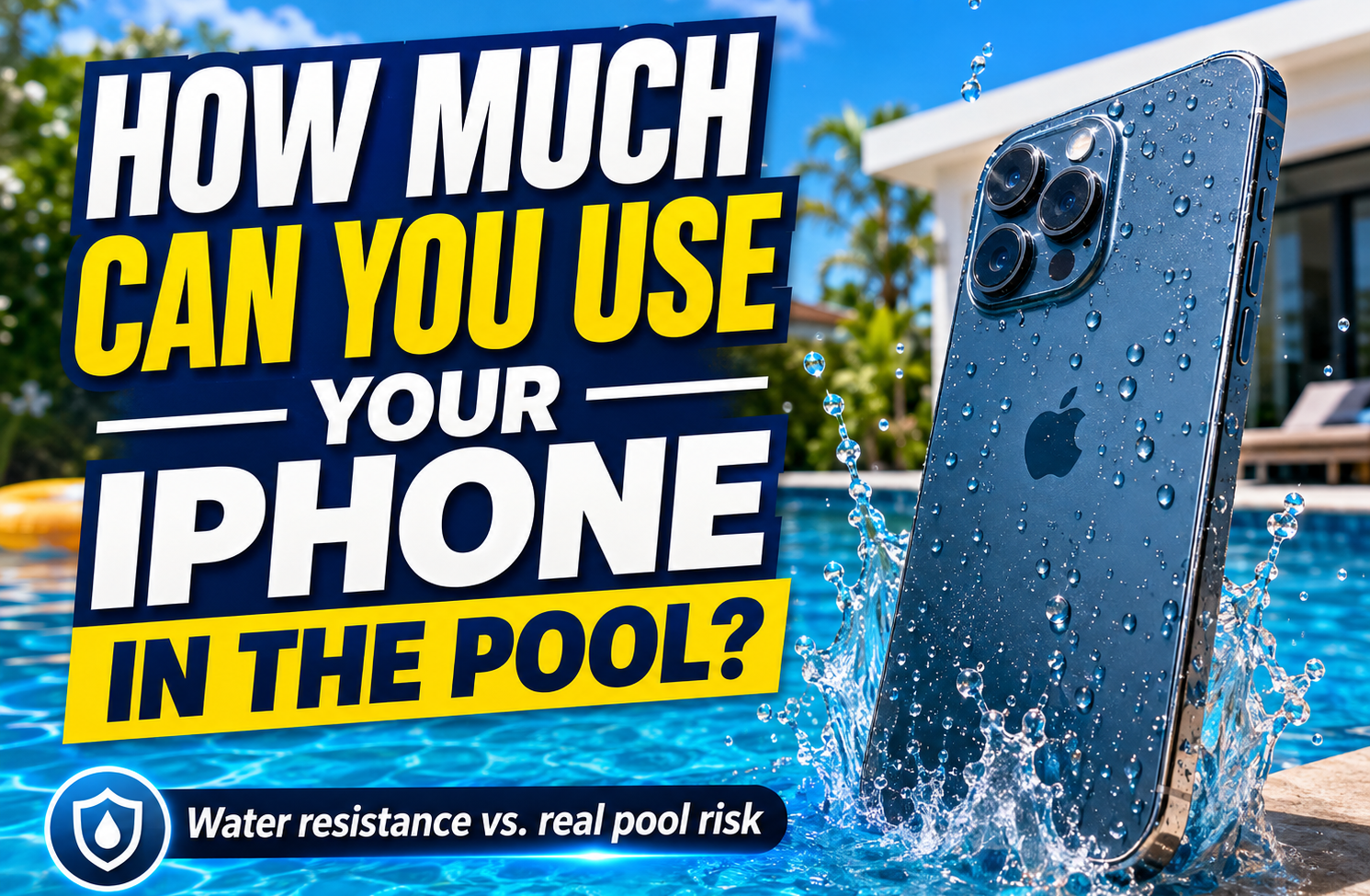
It is common to see claims about how the latest devices can withstand being submerged up to six meters underwater. However, there is a massive gap between the laboratory tests where this technology is certified and the chemical and physical reality of a recreational body of water.
To reach a clear conclusion, it is necessary to dissect which models offer this capability, how the engineering behind their seals works, and, most importantly, why treated water challenges these defenses in ways that user manuals rarely explain.
The Engineering of Resistance: How Does It Actually Work?
Devices are not “waterproof,” but rather “water-resistant.” This barrier is achieved through three key components that most users are unaware of:
- Polyurethane adhesives: A highly engineered double-sided tape that binds the screen to the chassis of the phone, sealing the edges.
- Silicone O-rings: Tiny rubber gaskets surrounding the physical buttons and the SIM card tray.
- Micrometric hydrophobic meshes: A microscopic net over the speakers and microphones that utilizes the natural surface tension of water to prevent droplets from penetrating, acting as an invisible wall. Additionally, the internal motherboard features a “conformal coating” designed to delay short circuits.
Which Models Feature This and What Do They Promise?
Water resistance has evolved over the years, but the standards are measured under ideal conditions:
- iPhone 12, 13, 14, 15, and 16 (and their Pro versions): These feature an IP68 certification, promising resistance up to 6 meters (about 20 feet) of depth for a maximum of 30 minutes.
- iPhone 11 Pro: Promises up to 4 meters for 30 minutes.
- iPhone 11, XS, XS Max, and XR: Promise up to 2 meters for 30 minutes (the XR and 2nd generation SE have an IP67 rating, resisting only up to 1 meter).
Scenarios Where This Technology DOES Work
Water resistance is structured exclusively as a survival mechanism for accidents in static, freshwater, not as a recreational feature. This technology works perfectly for:
- Quick, accidental drops into a sink or a bucket of clean water.
- Brief exposure to rain or pure water spills.
- Environments where the water has no velocity, extreme temperatures, or chemical alterations, and where the device is immediately removed and dried.
Scenarios Where It DOES NOT Work (The Treated Water Factor)
This is where the depth claims fail in practice. A treated body of water is chemically designed to oxidize and break down organic matter, and this chemistry directly attacks the device’s technology:
- Chemical degradation of adhesives: The compounds used to keep water crystal clear (such as stabilized free chlorine, bromine, and cyanuric acid) attack the phone’s polyurethane adhesives at a molecular level. With each submersion, the chemicals dry out and brittle the glue holding the screen in place.
- The illusion of time-based wear: The IP68 certification is only fully valid when the phone comes straight out of the box. A device with months of use, which has been exposed to the sun or suffered microscopic, imperceptible drops, already has micro-fissures in its internal seals.
- Dynamic pressure vs. Static pressure: The 6 meters Apple promises are measured in a completely motionless tube of water. Swimming with the device, waving it underwater to record a video, or simply passing it in front of the return jets (the nozzles that push filtered water back into the pool) generates bursts of dynamic pressure. This physical force instantly breaks the surface tension of the hydrophobic meshes in the speakers, pushing water into the motherboard long before reaching 6 meters deep.
Conclusion
The technology inside recent iPhone models is an engineering marvel, but it functions strictly as life insurance, not as scuba gear. While the seals and meshes can withstand submersion to several meters in a controlled laboratory, a pool environment—with its aggressive load of chemical sanitizers and constant water movement—irreversibly breaks down and breaches those materials. Intentionally submerging a device in treated water is betting against a chemical degradation that, eventually, always wins the game.